Support My Korean Immigrant Parents


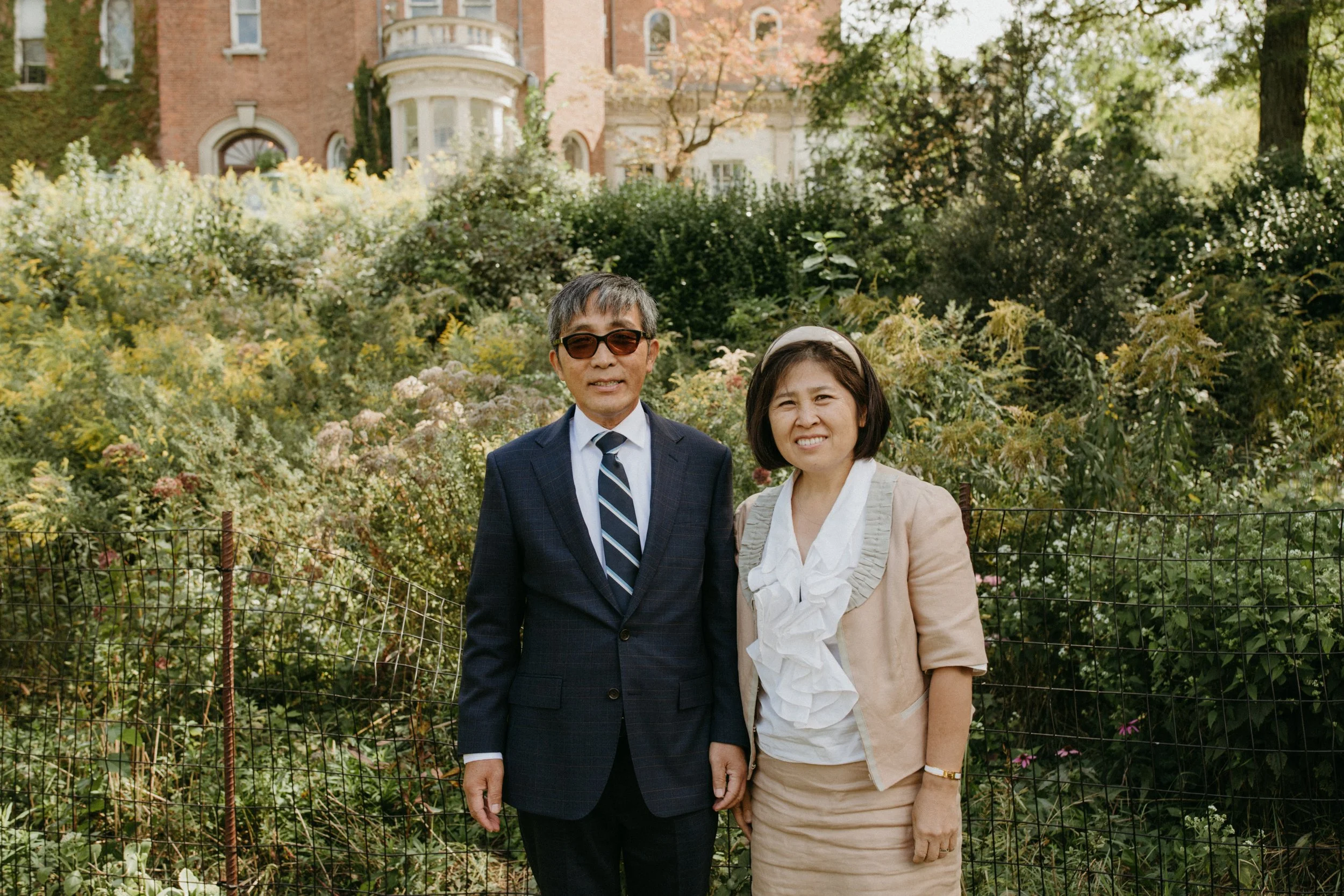
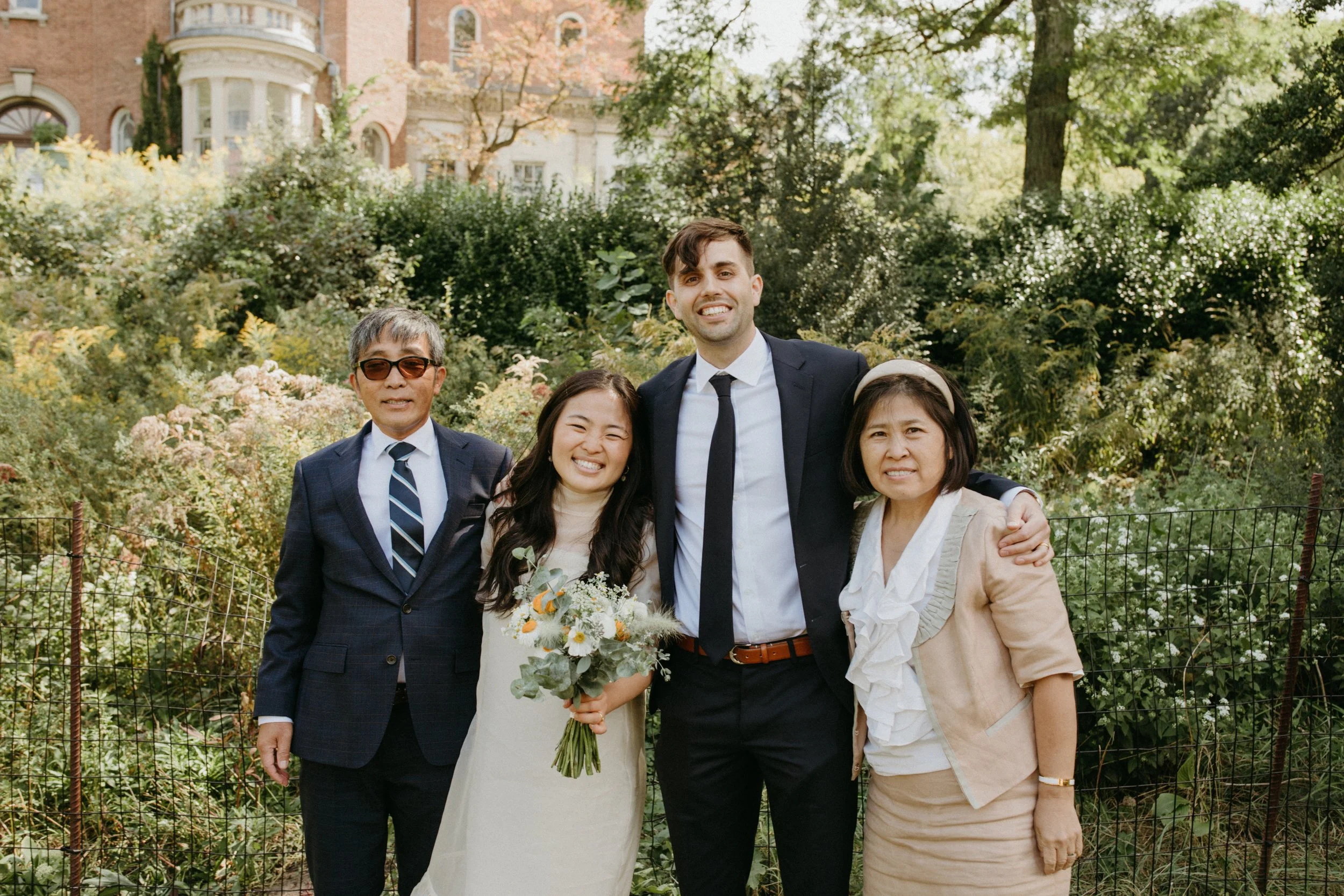
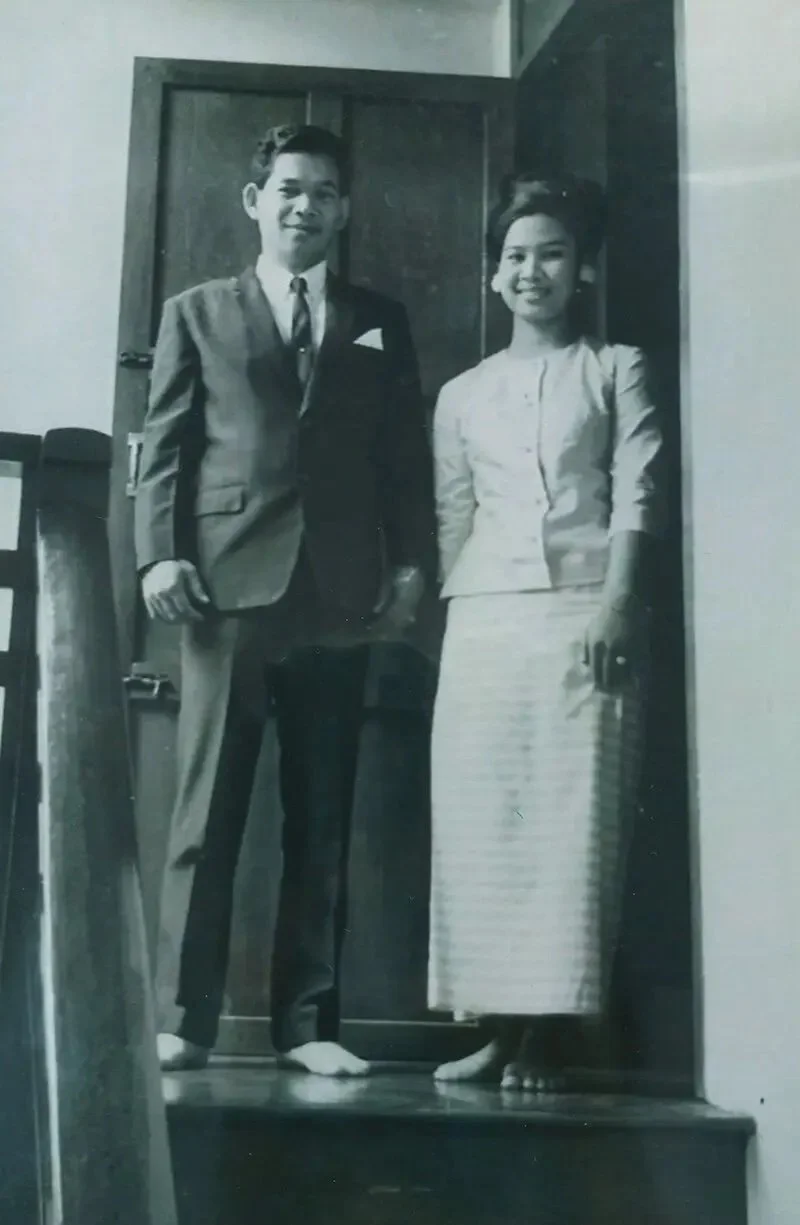
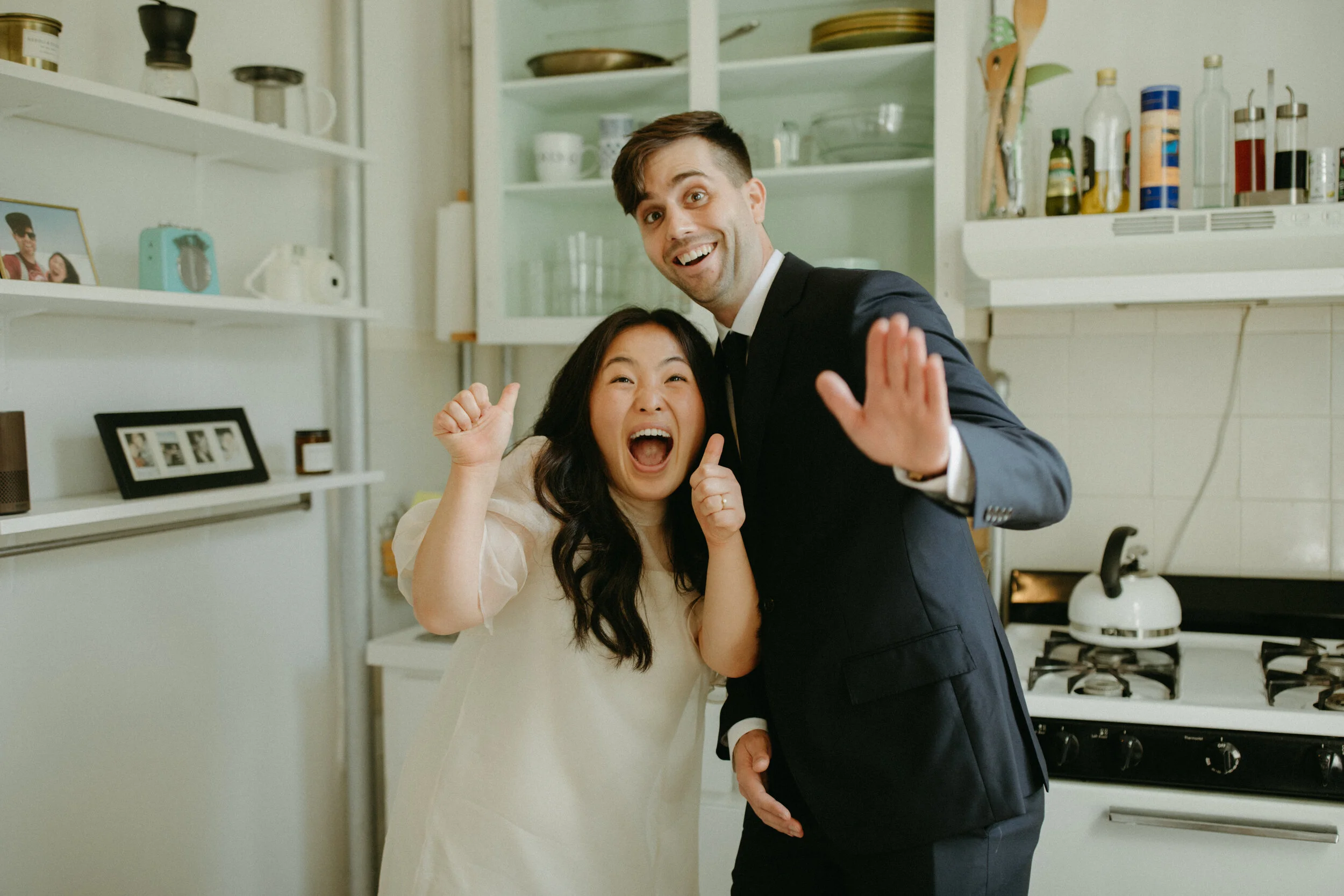
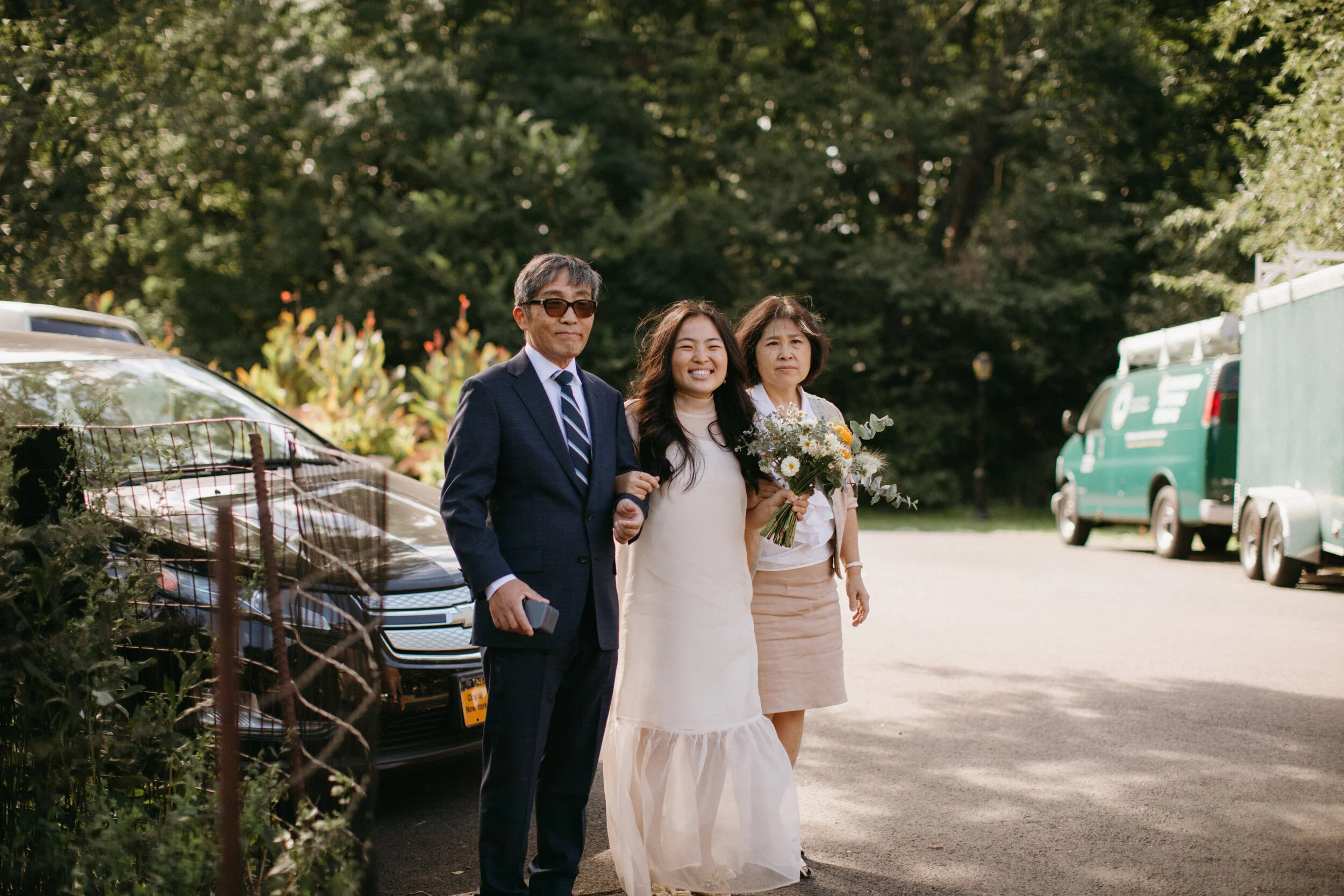
My mom and dad at our wedding, on September 20, 2020, in Brooklyn, New York. Eloise Photography.

Dear friends, followers, and supporters of Greg, me, and our family,

My incredible friend Melody Liao created an emergency fund to raise money for my parents, who are in dire need of financial support right now.

For those of you who don't know, my dad has been battling late-stage cancer for the last two years. On July 1, 2020 — three months into the global pandemic, and the day after his 60th birthday — my dad was diagnosed with Stage 3B Lung Adenocarcinoma. In March 2020, shortly after the pandemic hit the U.S., he had a really bad cough, shortness of breath, and chest pains, so he went to a clinic to see if he had COVID-19. The doctors found a large mass on the upper part of his right lung, and after doing multiple biopsies, they concluded that it was, indeed, cancer. We were in Virginia with my parents when they found out, so we received the news together. I knew my parents were not equipped to navigate the complicated mess that is the U.S. healthcare system. And I also knew their English language skills were not good enough to give them the ability to properly advocate for themselves, let alone fully understand what was happening to my dad's body. The day we found out my dad had cancer, Greg and I made the decision to put our music careers on pause and become my parents' full-time caregivers. We wanted to help them battle what we all knew would be the most difficult part of their lives.

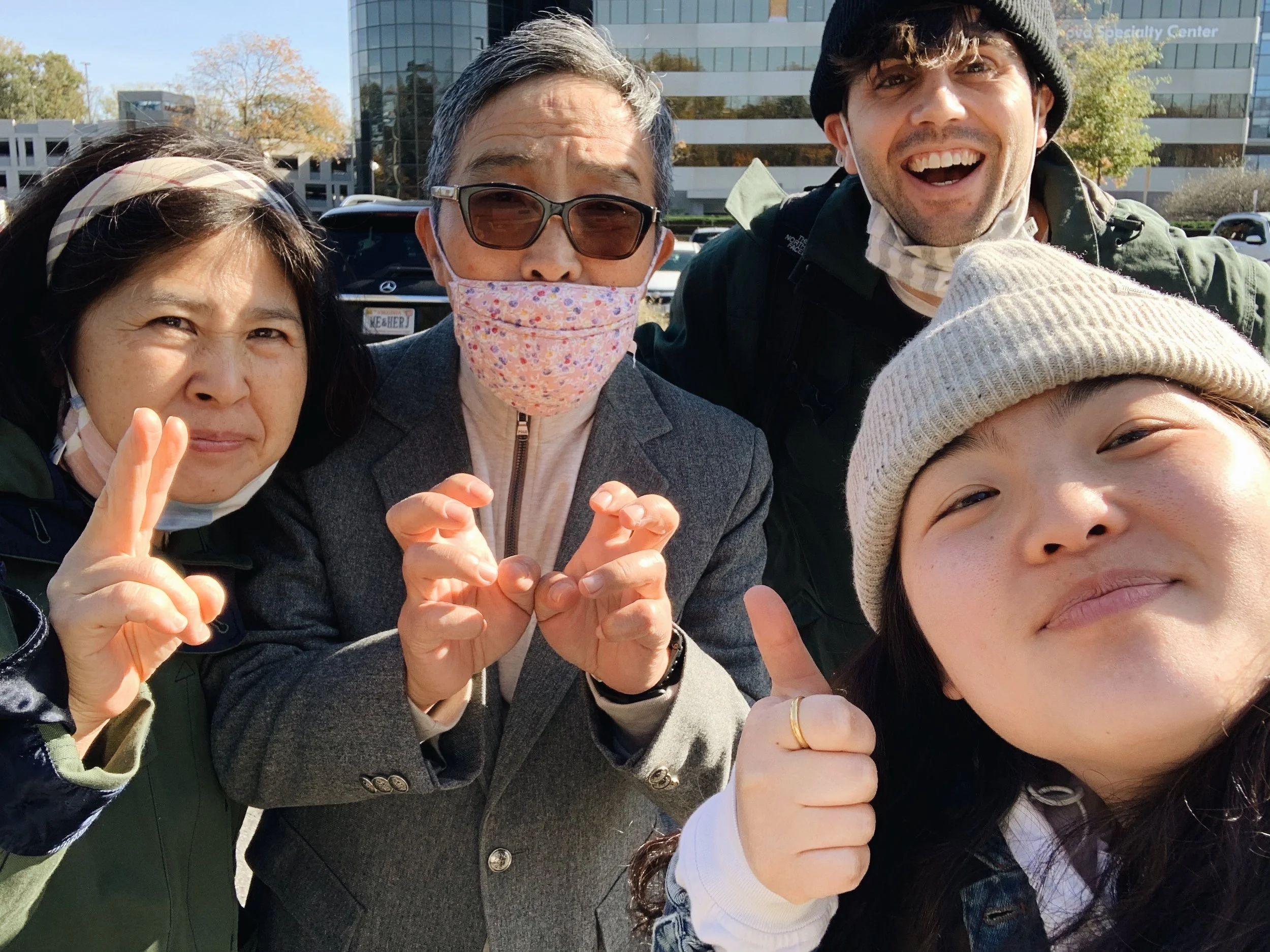
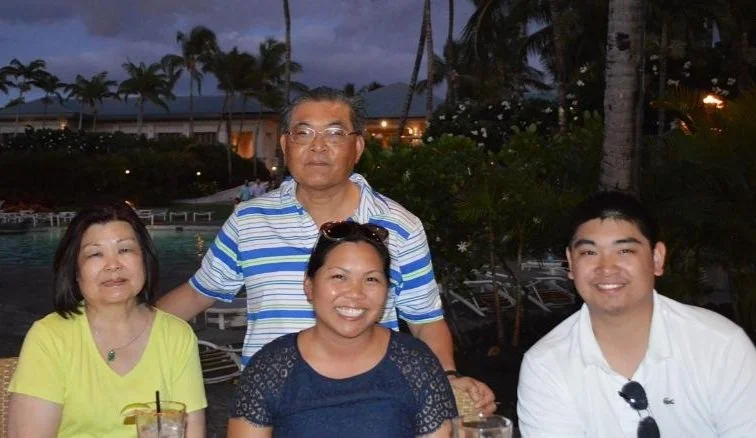
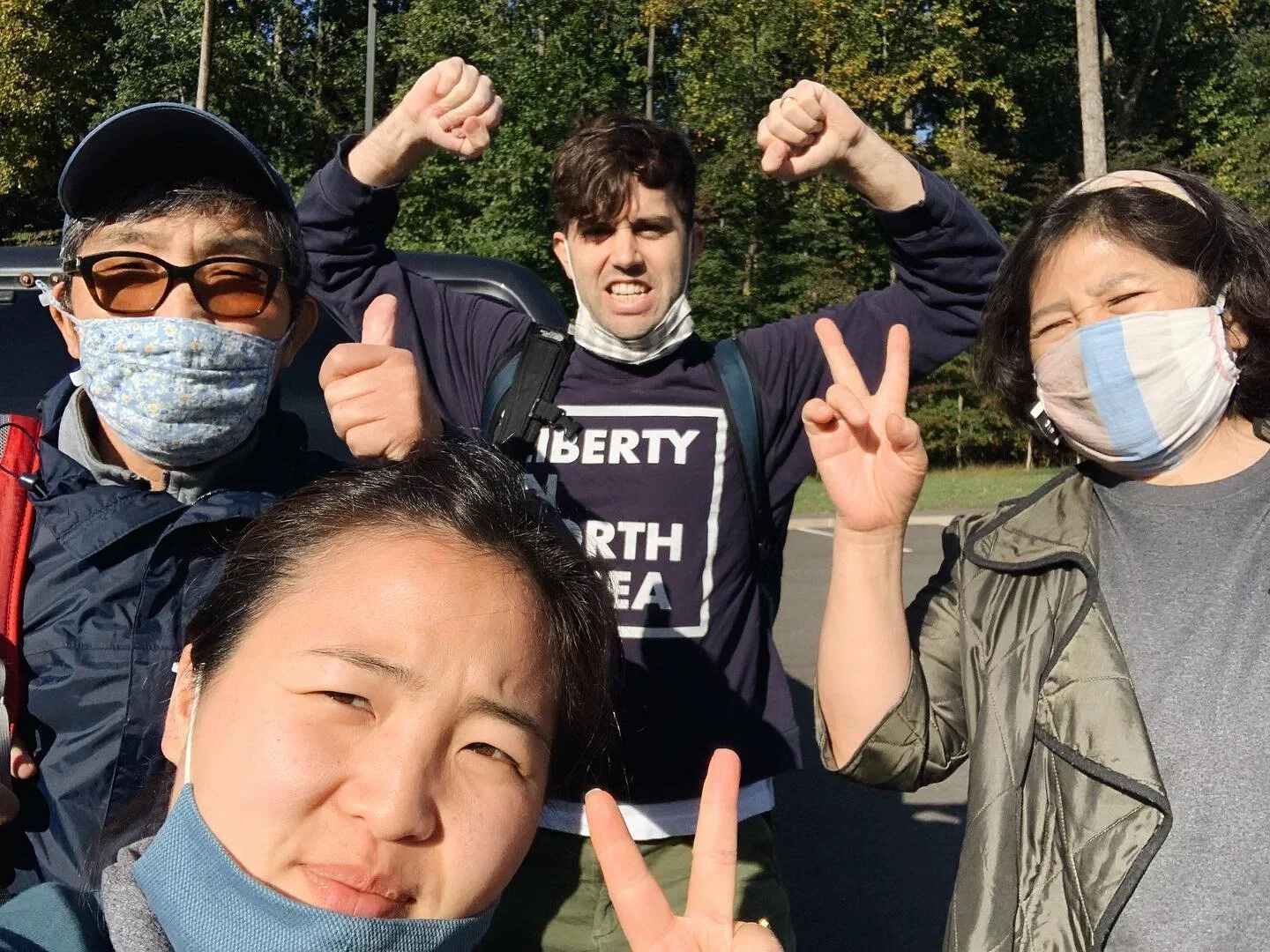
My mom, dad, Greg, and me taking a selfie before going in for chemotherapy at the INOVA SCHAR Cancer Institute in Fairfax, Virginia.

From 2020 to 2021 — for two full years — Greg and I drove back and forth between New York and Virginia every single week. We drove down to Virginia from Monday through Friday, and we drove back to New York on the weekends. We took my dad to every doctor's appointment, we sat with him through every chemotherapy transfusion, radiation session, and immunotherapy treatment, and we translated and advocated for him every step of the way.

The cancer treatments were incredibly hard on my dad's body. He lost all of his hair. He vomited from the chemotherapy. He couldn't walk because he was in so much physical pain. He had to go to the emergency room on multiple occasions. Since August 2020, my dad has completed two rounds of chemotherapy (a total of 10 transfusions), two rounds of radiation (a total of 40 sessions), and one round of immunotherapy (a total of 24 transfusions). I will never know the full extent of the pain he has had to endure over the last two years. But he is, and has always been, a fighter. During the first half of 2021, when my dad was on his biweekly immunotherapy regimen, all of his scans kept coming back normal, so we thought we were in the clear.

On November 1, 2021, after a year and a half of battling cancer as a family, we received the devastating news that my dad's cancer had metastasized to his brain and his left lung, advancing his cancer from Stage 3B to Stage 4. One of his brain tumors was in his cerebellum (the middle of his brain), and the second tumor was wrapped around his auditory canal (the passageway that connects his ear to his brain). The tumor that was wrapped around his auditory canal was pressing against nerves that control his hearing, facial mobility, and balance, so in addition to receiving the Stage 4 diagnosis, my dad also lost complete hearing in his right ear. The right side of his face was also beginning to droop, indicating that he was losing facial mobility of the right side of his face. In December 2021, right before the holidays, my dad received a second round of radiation to ablate his brain tumors, and that treatment was successful. But unfortunately, his hearing loss and loss of facial mobility are incurable. Since January of this year, he has been on a new targeted treatment, specifically created for Stage 4 Lung Cancer patients, called Capmatinib. It's a medication that targets his particular mutation of lung cancer, all throughout his body, and he takes that twice daily.

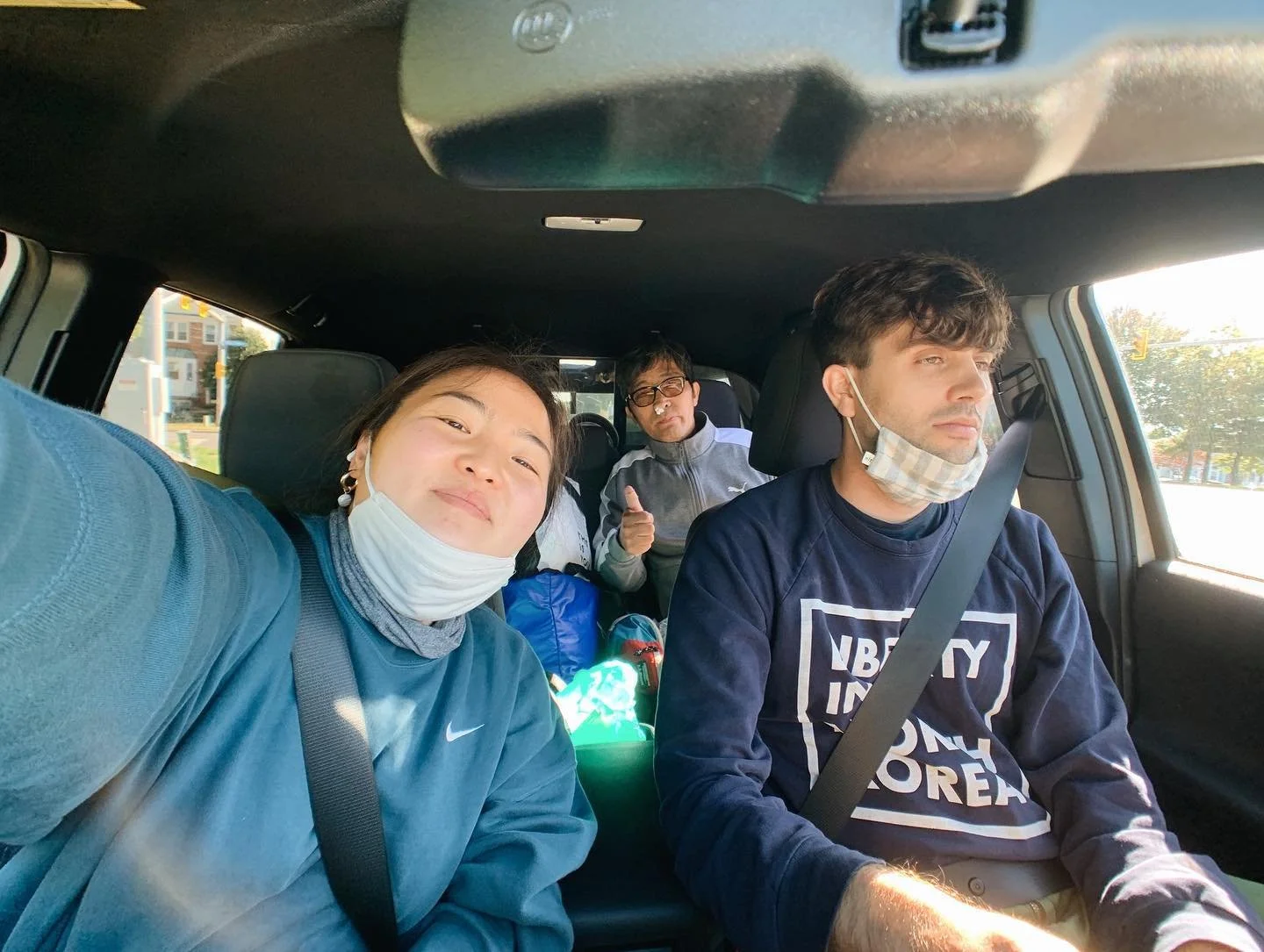
My mom, dad, Greg, and me, taking a selfie in my dad’s Toyota Tacoma truck, on our way to chemotherapy.

In addition to the burden of cancer, my parents have also been facing massive financial burdens that have been exacerbated by COVID-19.

In 2018, they lost their entire life savings, saved over the course of 30 years, to the exploitative landlord of their laundromat business — a business they owned for ten years. Their landlord swindled my parents out of a $2 million investment — an investment my parents were only able to afford by pulling out a second mortgage from their house. In 2018, after a five-year-long legal battle, they lost all their money, and to pay off their second mortgage, they had to sell their house.

During the same time that they owned their laundromat, they also rented a space to run a dry cleaners business. Their landlord at that business also exploited them, and in February 2020, they took my parents to court, legally obligating them to pay $82,000 for back-rent, in addition to fees and interest.

These two massive financial blows have had devastating impacts on my parents’ present circumstances, as they cannot receive approval for low-income housing until they pay their landlord. In addition to fighting cancer, my parents are fighting a legal standstill where they are trapped by this $82,000 debt to their landlord. My mom has been working at a bakery inside a Lotte, a local Korean grocery store, to cover their daily expenses.

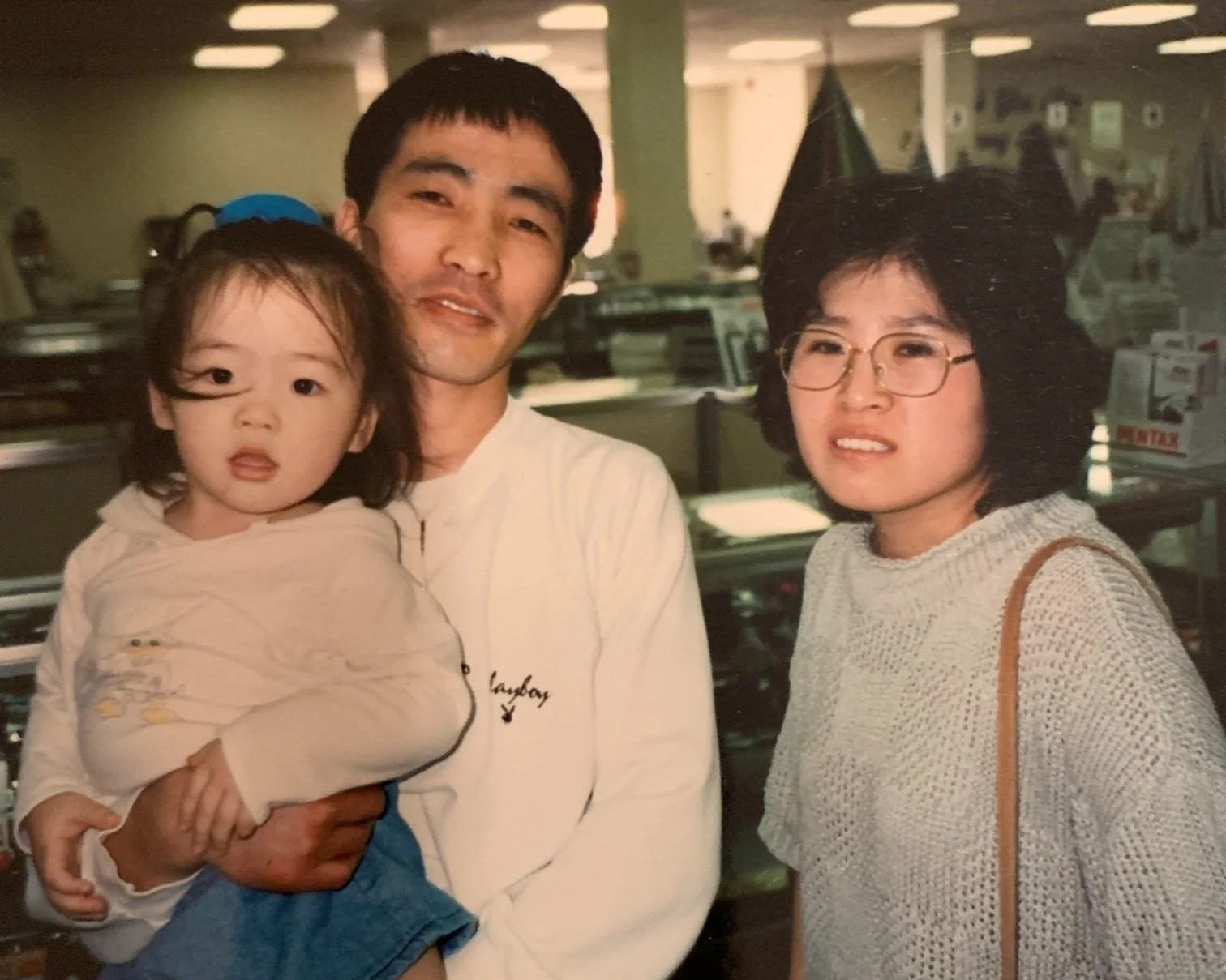
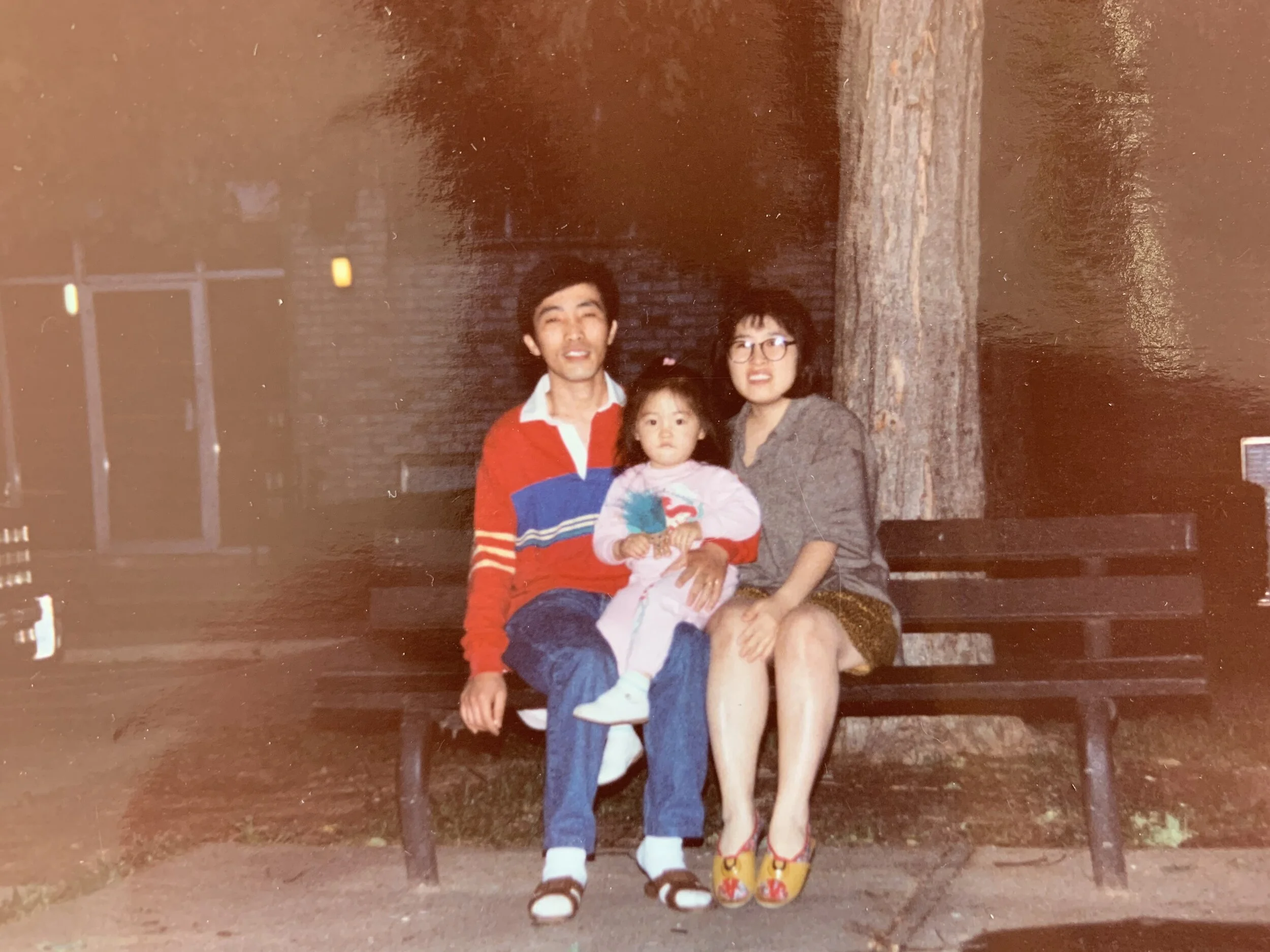
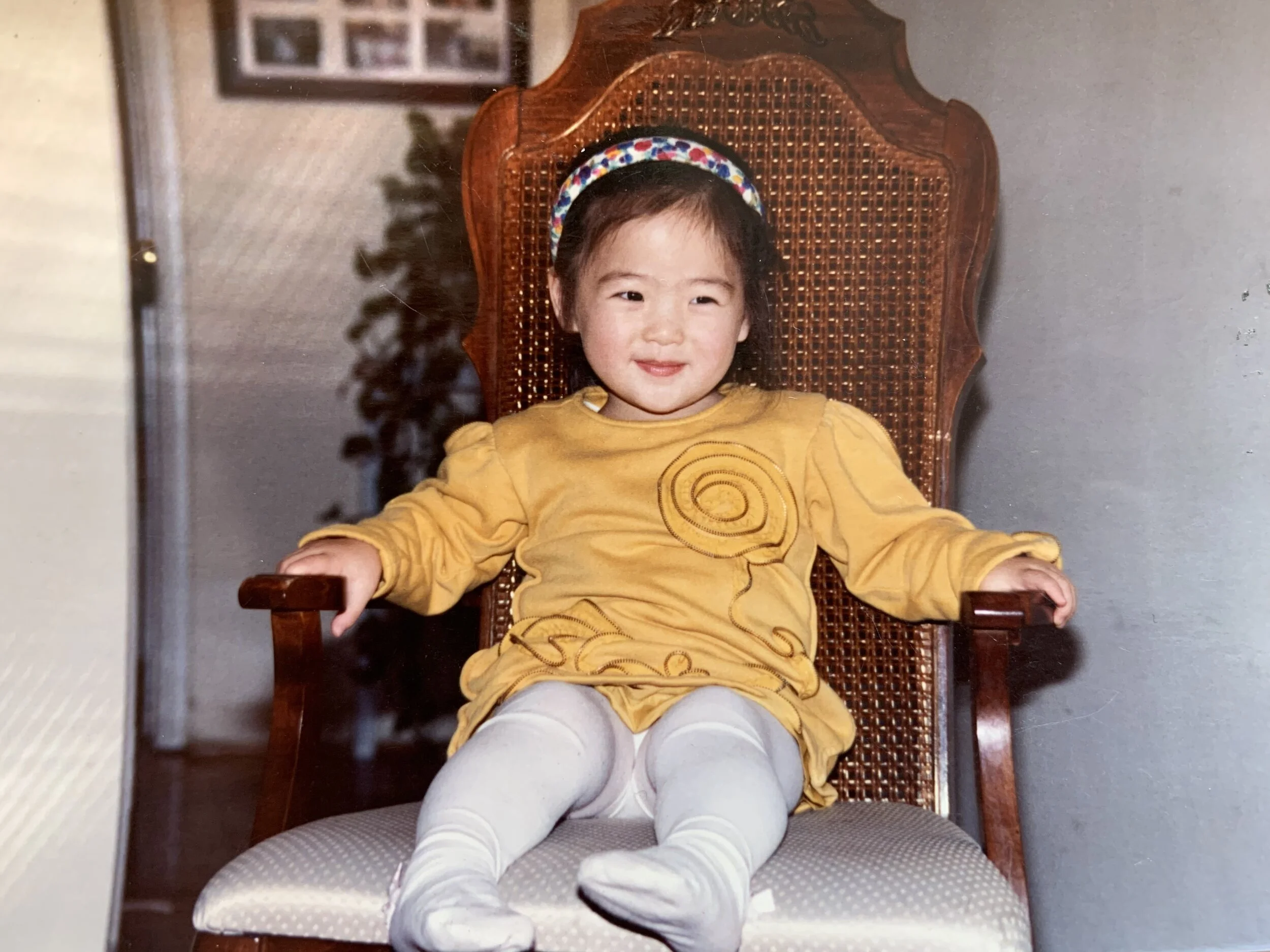
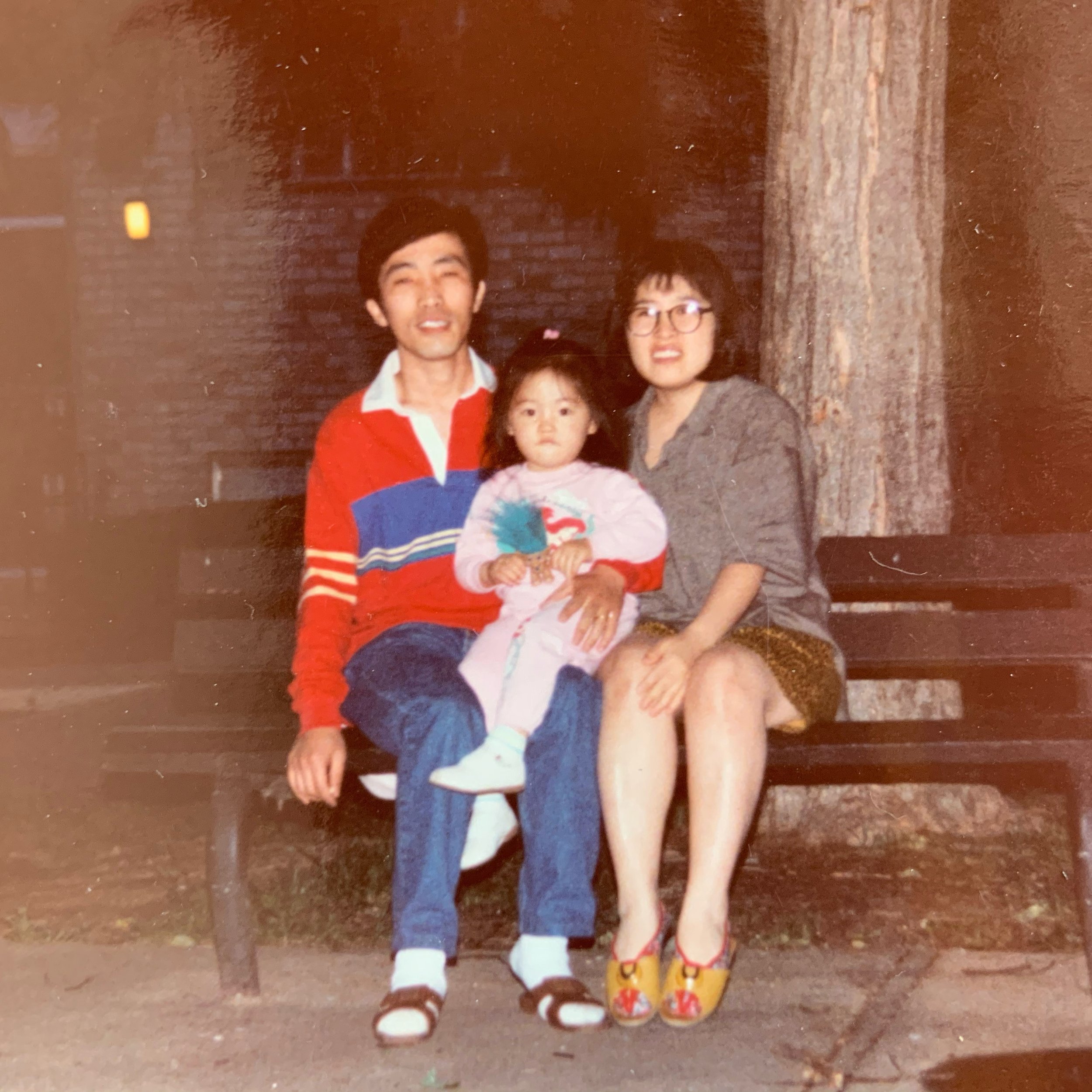
My parents and me, when I was approximately three or four years old. Circa 1991 / 1992.

My parents are the last people that would ever ask for money. They don't even know this gofundme exists, and if they did, they would insist that they don't need help from anyone. In Korean culture, there is nothing more shameful than being a burden. But the truth is: my parents are the furthest from being a burden. They are two of the strongest people I know.

Both of my parents were children born to North Korean refugees in the aftermath of the Korean War and the Japanese Occupation. My dad was the youngest of four, and both of his parents escaped North Korea by boat during the war. His dad was disabled and was unable to work, so he grew up dirt poor in the countryside of Pyeongtaek / 평택, a small farming town in Gyeonggido / 경기도. My mom was the second of four, and she grew up in Seoul / 서울. Both of her parents escaped from Pyongyang, the capital of North Korea, during the war. Her dad left his mother and four younger siblings behind, never to see them again. My mom’s dream was to become an opera singer, but right before she graduated from high school to go to college, her parents’ textile business went bankrupt, so she made the difficult decision to prioritize her two younger brothers’ educations over her own.

In 1986, at the age of 26, my dad immigrated to the U.S., in search of a better life. In 1987, he and my mom met, after a year of communicating across oceans through letters. In 1988, I was born, and two years later, in 1990, my mom and I immigrated to the U.S. to join my dad. Ever since they arrived in America, they have literally done nothing but work themselves to the bone, every single day, in the hopes that, if they just worked hard enough, it would all pay off, and they would one day achieve their American dream.

My family at our wedding. Eloise Photography.

My parents are the kindest, most loving, hardest working people I know. I am who I am because of them. Throughout my entire life, they have worked dozens of labor-intensive, low-income jobs, just to put food on our table, put clothes on my back, and give me all the opportunities that were never afforded to them, for reasons completely outside of their control. Occupations, wars, political corruption, poverty, immigration, language barriers, gender discrimination, racial discrimination, immigrant exploitation, and generational trauma, all played vital roles in the place they find themselves today.

My parents did not get here because they're lazy. They were exploited by a broken, corrupt system and powerful, predatory people. They worked hard every single day, doing backbreaking labor, as laundry workers, deli owners, dry cleaners, high school lunch servers, and janitors, just to make ends meet and serve their communities. They worked harder than anyone I know to try to achieve the elusive American dream. But after 35 years of sacrificing all of their time, youth, energy, blood, sweat, and tears, they are living in a poorly lit, cramped, one-bedroom apartment, and they are living off of food stamps and Medicaid. To be living in the level of poverty they're living in right now — after all the work they've done — is criminal. Immigrants who come to this country and willingly work all the high-labor, low-wage jobs that none of the white, English-speaking people want to take, deserve far better treatment than this.

You don't owe my parents anything. But if you want to swing the pendulum of justice back in their direction, please consider donating to their emergency fund today. If you want to support two 60-year-old Asian American immigrants, who have literally done nothing but work their asses off for the last 35 years, donate to their emergency fund today. If you want to support my mom and dad, who were exploited by people who desired money and power over equity and integrity, please consider donating to their emergency fund today.

My parents would be forever grateful for your radical act of generosity. Greg would be forever grateful for your radical act of generosity. And I would be forever grateful for your radical act of generosity.

I am tearfully writing these words in my local coffee shop. Thank you for reading them.

With love,
Jieun
 

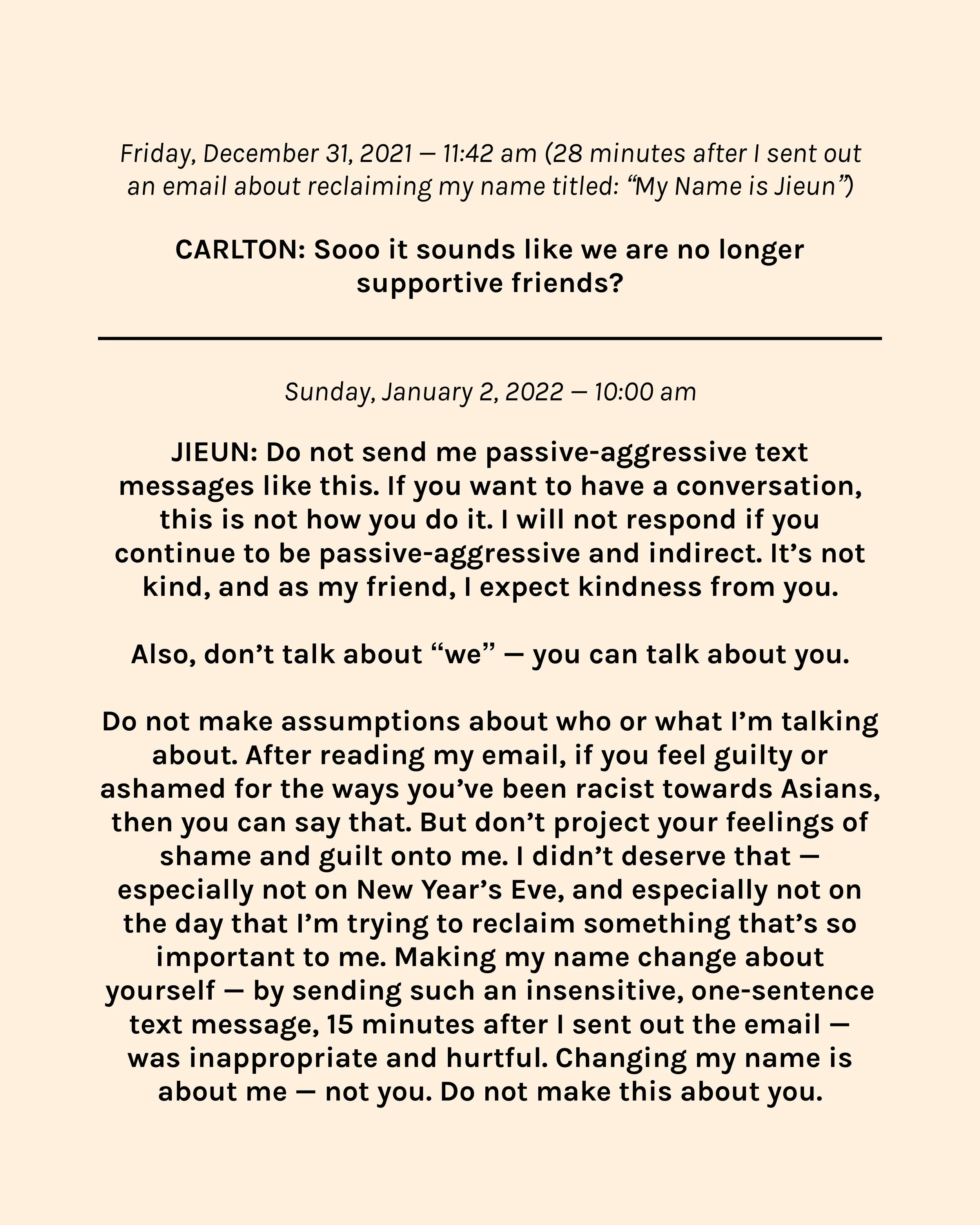
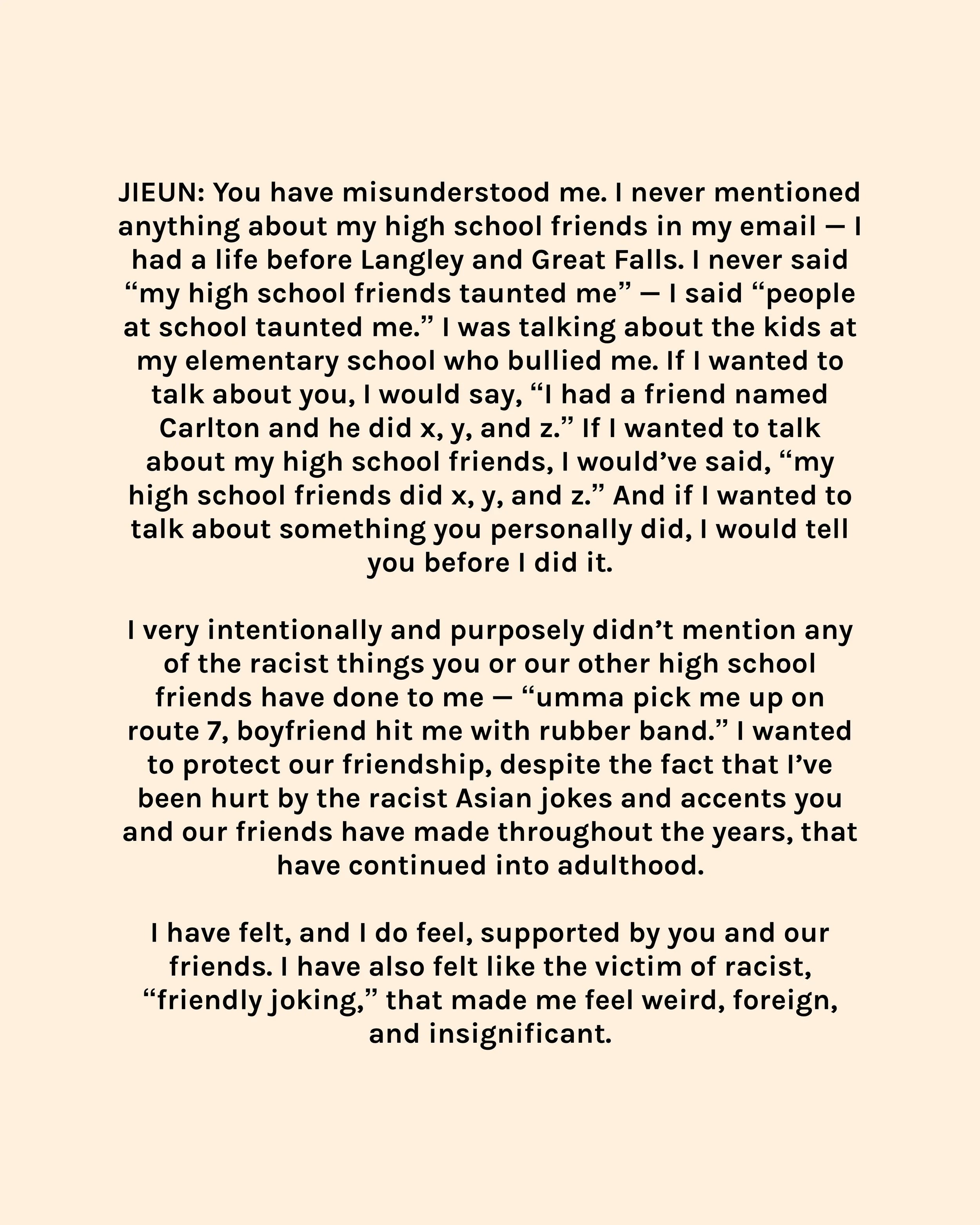
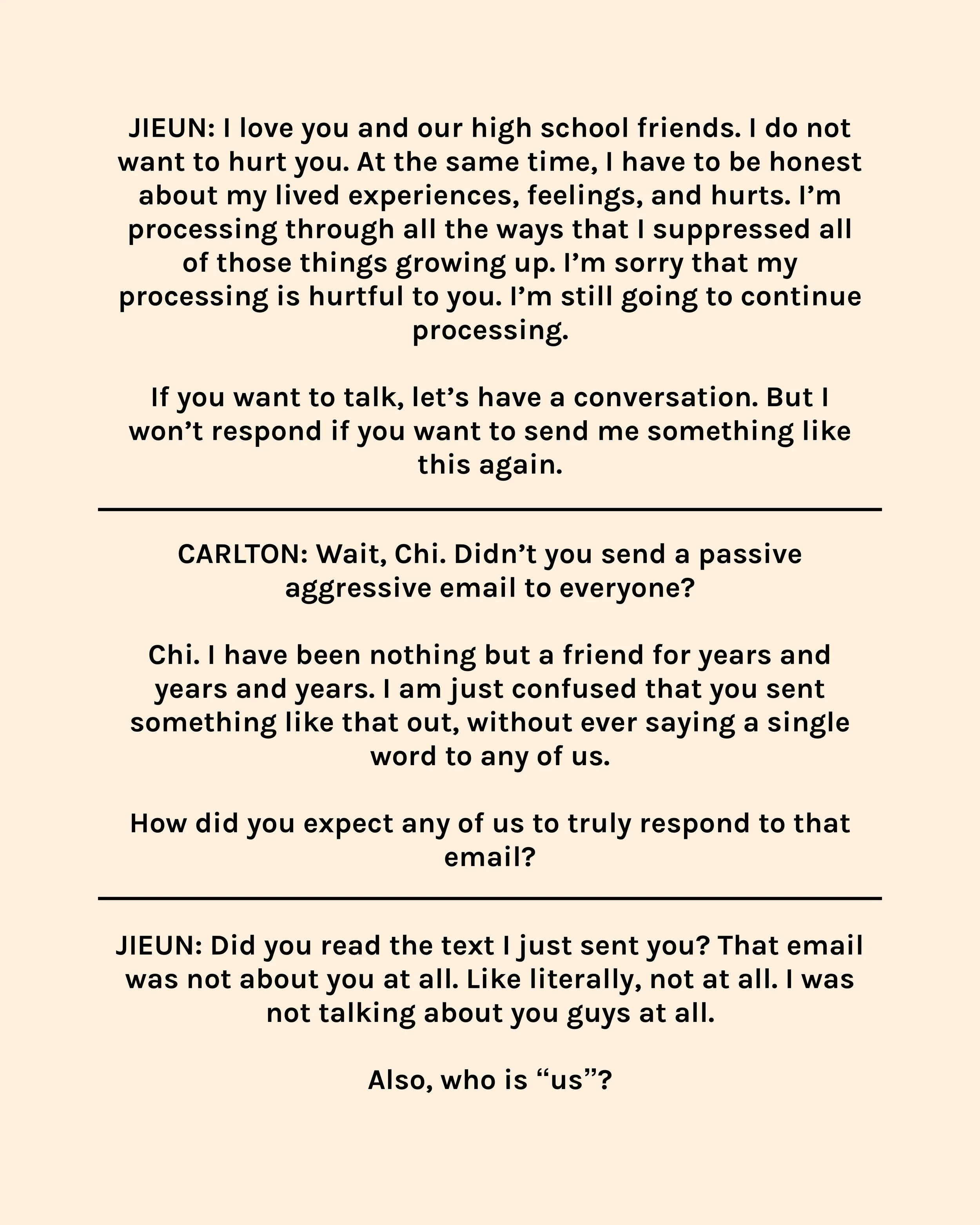
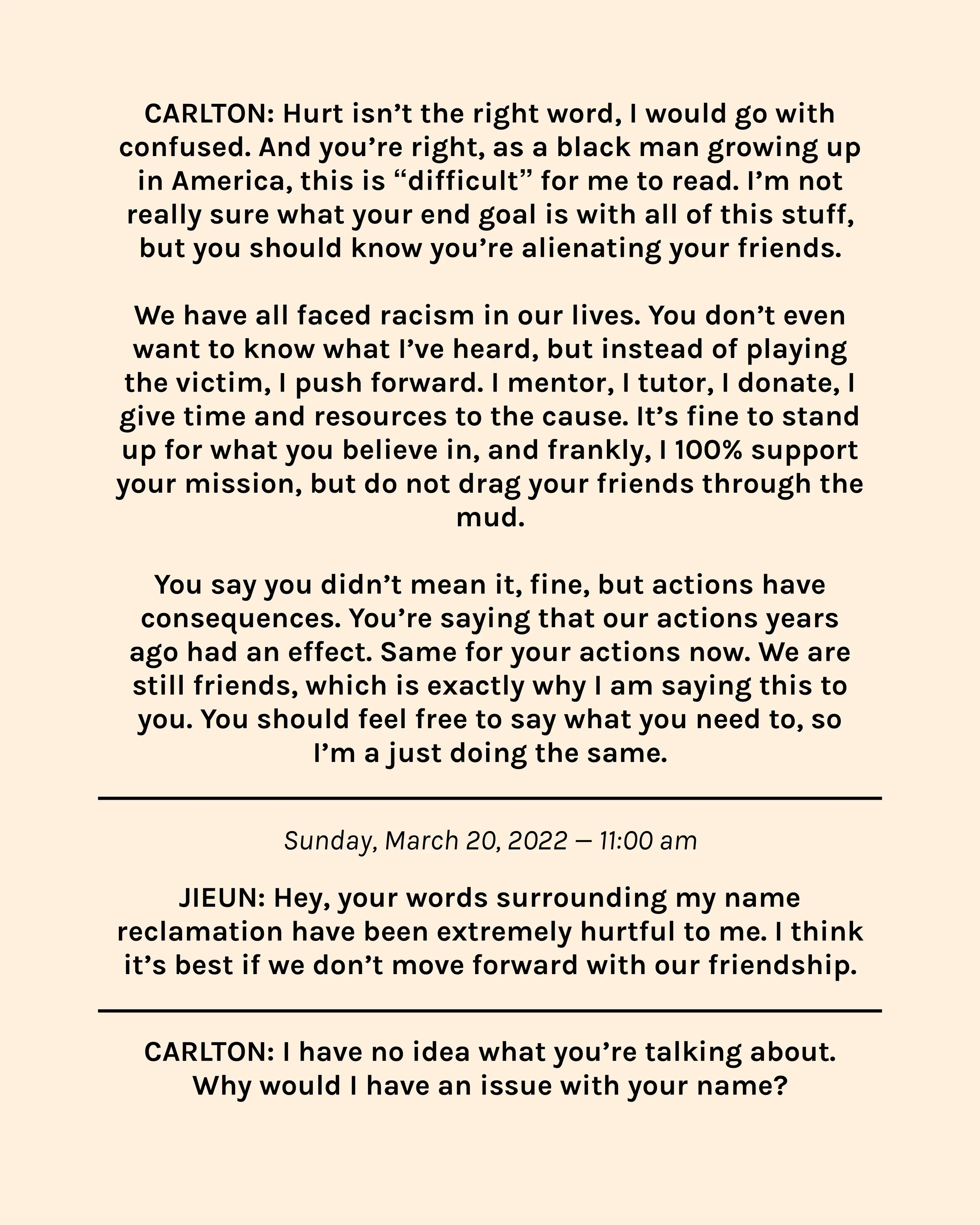
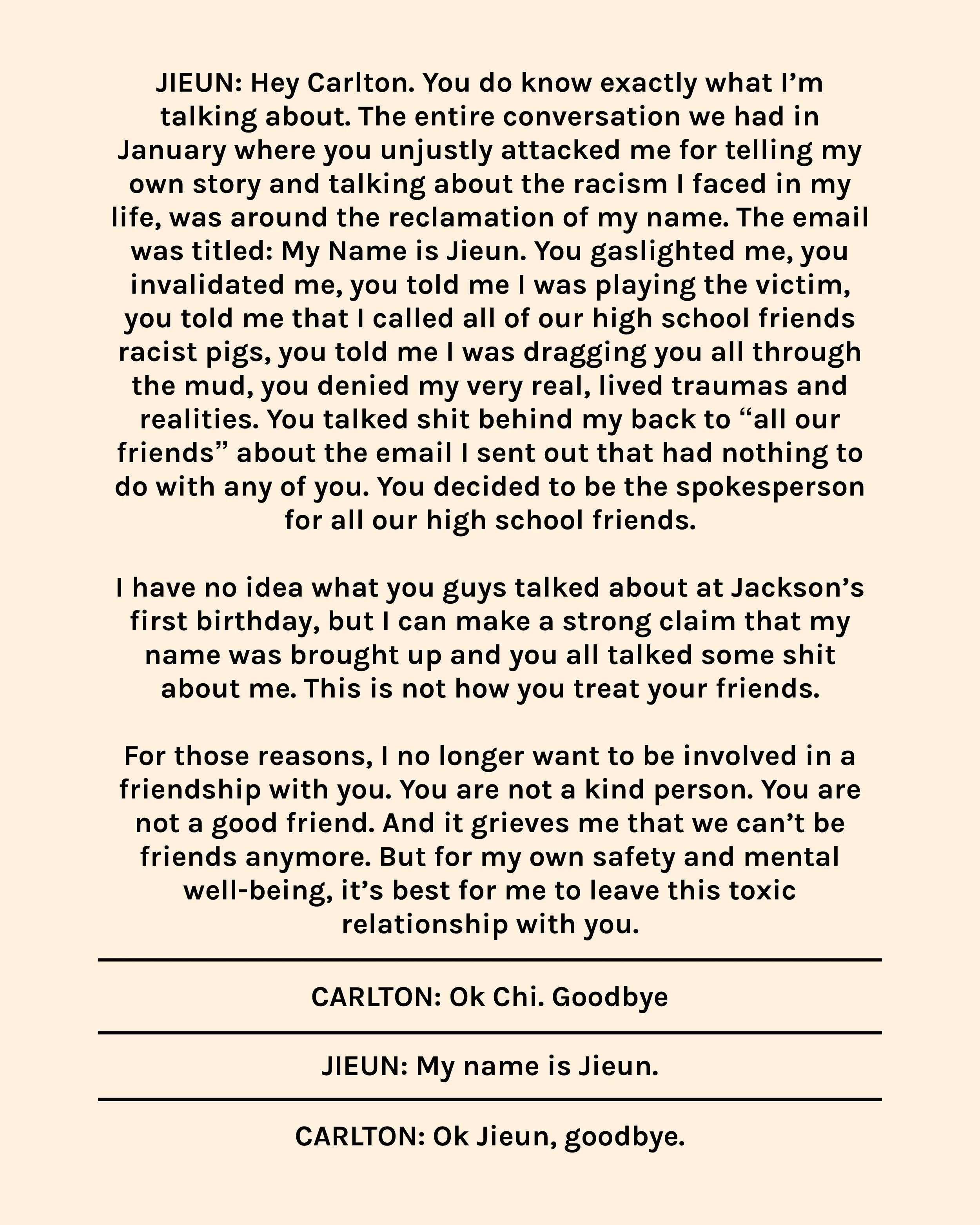
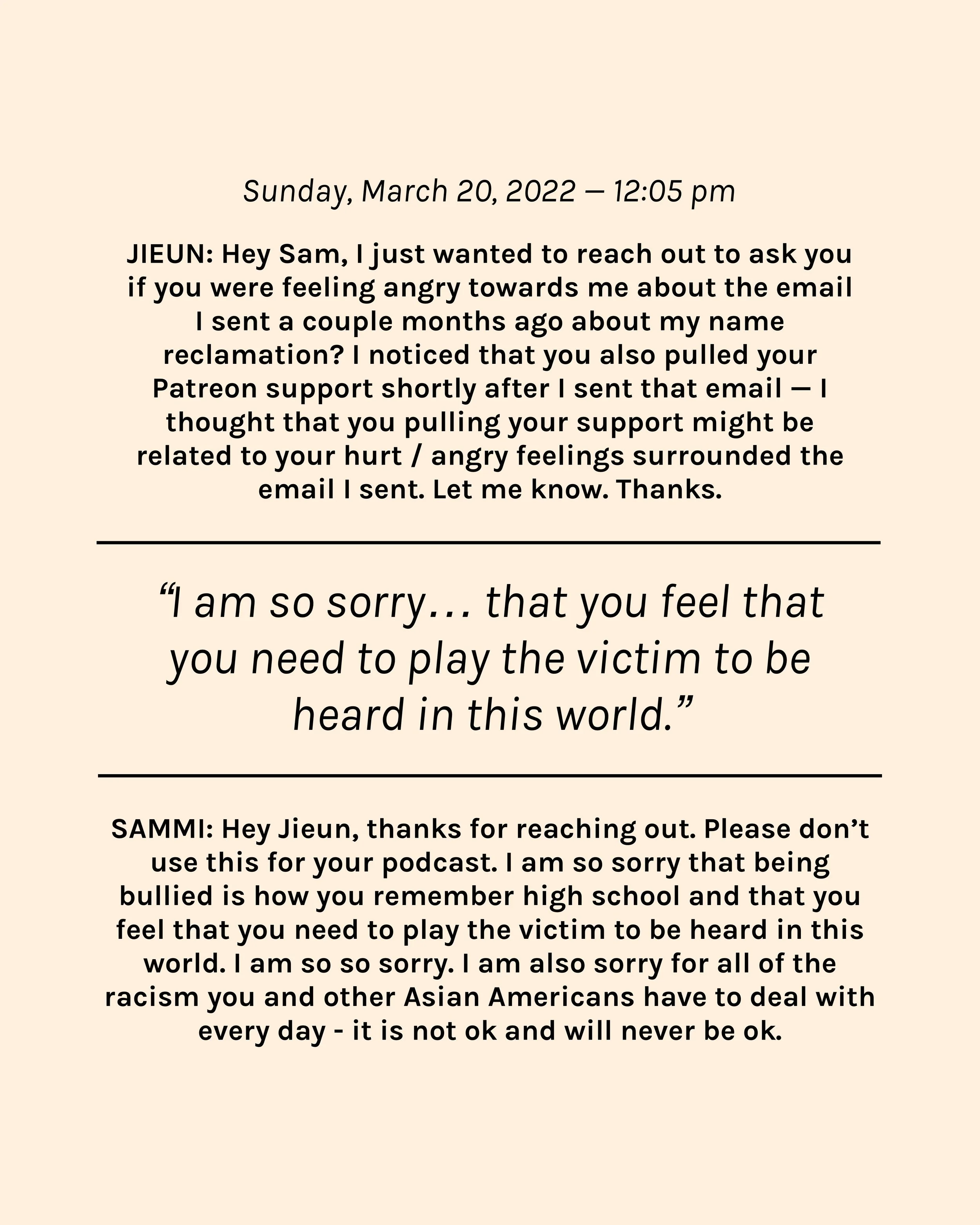
Anti-Asian Racism Within Friendships


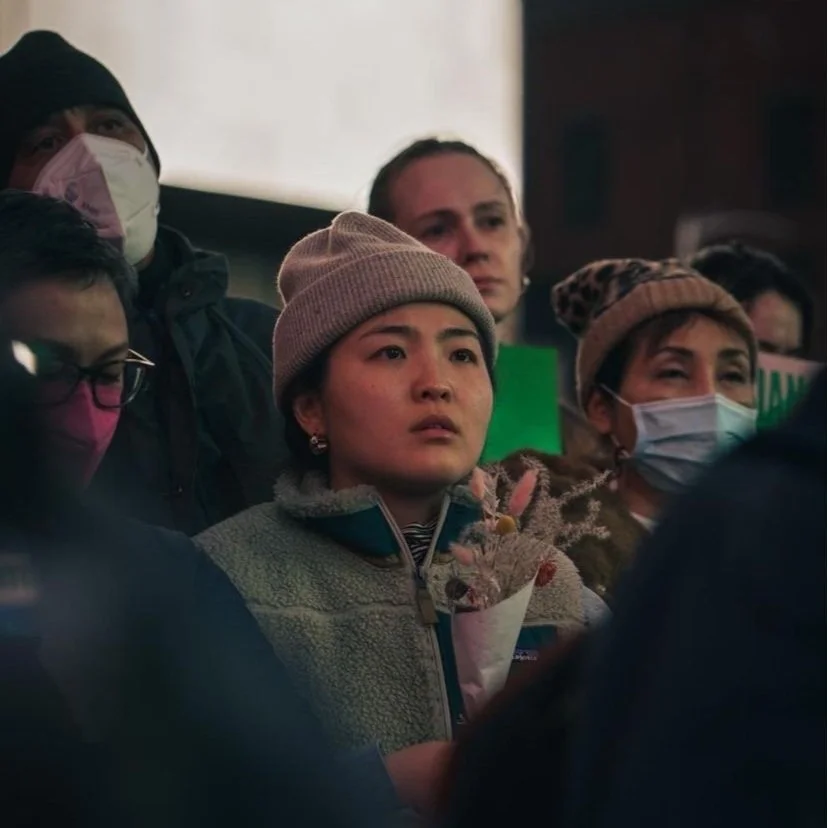
Jieun Ko at the #BreakTheSilence Rally in Times Square, held in honor of the one-year anniversary of the Atlanta Spa Shootings. Photo taken by Ken.

Thank you to everyone who has reached out to me with words of encouragement, validation, empathy, and kindness. Your words have been incredibly healing to read and hear.

This conflict with my former friends brought up many things for me.

"See! This is exactly why we never do stuff like this! This is what happens when you try to take up space! There is no space for you! Don't you know that by now?! This is why you can't be Jieun! This is why you could NEVER be Jieun! There has never been, and there will never be, space for you to exist in this world! Go back to accepting that reality! Sit the hell down and just be quiet! Laugh along! Let it go! Be the bigger person! That's how you stay safe!”

“Look at what's happening already! It hasn't even been 30 minutes! And not even from a stranger — your own best friend! You should have never talked about racism! You know better! You know the rules! You're now allowed to get mad when people do racist things to you! You're not allowed to tell people that you're disappointed with them when they hurt your feelings! Your feelings don't matter! Your feelings definitely don't matter more than theirs! You're not allowed to hurt their feelings! It doesn't matter if you didn't mean it! It's still your fault! You're still responsible! That's why it's better to just stay quiet and keep your head down, just like your mom always says!"

This voice — that has always been in there to try and keep me safe — got so incredibly loud. Ever since I came to America at the age of 2, that voice has been working tirelessly to protect me from this white supremacist world, that just could not make sense of this "little Asian foreigner."

I have lost many friends throughout my journey of becoming myself. I think it’s a natural part of growing and changing. Since the beginning of 2020, with the collision of the COVID-19 pandemic, the scapegoating of Asians for "spreading the virus all around the world," the consequential explosion of anti-Asian violence that ensued against our community, the increase of Asian representation in mainstream media, and my dad's terminal cancer diagnosis, I just no longer had the time, energy, or capacity to pretend to be anyone other than myself anymore.

I had no energy to hold up all my masks, code-switch, people-please, erase myself, suppress my anger, be a doormat, beat myself into submission, or "keep the peace" at the price of myself. And I wasn't required to because we were all quarantined and socially distanced.

Chi was only half of me.

She was always happy. She hid away all of her pain. She suppressed her anger. She controlled her feelings and behaviors. She constantly centered others. She didn't ask for help, even when she needed it — because to need help was to be a burden, and nothing was more shameful than that. She didn’t take care of herself, because self-care was selfish. She was celebrated for her incredible work ethic — she would work until she broke. She was adored for her ability to empathize with others and make everyone feel seen — while she, in turn, kept her stories to herself and felt completely invisible.

She willingly accepted the role as the butt of the joke because she discovered that laughing along with racism was far safer for her than getting mad about it. Being the scapegoat was her only tool for survival in the oppressive, white supremacist communities that surrounded her.

She knew better than to talk publicly about her Korean identity, her food, her culture, her language, her homeland, her family, her mental unwellness, her family's poverty, the racism she quietly endured every single day, and the exploitation she watched her parents quietly endure every single day. The expectation that was placed on her shoulders was to be the perfect little Chi that everyone expected her to be.

She internalized racism against herself and her people. She kept her Korean at home. She hated being Asian. She was taught to hate it. She hated her skin, her eyes, her hair, her name, her voice, her customs, and her language. She hated every part of her being because she was not white — and the world around her constantly told her that being white was the only way to be worthy. She tried to warp herself in every way possible to try to meet the unreachable white standard — but she was never good enough.

She regretfully participated in the denigration and subjugation of her own race and other marginalized races, through harmful “jokes” and cultural appropriation. This was her way of fitting in. This was her attempt at more closely aligning herself with the white majority. She also held the false belief that, if her people were on the table, then so was everyone else (except white people).

Chi was a shell, used to protect Jieun from the cruel, harsh world. Chi was a shield, used to keep Jieun safe from the blows that came for her every single day. I am grateful for all of her labor. She did what she had to do to survive. I also regret all of her poor decisions.

While Chi and Jieun share a lot of similar qualities, over the last ten years, I have worked really hard to integrate Chi with Jieun.

Unlike Chi, Jieun is an actual, whole, entire human being. She is Korean. She is American. She is Korean American. Her name means wisdom and mercy. She is Christian. She is a woman. She is an immigrant. She is the only child of immigrants — immigrants who have suffered greatly and continue to suffer greatly, in a country that treats them as if they are as disposable and repulsive as yesterday's garbage.

She is incredibly proud of where she comes from. She is incredibly proud of her culture and her heritage. She is incredibly proud of her parents. She speaks Korean with her family. She loves eating Korean food. She used to do Kumdo, a modern Korean martial art form, also known as "the way of the sword,” and she absolutely loves it. She has aunts, uncles, and cousins that all still live back in South Korea. She could even possibly have some relatives that are still alive in North Korea. She is fully Korean. She is fully American. She is unapologetically Asian.

She is courageous, energetic, joyful, driven, tenacious, and optimistic. She is a fierce fighter for justice. She is a bold, outspoken woman who bravely speaks the truth, even when it terrifies her. She is unwavering in integrity, unwilling to bend on the ideals that she upholds: truth, justice, authenticity, and love.

She makes space for all of her emotions and all of herself. She embraces her anger and the sacred rage of others. She is unashamed of the anger that lives in all of us. She knows that anger is a natural, healthy, and proportional response to injustice. She wants real peace, real love, and real reconciliation, and she is unwilling to settle for any fabrications or counterfeit versions of them. She knows she is worthy as her whole self. She knows she is beloved as her whole self. She knows she is an irreplaceable gift to this world.

She knows and admits she is flawed. She tries her best, but she falls short every single day. Sometimes she’s prideful. Sometimes she’s mean. Sometimes she’s selfish. She is a continuous work in progress.

She is not a doormat. She is not a scapegoat. She sets healthy boundaries. She is honest. She is direct. She is respectful. She will defend herself if people abuse her.

She loves people fiercely. She is a protector. She cares about the people who are most marginalized and outcasted. She is a challenger. She is not afraid of conflict. She is not afraid to step into the messy spaces. She expects the best from herself and the people she loves the most. She challenges herself and others to live life to its fullest potential. She firmly believes in the providential value, beauty, and light that we all carry within us.

This is who Jieun is. This is who I am.

If you don't like the person I am and you no longer want to be friends with me, I validate your decision and this is your cordial invitation out. Thank you for your friendship. I’m sorry for the ways that I have failed you. I forgive you for the ways that you have failed me. It's best for the both of us if we part ways now.

If you like the person I am and you would like to continue to move forward in our friendship, I'm happy to move forward in friendship with you.

I won't be perfect in this friendship, and neither will you. We will hurt and disappoint each other at times, unintentionally and intentionally. Our friendship may end at some point, for various reasons, both in and out of our control. But in our friendship, I commit to honesty, authenticity, communication, reconciliation, repentance, and accountability. I will show up as my whole self. I ask that you do the same.

Let it be known that I no longer have the time, energy, or capacity to be friends with people who can't make space for all of me.

Those aren't friends anyway.

Thank you.

With love,
Jieun
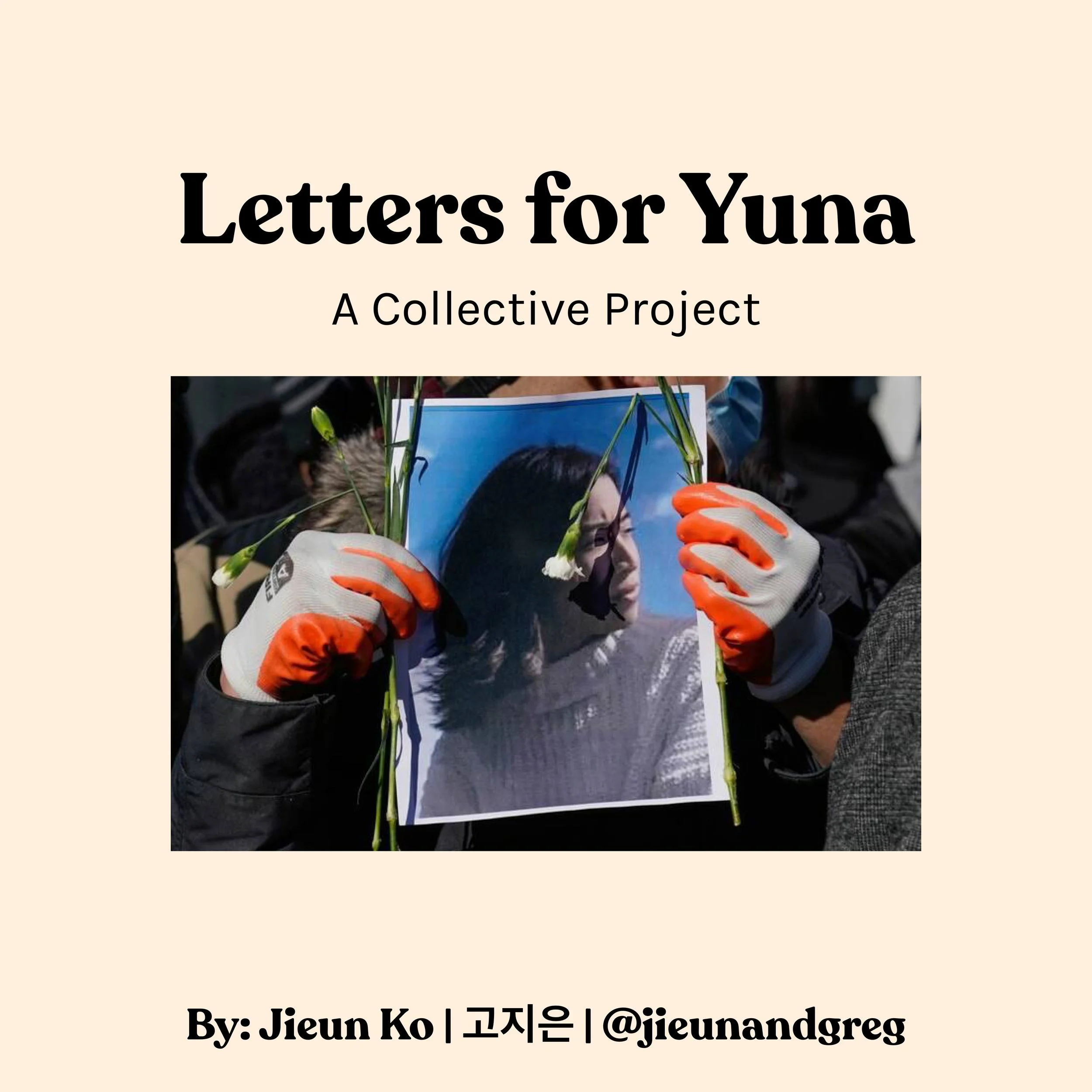


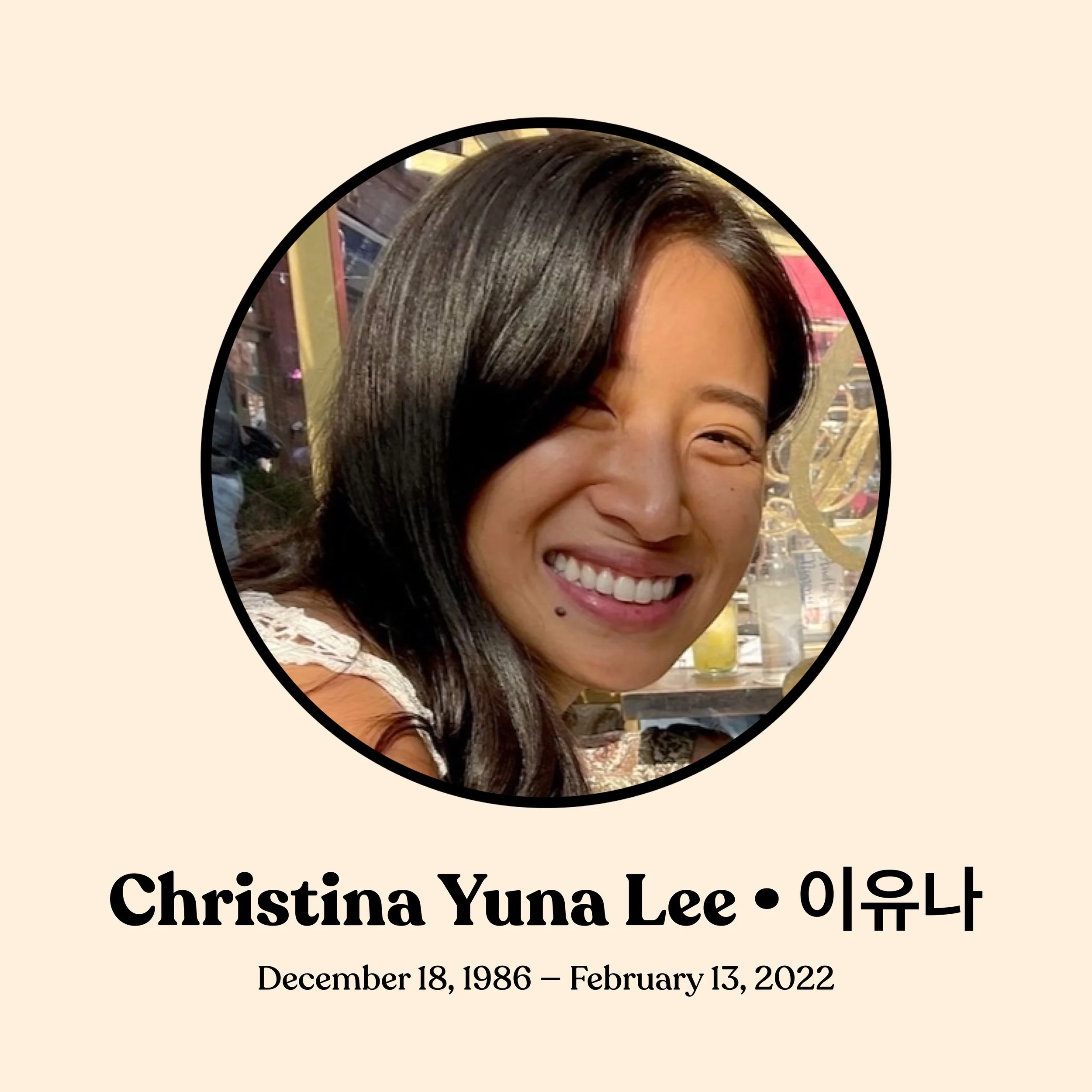
Christina Yuna Lee


Her name was Christina Yuna Lee. Her name was 이유나.

She died on Sunday, February 13, 2022. She was a Korean American woman. She was 35 years old.

She was a New Jersey native. She was a New Yorker. She was a Chinatown resident. She was a Rutgers University graduate. She was a Senior Creative Producer at Splice.

She was a daughter. She was a sister. She was a friend.

Yuna was beloved. She was bright. She was brilliant. She was artistic. She was creative. She had a way of making everyone she met feel seen and heard. She was the type of person everyone wanted to be friends with. Her friends described her as irreplaceable.

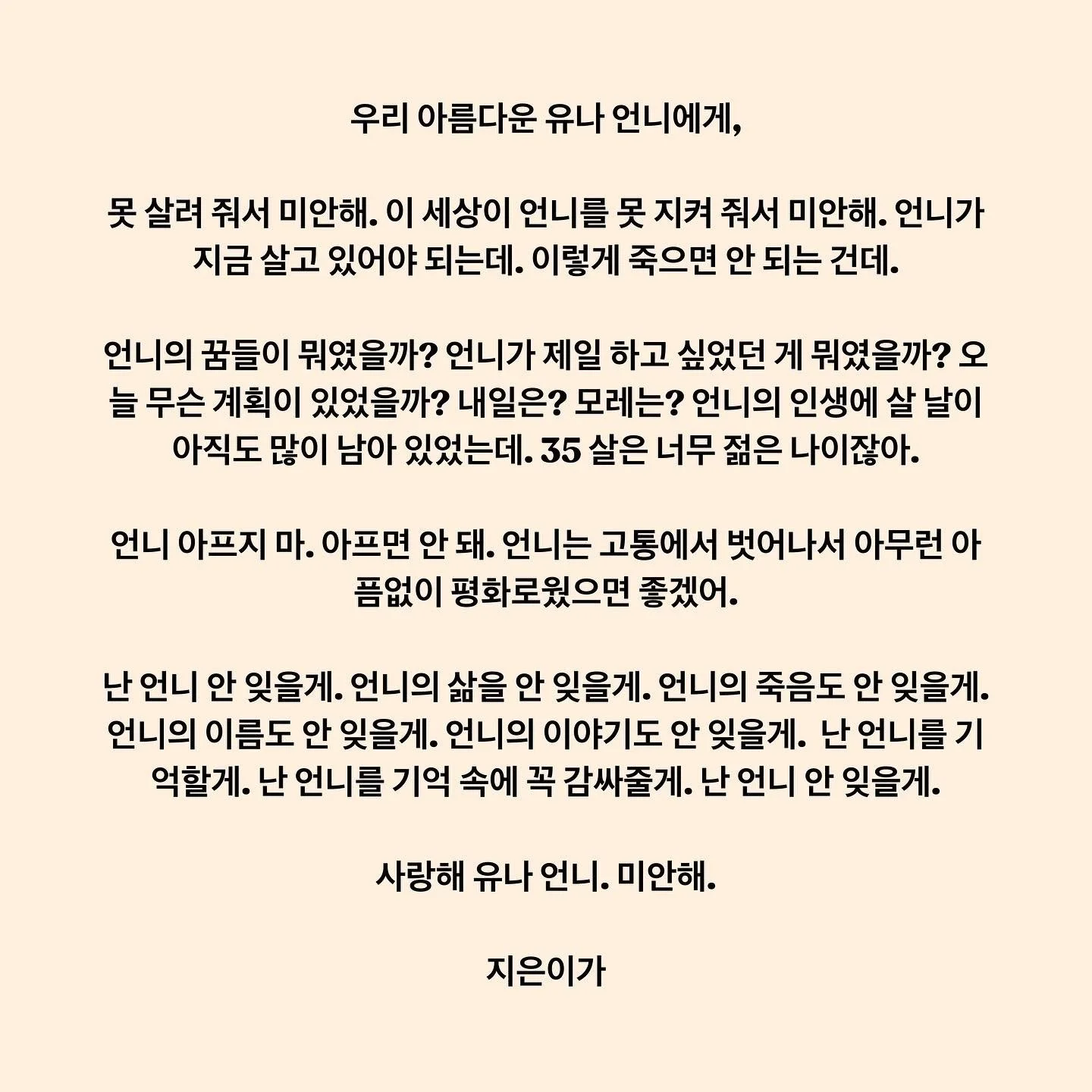
Here are a few stories that her friends from Splice shared. May we read these stories and remember the irreplaceable Christina Yuna Lee.

My sincerest thanks to Kenneth Takanami, Katie Smith, Matt Block, and Jordan Welner. Thank you for allowing me to share your stories.

Christina Yuna Lee forever. 우리 영원한 이유나. 🤍


Christina and I were fast friends. On her second week or so at Splice, we met around the corner of her new apartment to get coffee at Sunday to Sunday. She was excited about having her own place to listen to vinyl records, bu longed for our (then) closed office to reopen, so she could be around people again.

Chrstina started at Splice around the same time as the Asian hate crime shootings in Atlanta. It was an emotional and gutting introduction. We met on a call with the other Asians in our work community to support one another. Afterwards, I reached out to her and we talked about how we could galvanize this moment to do some really important work at Splice.

We bonded over a shared mission for a more inclusive creator space, among many other things. She hoped to start conversations around diversity and opportunities for creators of all backgrounds at our company. She formed the Art Appropriation Council after many hours of discussion about the place of Asians in the music community and how we, in our small little corner of the industry, could combat racism and appropriation.

After the Atlanta attacks, we and the other Asians at Splice formed a channel to support one another. The thought of folks we didn't know being senselessly murdred struck us all deeply. We had long conversations about how we could continue to be there for our Splice community. The last and most recent message in this channel was Christina wishing us all a happy Lunar New Year.

There is not much else to say. Christina was an irreplaceable presence. Hearbroken or devastated doesn't begin to cover it. "Now what?" is the question that keeps ringing — what do we do as a community? What could we have done differently? There are no answers. Just endless questions.

Life is fragile. Amidst all the headlines and takes and posts, don't lose sight of the human loss at the center of all of this. Hold tight those you love.

Christina forever. My thoughts to her family and many loved ones.

— Kenneth Takanami, Splice


Christina and I met through work (Splice) in March 2021 and I knew we’d become fast friends, or should I say more accurately, I wanted to become fast friends. Sitting in front of me was a kind, smart, cool, beautiful person… who wouldn’t want to be friends with her? And luckily, we became just that, having so much in common around our interests and how we see the world and we were both single gals in the city who loved to go out on the town and all that fun stuff. We just really bonded.

But the important point in all of that is I know it’s not unique to me. I know I’m one of countless people in the world who had that exact same experience with her. Maybe you’re not a single gal in the city, but you connected with her in a real way right off the bat because Christina made you feel heard and accepted and warm. What a special person, to have those abilities, to be so generous of spirit that you constantly make the people around you feel good.

Years ago a friend told me about this idea, that everyone’s personality and core has a different color light attached to it—pink, purple, blue, green, etc. and as you move through the world, you bond with certain people based on these colored lights, whether they’re the same or complementary colors, etc. and that there are a few special people out there that simply contain the whole spectrum of visible light—they bond with all the colors and brightly reflect all colors back.

I truly believe that Christina was one of those special reflective lights and all who knew her are so much brighter for it.

— Katie Smith, Splice


From the first time that we met about a year ago, the qualities that instantly stood out about Christina were how genuine, selfless and passionate she was. That is how I will always remember her.

Christina's dedication to empowering the 30+ producers on our team and the hundreds of sample creators and musicians worldwide evolved the way that we release packs on Splice. She was committed to amplifying creators' stories and fostering intentional representation for the communities with whom we work. This rang true from planning new sample labels to triple checking an email address to ensure that every creators' voice was heard as part of a pack story she was working on. No detail was too small.

When I met Christina for the first time in person last Fall, it felt like we had been friends for 10 years. When I asked her for visual artist recommendations for the album with my grandfather (with a very vague description) she hit me back in 10 minutes with a fully fledged pinterest board of ideas titled "Block Grandpa" so that she could better understand who might be a good fit. This was just the kind of person she was.

There really aren't any words to capture how unbelievably tragic, senseless and horrific this loss is. There is a saying, though, that I've held dear for over a decade: In Remembrance There is Life. I know that everyone who was fortunate enough to cross paths with Christina will continue to carry her light forward and honor her memory.

Rest in peace, Christina Yuna Lee, may your memory be a blessing.

— Matt Block, Splice


In fall of last year, I decided it was time to escape my apartment and give Splice’s recently opened Manhattan work space a chance. It was a Tuesday and although I didn't expect a crowd, I was surprised to find only one person tucked away in the back of the office. I was familiar with Christina but only as a friendly face on occasional zoom calls. We exchanged casual hellos and I took a seat nearby.

As I began unpacking my things Christina perked up asking "Is that On The Road!?" I was a little embarrassed to be reading Kerouac’s quintessential hipster bible but felt immediately at ease in conversation with Christina who excitedly shared that she had read it for the first time a year prior and how it sort of fueled her fascination with the city. We went on for at least 30 minutes talking about books and sharing recommendations and I knew right away that I was making a very special friend.

I was completely swept up in Christina's sincere curiosity and kindness. I was inspired by her confidence and openness especially given we'd never met in person. She then insisted on giving me a tour of the office, showing me were I could find all the snacks and other nicknacks.

After that day, we continued to text, share books and met up on a few occasions for drinks with friends. More recently, I asked her if she'd be interested in joining a small book club with some friends of mine, which she enthusiastically accepted. I was SO excited to be making friends with Christina. I got a strong feeling that this is the type of friend that will help me become a better person. I saw characteristics in Christina that I wanted to adapt myself and reflect to others. I'm so grateful for these memories and will never forget you Christina <3

— Jordan Welner, Splice


Seollal | 설날: Lunar New Year 2022


Growing up, my family never celebrated 설날. We probably didn't celebrate Seollal because my parents were young immigrants who were too busy working to make time to celebrate. We also didn't have a lot of family that lived in America, so there weren't a lot of people to gather and celebrate with.

It makes me sad to think about all that was lost for our immigrant family, and all that is lost for so many immigrant families, when they leave their home countries and start new lives in new places, with new histories, new customs, and new traditions. Unfortunately, it falls on us to keep our culture’s traditions alive.

A couple months ago, my mom started working, and today, on Seollal, she has to work at a bakery, from 8 am to 8 pm. I have a thousand feelings I haven't fully processed, but the general feelings are overwhelming grief, anger, and sadness.


I wish we could be together today. If we could've been together today, she would've woken up at 5 am and started cooking. She would've gone to 한아름 the day before to get all of the ingredients she needed to make 떡만두국 for all of us. She would have made the 만두 filling with pork, dangmyun , dubu, green onions, garlic, ginger, and fish sauce. I would have helped her make platefuls of dumplings, something I've been doing with her since I was a little girl. I would have heard the sound of a giant pot of beef broth boiling on the stove. And the smell of this delicious soup would have filled our home, and it would have filled my heart with a comfort and peace that can only be done with the food of my people.

My mom would have ladled out three bowls for us, and she would have saved the last bowl for herself — everyone else has to eat first. My dad would have crushed some 김 on top of my bowl. There would have been 반찬 covering the entire table: kimchi, myeolchi, moochae, ojingeo-jorim. And we would've eaten it for breakfast, because that's what Koreans do.

And I definitely would have forced my parents to play 윷 with us. We started playing yut together in 2020, and I love playing it with them because it brings them back to their childhood. And I like watching my parents play. They never get to play.


Seollal is a day to think about our ancestors — our loved ones that are no longer with us today. So I'm thinking about my 외할머니 and my 외할아버지 today. I'm thinking about my 친할머니, that I barely knew, and my 친하라버지, that I never met. I'm thinking of my dad's brother and one of his sisters today. Im thinking about her son, my cousin. I'm thinking about my 큰아빠 who passed away from cancer last August.

I’m also thinking about my family in Korea today — my 이모, my 삼촌s, my 숭모s, my 이모부, and all my cousins — that I would’ve spent every Seollal with, if I had grown up in Korea. I haven’t spent nearly enough time with them, and yet they feel so close I can feel them, even though we’re thousands of miles apart.


This is the first time I've ever intentionally celebrated Seollal, and while it’s been painful to hold all the losses, it’s also been incredibly beautiful to reclaim the day. I’m connecting with a Korean tradition that is thousands of years old. I’m reclaiming a holiday that was lost through immigration and assimilation. I’m connecting with my family, my people — past, present, and future — and I feel the weight and power of that today.

Today, Greg and I will be grabbing big, warm bowls of 떡국 from Haenyo, a Korean restaurant named after the legendary female divers from Jeju Island, South Korea. Next year, I think I’ll just take the days off, drive down to Virginia, spend it with my parents, and give myself the full space to observe the holiday.

I'm looking forward to celebrating many, many Seollals, for many, many years to come. I will be keeping these Korean traditions alive. It's my honor and my privilege to keep them alive.

Happy Seollal, friends. 새해 복 많이 받으세요. ❤️

Love always,
Jieun | 지은

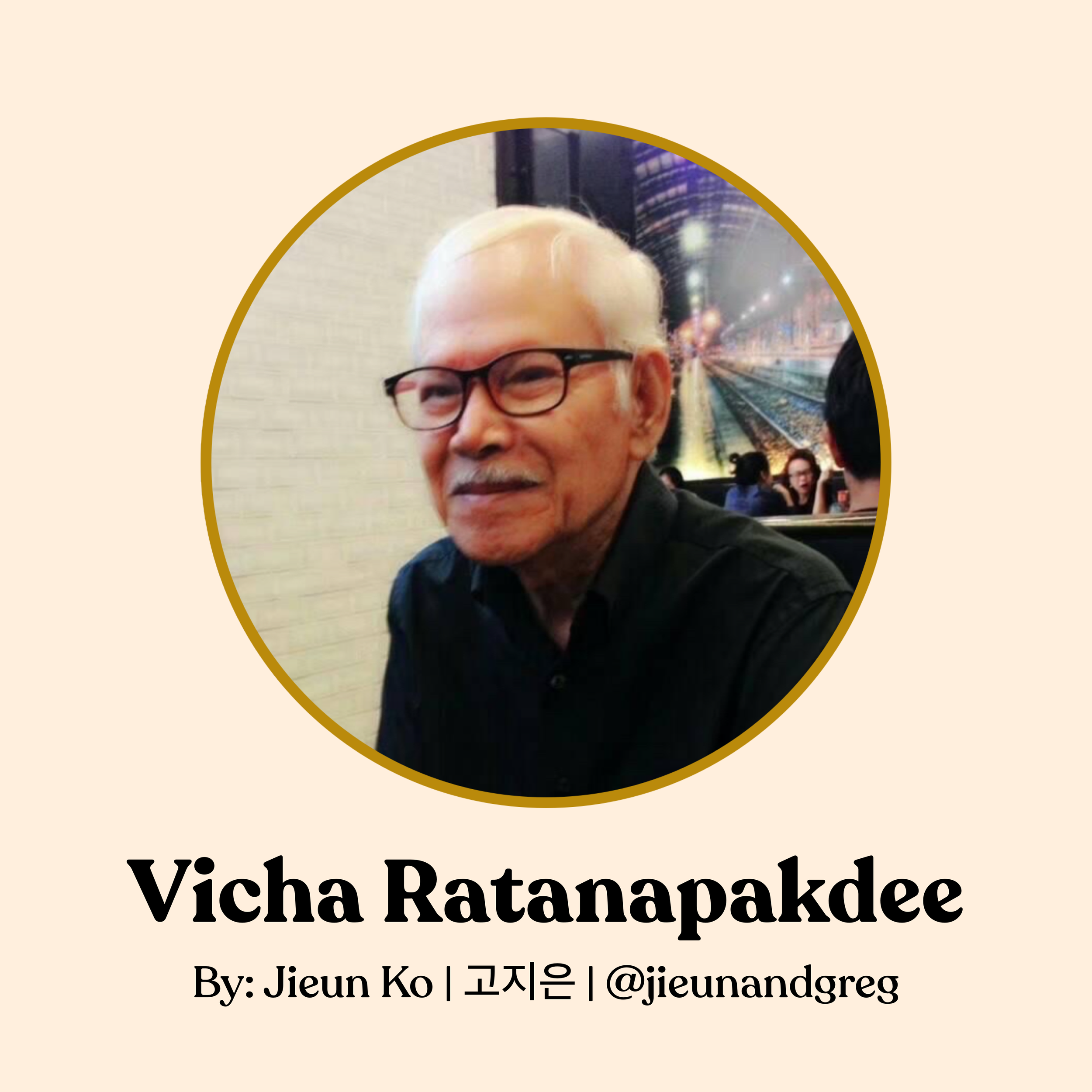
Vicha Ratanapakdee


His name was Vicha Ratanapakdee.

He died on Saturday, January 30, 2021.

He was a Thai American man. He was an immigrant. He was 84 years old.

He was a son. He was a grandfather. He was a father. He was a husband. He was a brother. He was an uncle. He was a cousin. He was a friend.

He had a wife. He had two daughters. He had seven brothers and sisters.

His wife’s name is Jintana. His daughters’ names are Monthanus and Pasama. His two grandsons’ names are Titus and Troy. His only living brother’s name is Surachai.

Vicha was affectionately known in his neighborhood in San Francisco as "Grandpa." He is affectionately known by the world as "Grandpa Vicha."

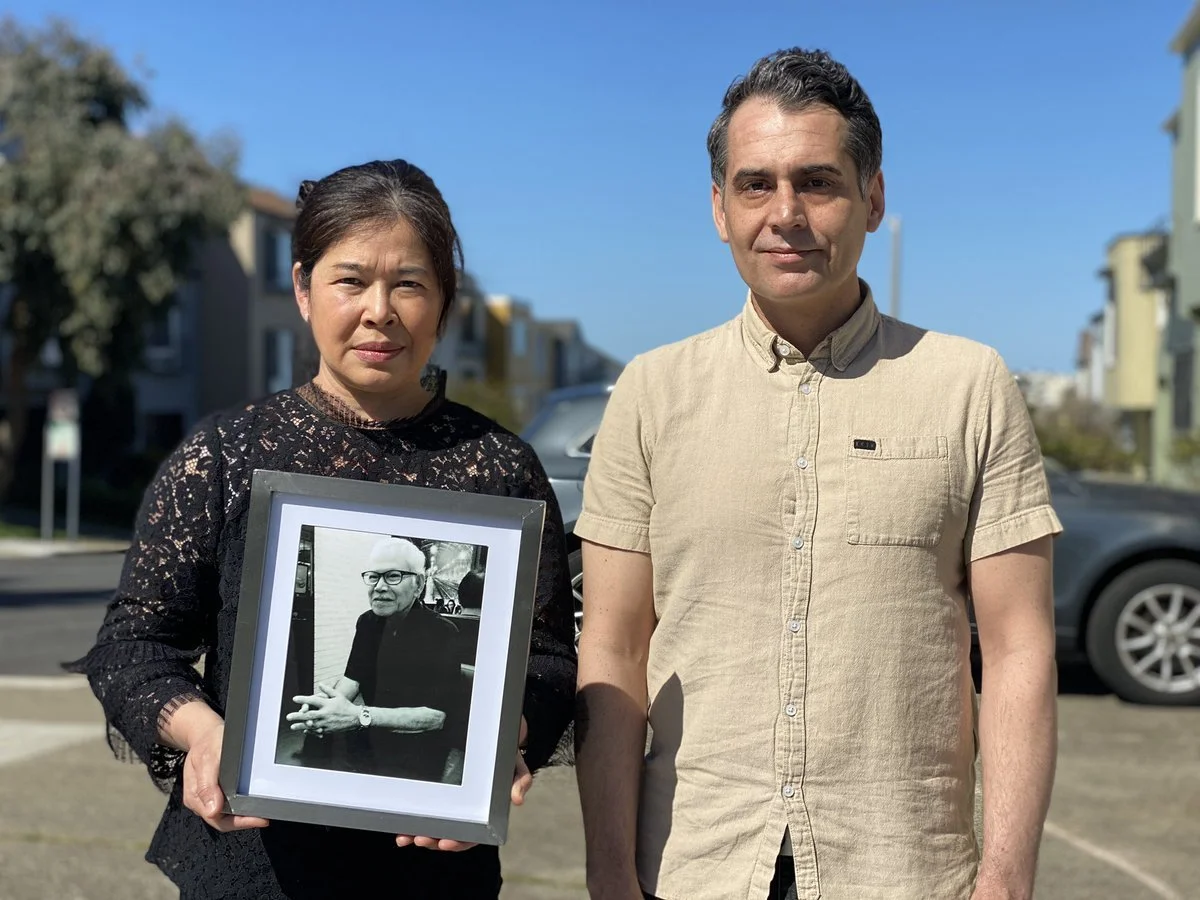
Vicha’s daughter, Monthanus Ratanapakdee, standing with her husband, Eric Lawson, holding a photo of her late father. (Photo from Dion Lim)

On the morning of Thursday, January 28, 2021, at 8:28 am, 84-year-old Grandpa Vicha was tackled to the ground at full speed, by a 19-year-old man named Antoine Watson.

As Vicha left his house to go on his daily morning walk, in his quiet neighborhood of Anza Vista in San Francisco, Antoine was sitting in his car with his girlfriend. When Antoine saw Vicha walking down Anzavista Avenue, he got out of his car, sprinted across the street, and violently slammed Vicha into the ground.

When Vicha's frail body hit the pavement, his head jerked upwards, and his head and body slammed into a garage door. A police officer eventually found Vicha lying in the street and rushed him to the hospital.

Vicha never regained consciousness. Two days after the brutal attack, he died from a brain hemorrhage.

Vicha died at 6:07 am at San Francisco General Hospital.

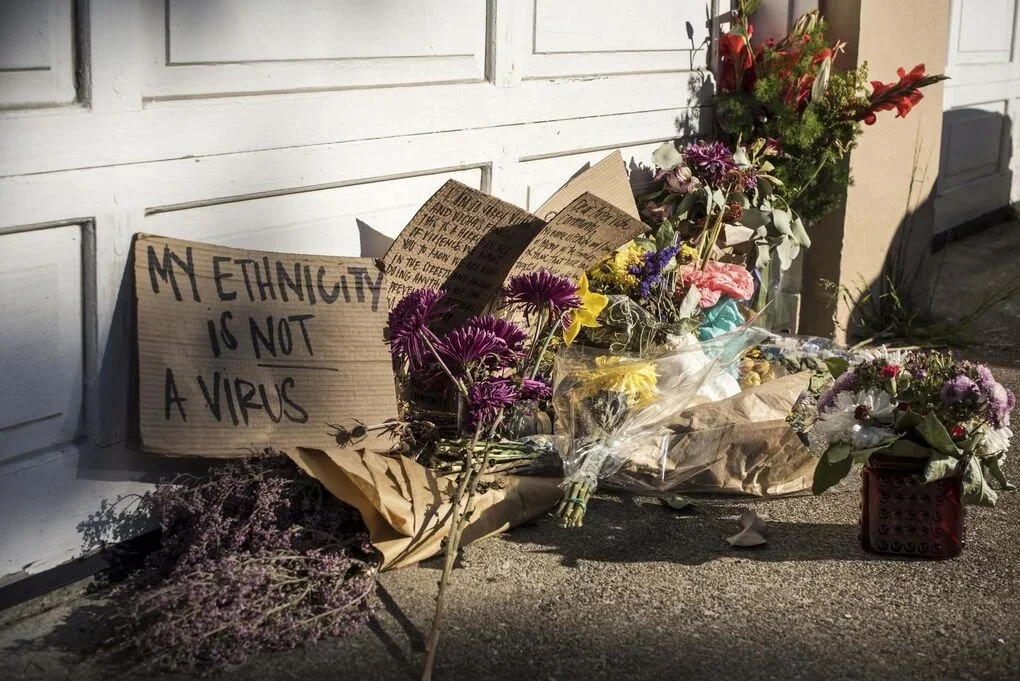
Neighbours and well-wishers left flowers and signs near where Vicha Ratanapakdee was killed. (Photo by Mark Leong of The Washington Post)

Vicha was short, thin, and nearly blind. He stood at 5 feet 6 inches and weighed 113 pounds. Nine months prior to the attack, Vicha had successfully undergone heart surgery. His doctor told him to walk every day for exercise.

Once it was safe for him to travel again, Vicha was planning on returning to Thailand — to eat his favorite southern Thai foods, and to see his youngest daughter, extended family, and friends.

---

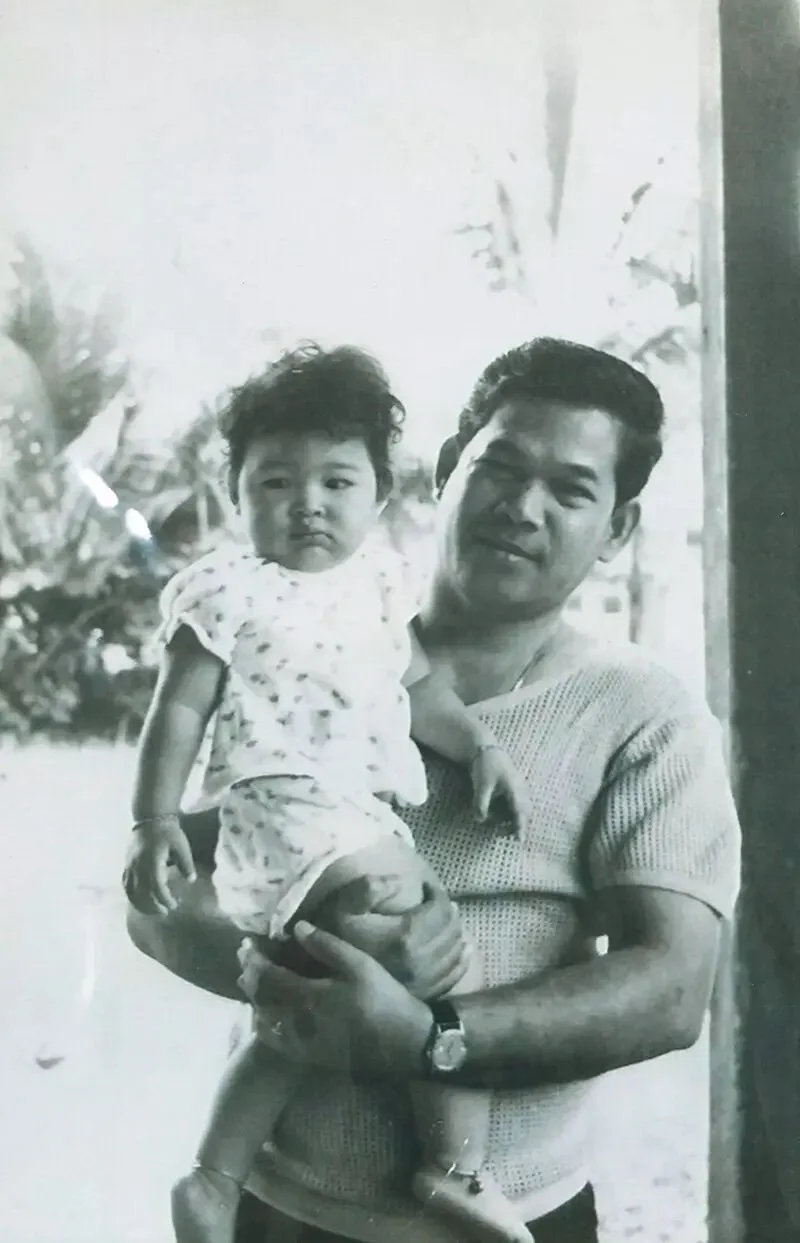
Vicha holding his eldest daughter, Monthanus, in 1973. (Photo from Monthanus Ratanapakdee via The New York Times Magazine)

Vicha was born on Saturday, December 5, 1936, in Thailand. He was one of eight children.

As a child, Vicha was very studious. He was one of the only people in his village who could speak English fluently. He was always curious about the world outside of his family's farm in Thailand.

Vicha studied at Thammasat University in Bangkok, one of Thailand’s most prestigious institutions. He went on to work as an auditor at Kasikornbank, one of Thailand’s largest financial institutions.

Vicha and his wife, Jintana, on their wedding day in 1970. (Photo from Monthanus Ratanapakdee via The New York Times Magazine)

Vicha got married to his wife Jintana in 1970. He retired in 1996.

Five years ago, in 2017, Vicha and his wife traveled to San Francisco to live with their eldest daughter, Monthanus Ratanapakdee, and their son-in-law, Eric Lawson, to help take care of their two grandsons, Titus and Troy. During that time, he became known as "Grandpa" throughout their neighborhood, where he made it his daily practice to go on morning walks every day.

Vicha holding his eldest grandson, Titus Lawson, in 2009. (Photograph from Monthanus Ratanapakdee via The New York Times Magazine)

Vicha was a devoted Buddhist. He loved tennis, golf, and music. He loved to travel the world.

Vicha's daughter said she will always remember her father as a gentle soul.

Vicha was his daughter's everything. He was her closest confidante. If she had something on her mind, she could always ask him for advice. He was the stable and calming presence in their family.

He was the nicest and kindest man.

Following Vicha's death, his daughter said: “My mother is suffering so much. She speaks to him, holding his picture, while praying. She suffers deeply from losing my father. It has also affected her health."

Vicha's family scattered his ashes in the Pacific Ocean near the Golden Gate Bridge. Vicha’s funeral was conducted by Thai monks at a Buddhist temple.

Remember Grandpa Vicha.

With love,
Jieun
 

Michelle Alyssa Go


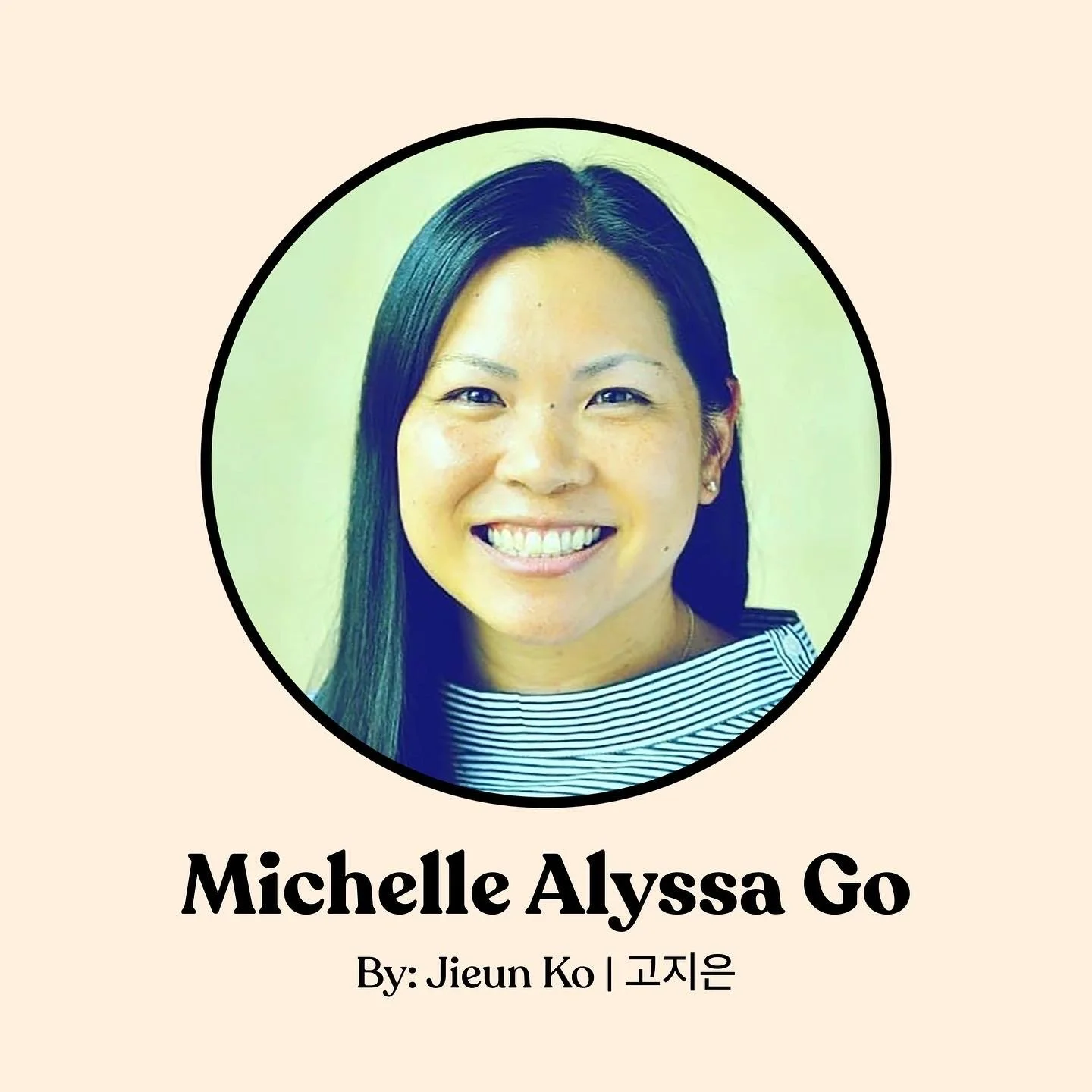
Her name was Michelle Alyssa Go.

She died on Saturday, January 15, 2022.

She was a Chinese American woman. She was 40 years old.

She was a Californian. She was a New Yorker. She was a neighbor. She was a sister. She was a daughter. She was a friend.

On December 29, 2021, she celebrated her 40th birthday and rang in the new year with her friends in the Maldives.

On the morning of Saturday, January 15, 2022, at 9:40 am, Michelle Alyssa Go was pushed in front of an oncoming subway train at Times Square while she was waiting for her train to arrive. As a southbound R train was approaching the subway station, a 61-year-old man ran towards her on the platform, with his arms outstretched in front of him, and tackled her onto the tracks. She died at the scene.

Michelle on vacation, with her parents Justin and Marjorie Go, and her brother Jefferey Go. (Via CNN)

Michelle was born on Tuesday, December 29, 1981, to Justin and Marjorie Go, in Berkeley, California. She grew up with her parents and her brother Jefferey in Fremont, California, in the East Bay area, southeast of San Francisco.

In 1998, Michelle graduated from American High School, where she was a cheerleader and a member of the Honor Society. In 2002, she graduated from UCLA with a degree in Economics and Public Policy. During her years at UCLA, she was a member of the Alpha Iota chapter of the Gamma Phi Beta sorority. A few years after graduating from UCLA, she moved to New York and attended the NYU Stern School of Business. In 2010, she graduated and received her MBA in Finance. For the last four years, she worked as a Senior Manager in mergers and acquisitions at Deloitte Consulting. Prior to her time at Deloitte, she worked at several other companies, including Citibank and Barclays Capital.


Michelle doing volunteer work for the New York Junior League. (Courtesy of Dayna Barlow Cassidy)


Michelle volunteered for the New York Junior League for 10 years — an organization committed to promoting volunteerism, developing the potential of women, and improving communities through the effective action and leadership of trained volunteers. She coached women and children on nutrition with the goal of stabilizing at-risk families struggling with homelessness. She helped prepare job candidates for interviews, helped them fine-tune their résumés, and offered them advice on their personal finances.

Michelle lived on the Upper West Side. She renewed her lease during the pandemic instead of leaving the city. She was committed to the city that she considered home.

She rode the subway regularly to meet up with friends and take spin classes in Tribeca. She had two neighbors named Olivia Henderson and Hannah Epstein. She regularly took care of Olivia's cat, Mimi. She loved to travel, and in different circumstances, she might have left the city over a three-day holiday weekend.

She was known in her apartment building for her big smile and her generosity. She was a natural leader. She was friendly. She was reliable, dependable, and fun. She was vibrant and full of energy. She was gentle and mild-mannered. She was kind and intelligent. She was remembered by her doorman for her kindness.

She was wonderful.

These were the words that were used to describe Michelle, by the many people who had the privilege of knowing her.

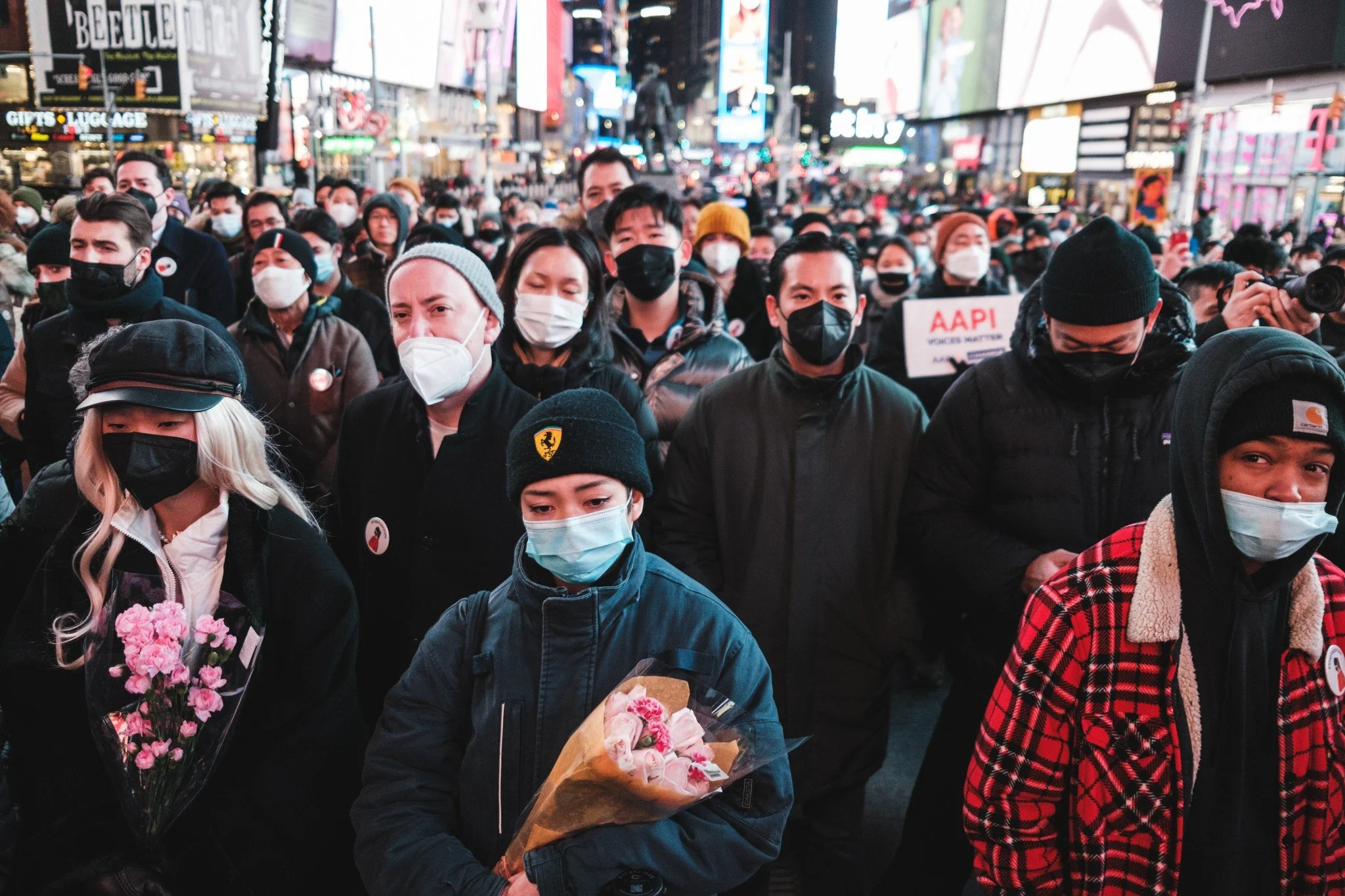
At Michelle Alyssa Go’s Vigil, more than a thousand people gathered at the Red Steps in Times Square to pay their respects. (Stephen Yang)

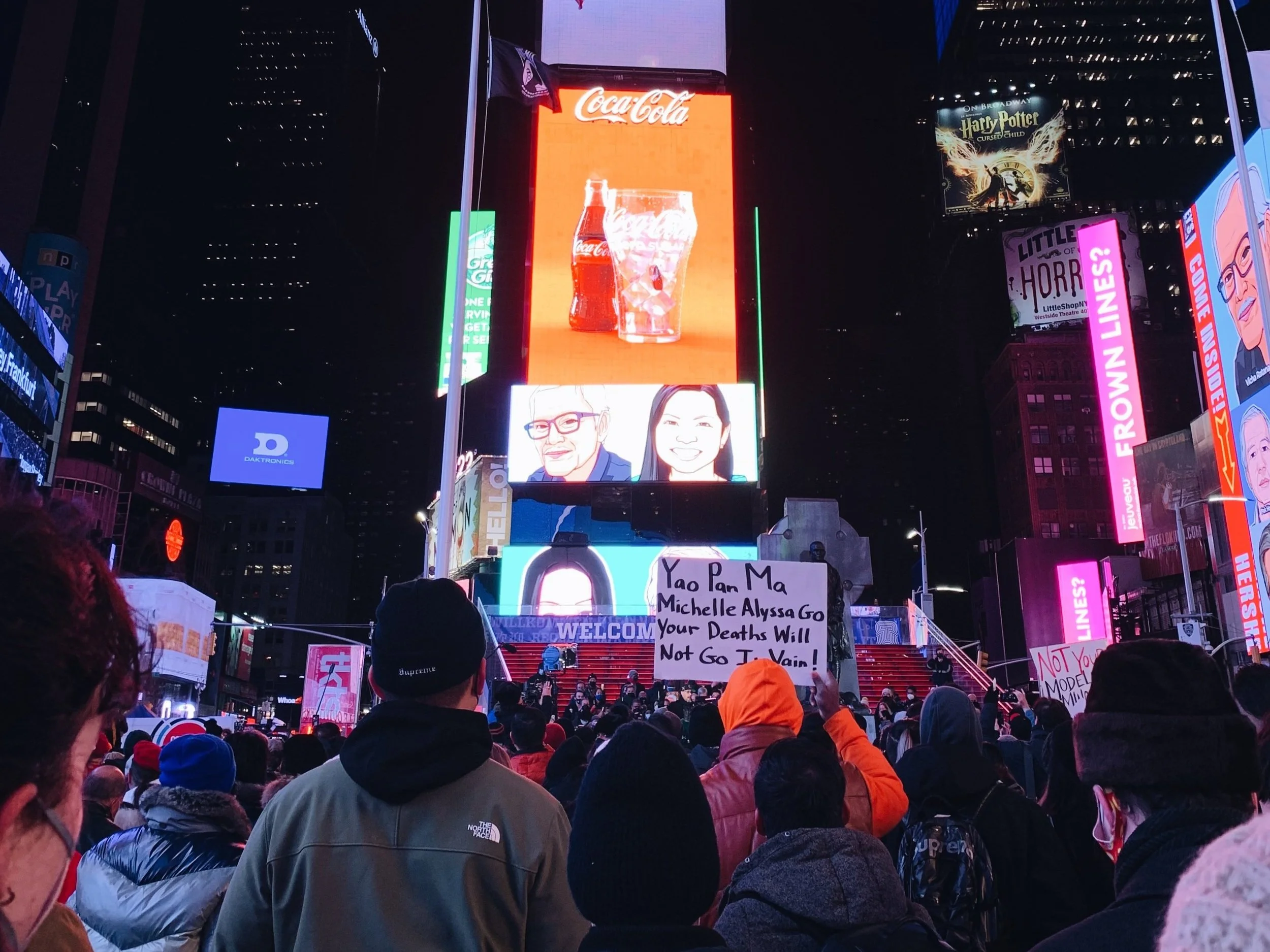
On Tuesday, January 18, three days after her tragic death, a candlelight vigil was held in honor of Michelle Alyssa Go, at the Red Steps of Times Square. The organization that put Michelle’s vigil together was Asians Fighting Injustice, a grassroots nonprofit dedicated to uniting the AAPI community in fighting against systemic injustice and hate, and reducing Asian hate crimes in our local communities. In frigid January temperatures, hundreds of people gathered in the middle of Times Square to honor Michelle’s life, grieve her death, and call upon our political leaders to take action.

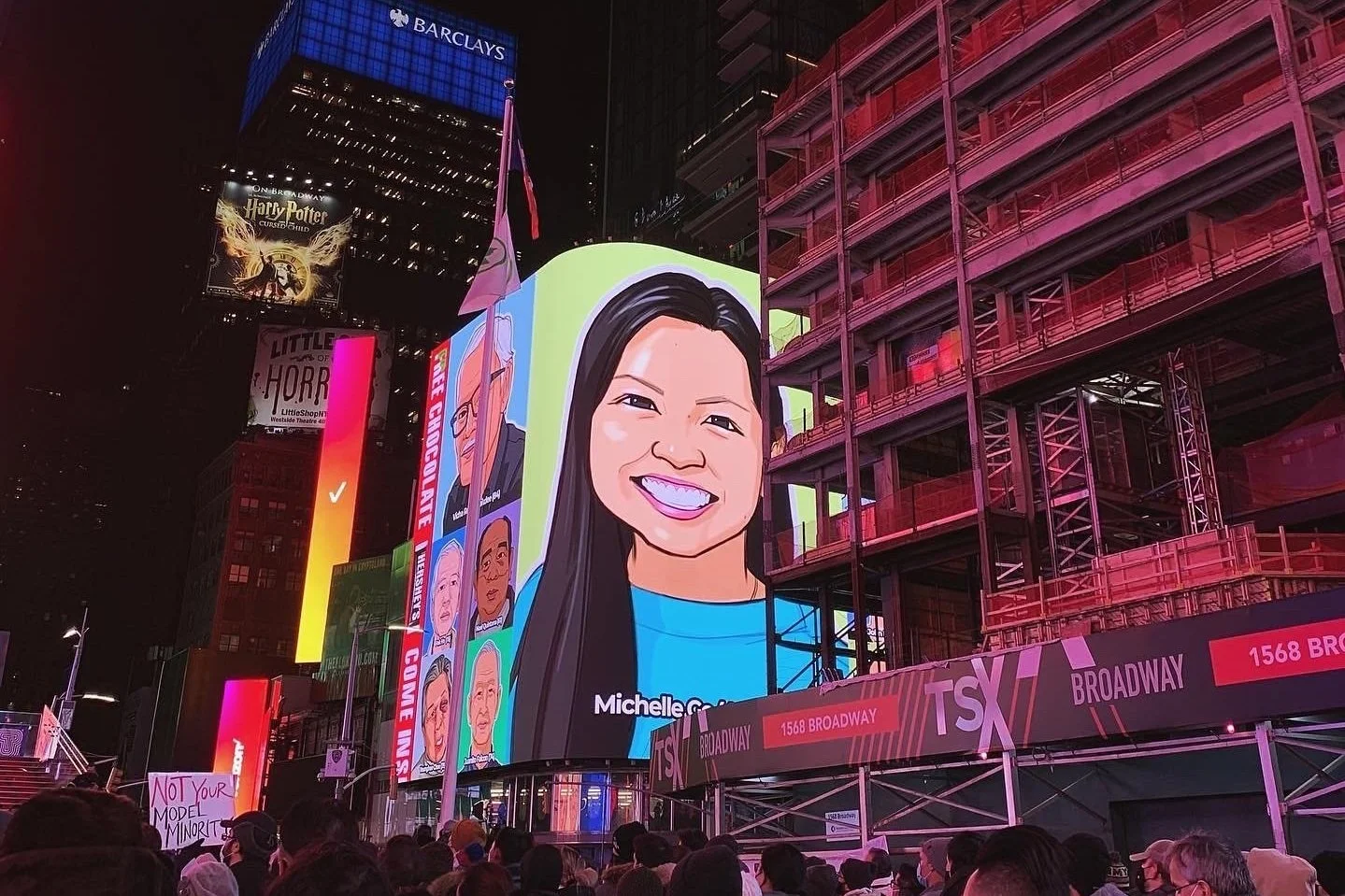
Michelle’s face was displayed in bright lights on a giant billboard in the middle of Times Square. Along with her face, were the faces of numerous Asian Americans who had also been the victims of anti-Asian hate over the last two years — 84-year-old Vicha Ratanapakdee, 75-year-old Pak Ho, 61-year-old Noel Quintana, 75-year-old Younghee Choe, and 74-year-old Juanito Falcon. These illustrations were all done by artist and activist, Jonathan Chang, who has been illustrating the faces of anti-Asian hate victims throughout the pandemic.

Michelle Alyssa Go’s face up in lights, alongside the late 84-year-old Vicha Ratanapakdee (top left), 75-year-old Pak Ho (middle left), 61-year-old Noel Quintana (middle right), 75-year-old Younghee Choe (bottom left) , and 74-year-old Juanito Falcon (bottom right). (Artwork by Jonathan Chang)

There were many speakers throughout Michelle’s vigil, but the best ones, by far, were Michelle's friends: Kim Garnett, Jae McGuire, Rakesh Duggal, and Urja Ohja (through Perry Yung).

Michelle’s friends choked back tears as they recounted memories of their beautiful, vibrant friend. Kim talked about how Michelle would have been mortified to know that she was getting all of this attention, with a massive billboard of her face in the middle of Times Square. She said Michelle was incredibly dedicated to her family. Rakesh said Michelle was a glass-ceiling breaker — nothing was too big for her. She always wanted to do the most challenging things. He said they had gone on at least 12 trips together. Urja said Michelle made sure she was okay on a work flight they took together because Michelle knew she was afraid of flying. She thinks of Michelle almost every time she’s on a flight. They all said she was incredibly brilliant, and the greatest friend that anyone could ever have.

Kim said she can't bring herself to refer to Michelle in the past tense yet. They were pandemic buddies. They went on walks around the neighborhood together. They ate dinner outside in the freezing cold together. They took SoulCycle classes together. She said Michelle loved New York, and they had both agreed that there was no place they'd rather be during the pandemic than New York City. The two of them had recently gotten season passes to Disney World together, but they had only used them once. She said Michelle would've been extremely disappointed to know that she wasn't able to use her season pass as much as she had planned.

Kim said she had just talked to Michelle the day before she died, on Friday, about something totally normal and mundane — New York weather.

It was a beautiful vigil. Volunteers passed out white roses and candles. Attendees held up signs. Broadway performer and songwriter Janet Noh performed her original song, “There’s a Place,” from her new musical, “Off the Boat.” Poet and music teacher Alice Tsui performed an incredibly powerful poem called, “We Are Golden” — reminding us to shine bright, because we are golden.

Last year, I received a letter in the mail from Korean American writer and poet E.J. Koh. It read, “It’s a joy to meet you. My grandmother told me all Kohs, ever distantly, are related. I hope you feel a bit of home in this letter.” Go is another transliteration of the family name Ko, Koh, or Goh.

While I never knew Michelle, she feels as familiar as a friend. We’re both Asian American women. We both live in New York City. We were both members of the Gamma Phi Beta sorority. And we share a family name. We are, ever distantly, related.

We are Asian American sisters. We are New York City sisters. We are sorority sisters. We are family name sisters.

We are sisters.

I wonder where she was going that morning. I wish she could’ve somehow, miraculously survived. I wish she had left the city for the weekend. I wish she had been running late that morning and skipped whatever plans she had made. I wish she had decided to take a taxi instead. This was not supposed to happen to her.

It would have been a joy to meet her.

As the days, weeks, and months pass, do not forget Michelle.

Remember Michelle Alyssa Go. Remember her face. Remember her name. Remember her story.

Michelle — I am so sorry. May you rest, in all your golden power and glory.

With love,
Jieun
 

My Name is Jieun: Reclaiming My Name


December 2019; Brooklyn, New York. (Eloise Photography)

As we close out the year, I want to share a big personal announcement with you all.

My name is Jieun.

I am reclaiming my name.

I will no longer be going by the name, "Chi." You can address me as Jieun from this moment forward.
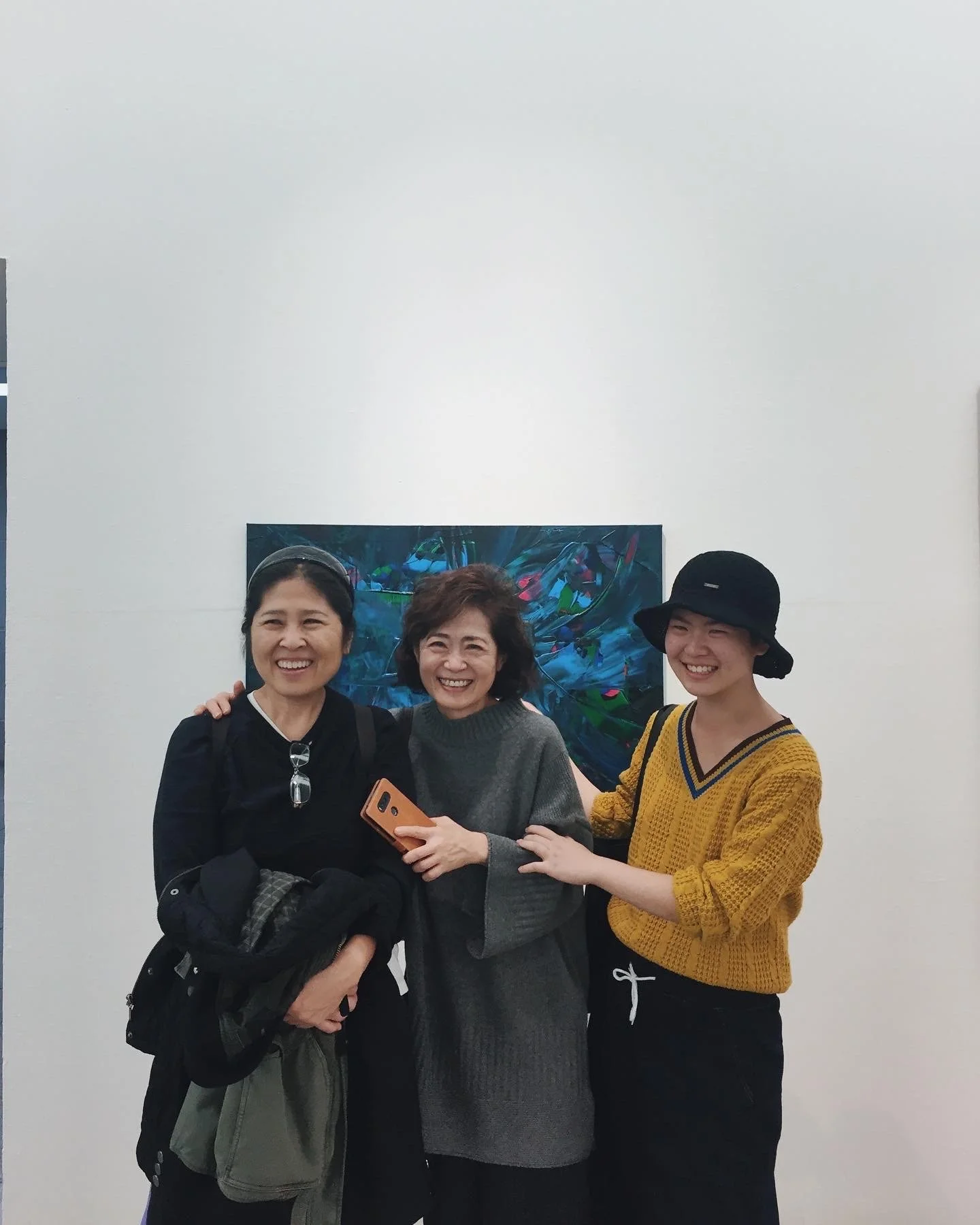
It feels incredibly vulnerable, exposing, and liberating to share this monumental life change with you all. Honestly, I wish I could've been Jieun in all circles, for my entire life.
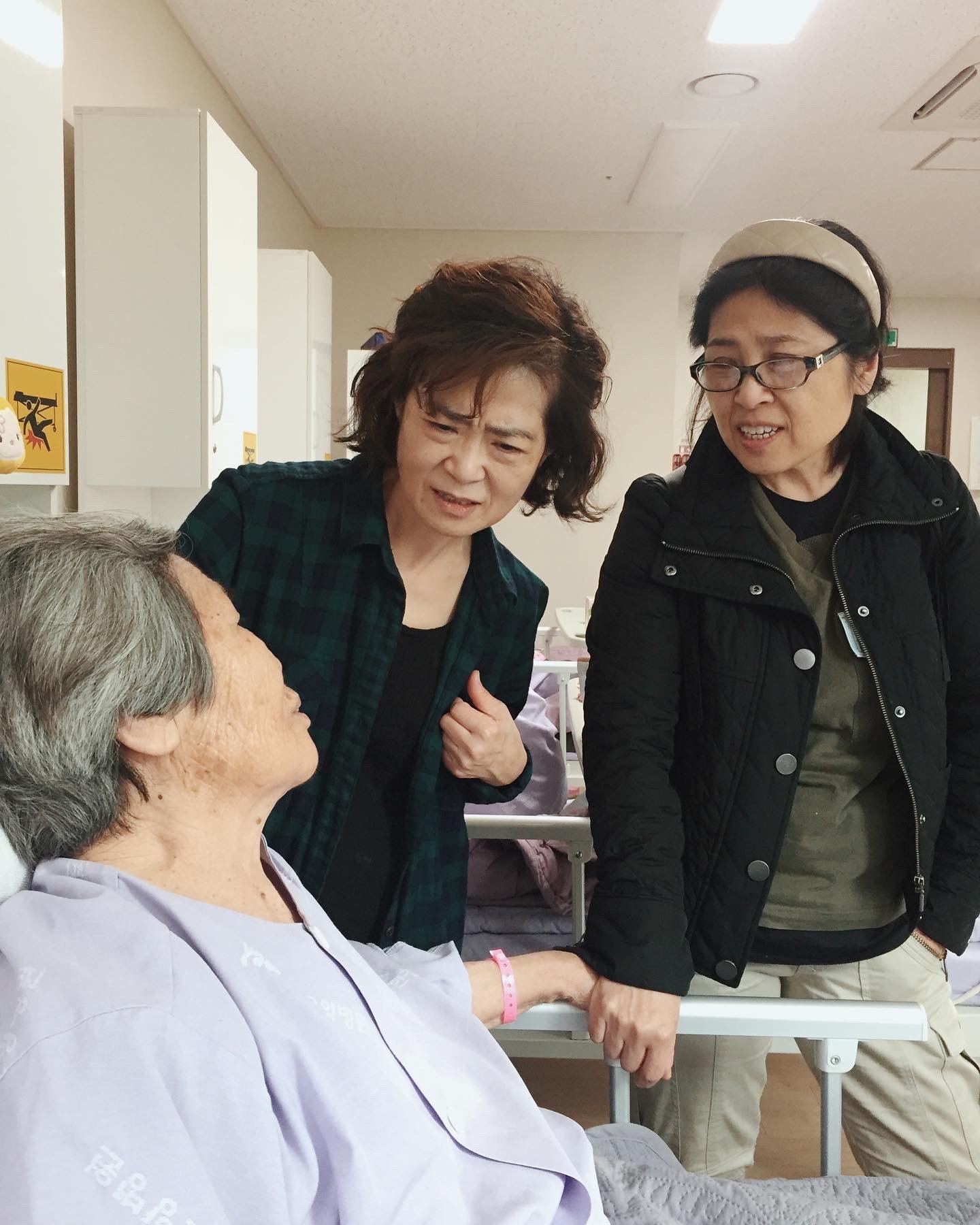
Over the past two years, as I’ve witnessed an exponential surge in anti-Asian racism, violence, and xenophobia, alongside the explosive representation of Asians and Asian Americans in mainstream media, music, and Hollywood, I have been digging deeper into my own anti-Asian racist experiences, and my relationships with my Korean and Asian identities. I've also been on a much longer journey — a 33-year-long journey — of trying to figure out who I am, where I come from, and how to exist in this world.

Let’s start from the beginning.

November 1988; Seoul, South Korea.

THE BEGINNING

On September 21, 1988, I was born at Severance Hospital in Seoul, South Korea. The name I was given at birth was 지은 (Jieun).

My name was given to me by my mother. Jieun means wisdom and mercy. My mom named me Jieun because she wanted me to grow in wisdom and generously share that wisdom with others. I actually only found out her personal reason for naming me Jieun a couple weeks ago, and when she told me, I cried.
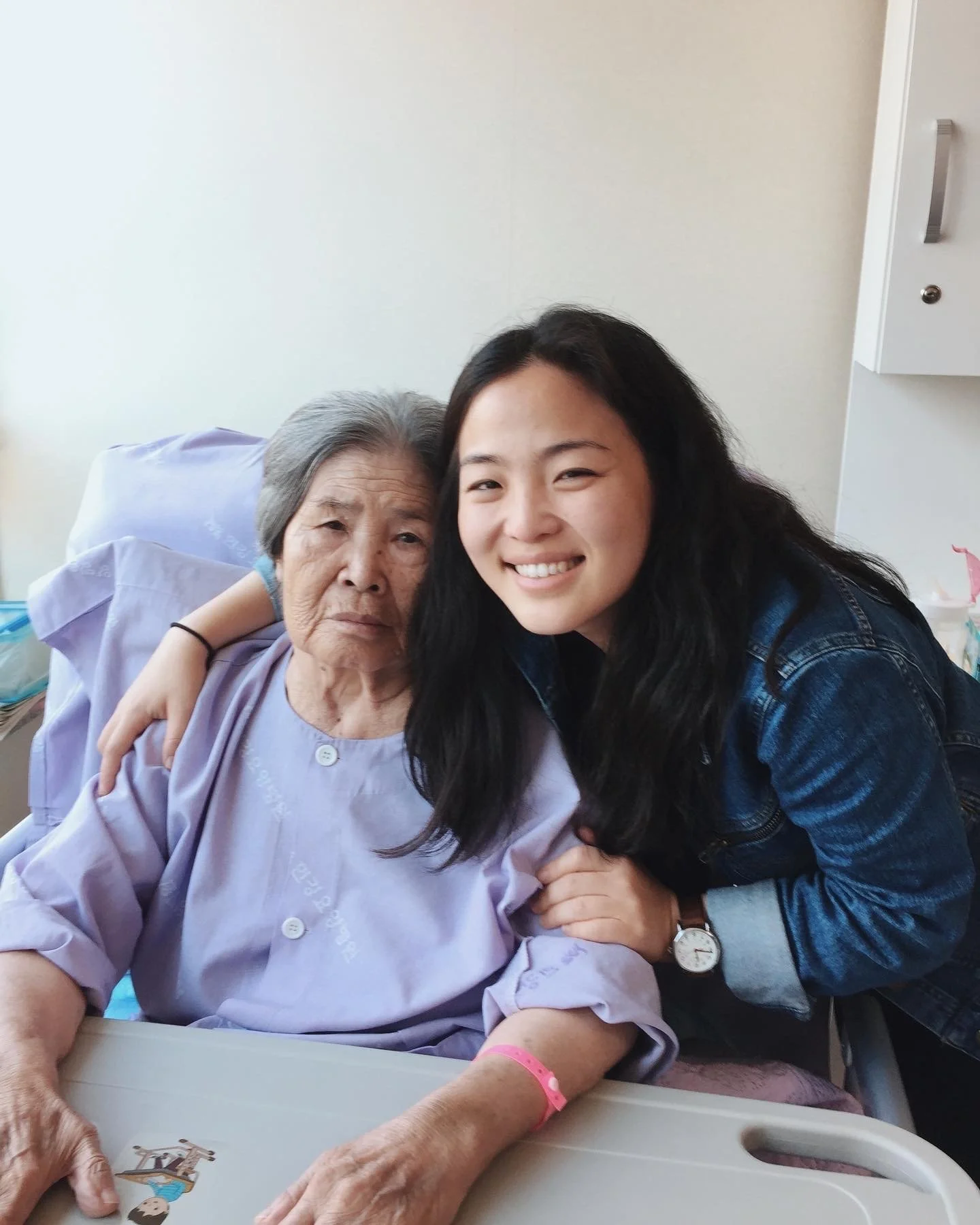
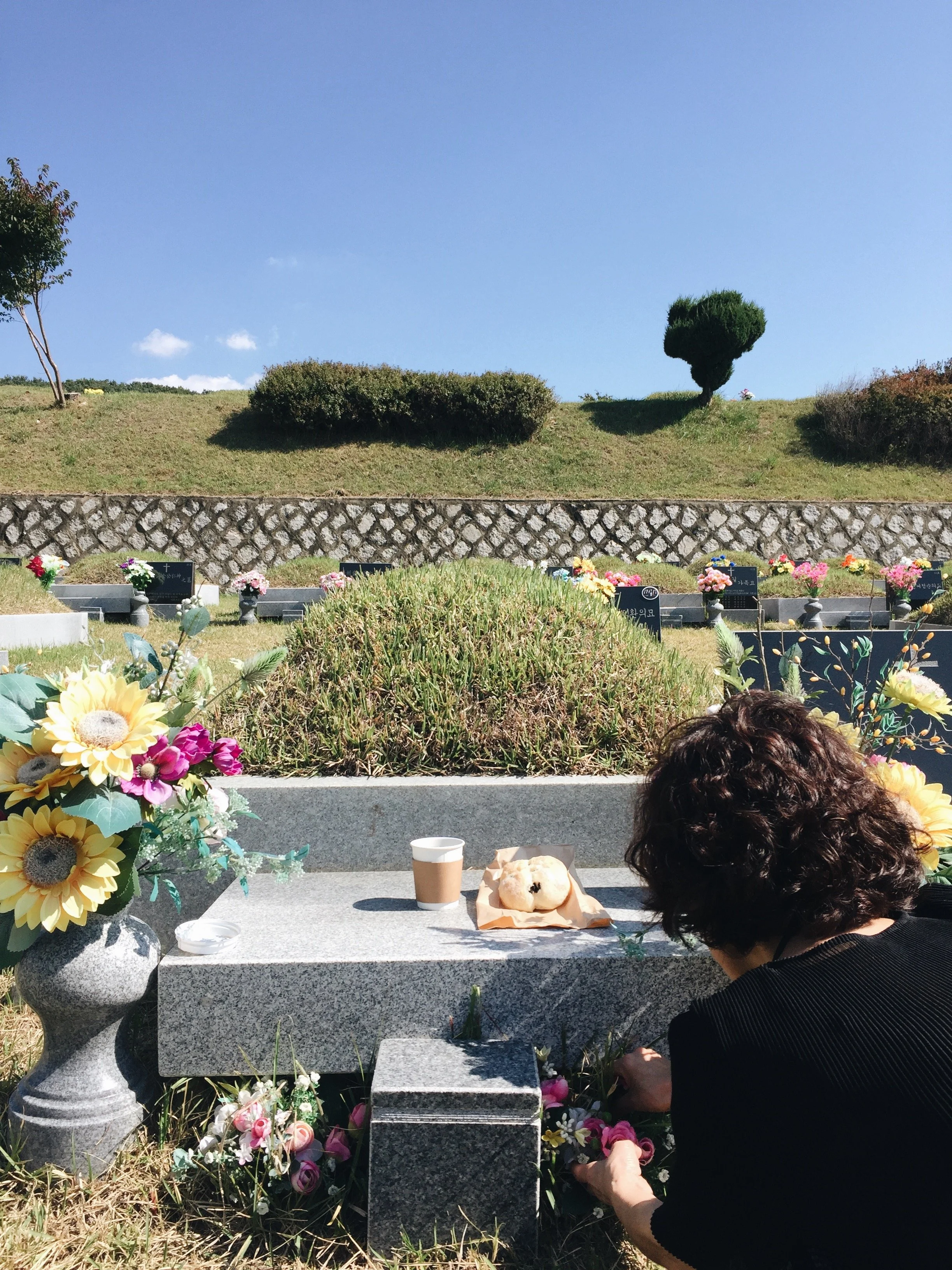
It felt like a fulfilled prophesy.

Before my mom and I immigrated to America in 1990, my mom went to the immigration office to get our paperwork filled out. The person assigned to helping my mom fill out our paperwork incorrectly transliterated my name. My name should have been spelled, “Jieun Ko,” but instead, it was spelled, “Chi Un Ko.”

Back in the late-1980s, the English language was still pretty foreign to the majority of Koreans. The immigration office employees did the best they could to help people spell their names, but without an official way of correctly transliterating Korean names into English, there was plenty of room for subjectivity and error.

And that’s how Jieun became Chi.

Circa 1993; Springfield, Virginia.

BECOMING CHI

In 1990, once we got to America, everyone I knew still called me Jieun. But my mom was still grappling with my American name, “Chi.” She wasn’t completely satisfied with “Chi,” and she knew she would have to decide on a name before I started school — a name that my teachers and classmates would call me. For the next two years, she kept searching for a better way to spell my name.

I remember as a kid, my mom had me try out the name "Ghi" for a while. But at some point during kindergarten, my mom changed her mind and told me I would be going by the name "Chi” from now on — a name I had never even heard before.

But I would only be called "Chi" at school. At home, I was still Jieun.

You can imagine how confusing this would be for a four-year-old, who just traveled across the world, moved to a foreign country, and is now living thousands of miles away from her family, her home, and everything she's ever known, with no say in the matter — and now she has to adopt a totally different name, but only in certain spaces.

As a little girl, when I would hear the name "Chi," I remember thinking, "That's not my name. My name is Jieun." I remember not liking the name "Chi" because it wasn't my name. But it was the name that was on my teacher's roster, it was the name on all my official documents, and it was the name my mom told me to go by at school. I was only four years old, so I didn't know how to make decisions for myself yet. I didn't know I had the right to go by what I wanted to be called, despite what was on my teacher’s roster. I didn't know how to spell "Jieun" either. I had no choice but to go by Chi. So in the fall of 1993, when I was in kindergarten at Cardinal Forest Elementary School in Springfield, Virginia, I was first referred to as "Chi."

At the age of four, I had to learn how to be Chi.

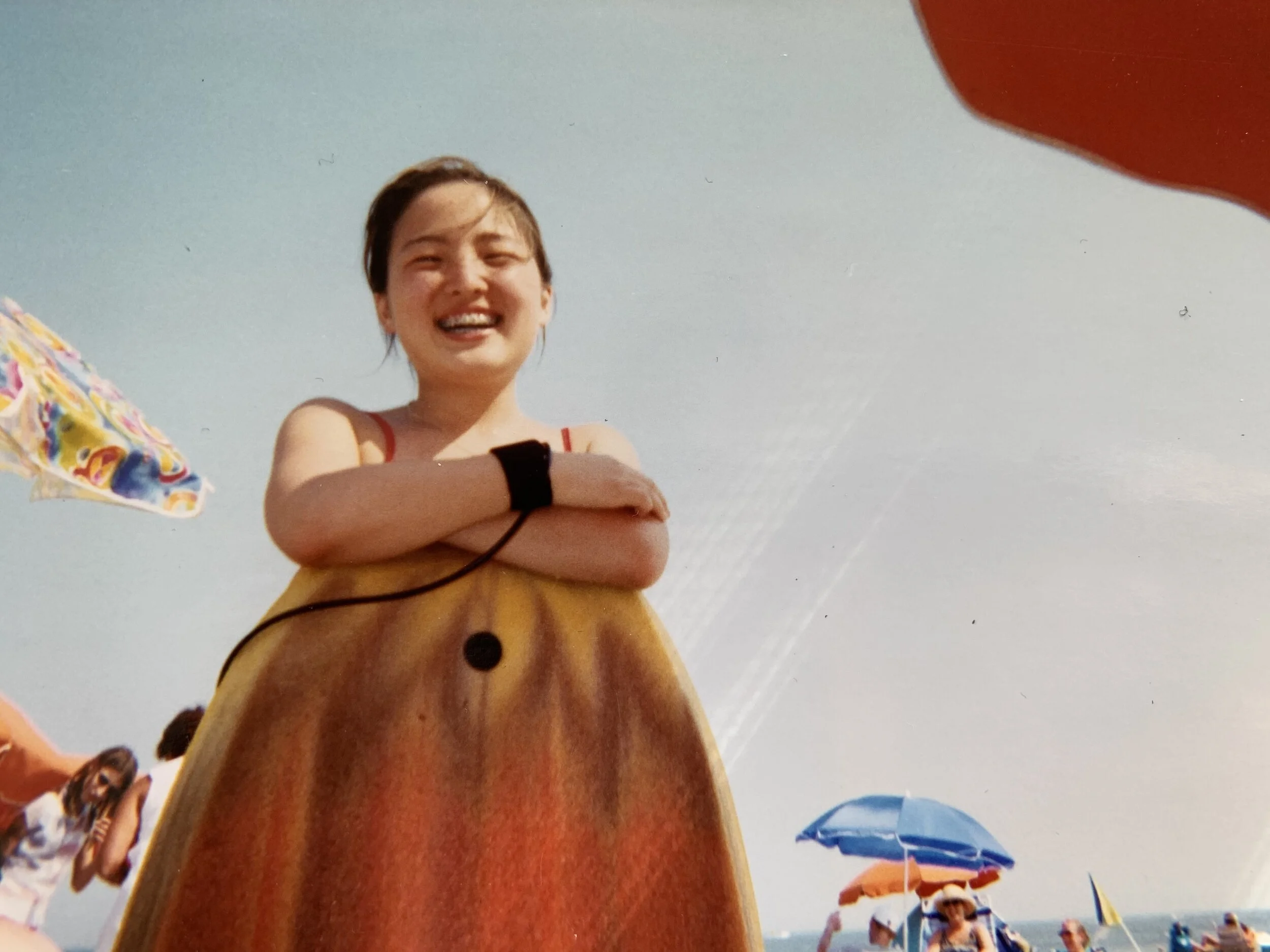
Circa Summer 2002; Ocean City, Maryland.

NAME-BASED RACISM AND TRAUMA

Growing up, and even into adulthood, I was the victim of endless name-based racism, bullying, and discrimination. People would taunt me at school, calling me Chiko, Chi-Chi, Ch-Ch-Ch-Chia, Chia Pet, Cheese, Chicharrones, Chunko — the list goes on. People would say, "Do you know your name means boy in Spanish?" "Oh my gosh, is your name Chi, as in *racist motion of making centered prayer hands while bowing* Chiiii?" "Ohhhh, like Chi, as in, your inner chi?!" "Doesn't your name mean energy in Chinese?" "I have a dog named Chi-Chi!"

Until this year, I’ve always introduced myself as, "Chi, C-H-I." I spell it out for people in advance because, 99% of the time, they don’t know what I'm saying. "Jean? She? Shy? Kai?” To make things easier for people, I’ve said, "It's like Cheese without the Z." At one point, I grew so frustrated with my name that I just told people they could call me whatever they wanted. "You can call me Chi, Chiko, Chi-Chi — you can even call me Bob!" I literally said this to people.

I hated when people asked me what my name meant.

When people asked me what “Chi” meant, I could never tell them what the meaning of my name was because, in Korean, Chi doesn’t mean anything. I also felt obligated to give people a whole explanation about the incorrect transliteration of my name. I would say, "Well actually, Chi is only half of my name. Un is the second half of my name. But actually, neither are the correct spelling or pronunciation of my actual name." My mom didn't make things easier for me either — when I asked her what my name meant, she would just say, "It means you're going to make your parents proud." So I would just tell people that, and they would usually respond by laughing and saying, "Wow, that's so Asian!"

I didn’t realize it at the time, but all of these experiences were incredibly traumatizing for me. My name was constantly being tossed around, butchered, mangled, mocked, and disrespected. I would have so much anxiety every time I had to introduce myself.

Because of all the name-based racism and trauma I experienced, I became incredibly embarrassed and ashamed of my name. I hated my name. And because my name and my Asian identity were inextricably linked, I also hated being Asian. The name “Chi” made me feel undeniably Asian, which was the last thing I wanted to be, in the overwhelming white spaces I grew up in.

Growing up in Northern Virginia, being Asian felt like something I was supposed to hide, erase, or get rid of. Being Asian made me feel different from everyone else around me, and I wanted so badly to fit in and be "normal." I wanted to be Kelly, Lauren, Madison, Ashley — literally anyone but Chi. Chi felt weird, ugly, and foreign.

Sadly, those three things felt synonymous to me.

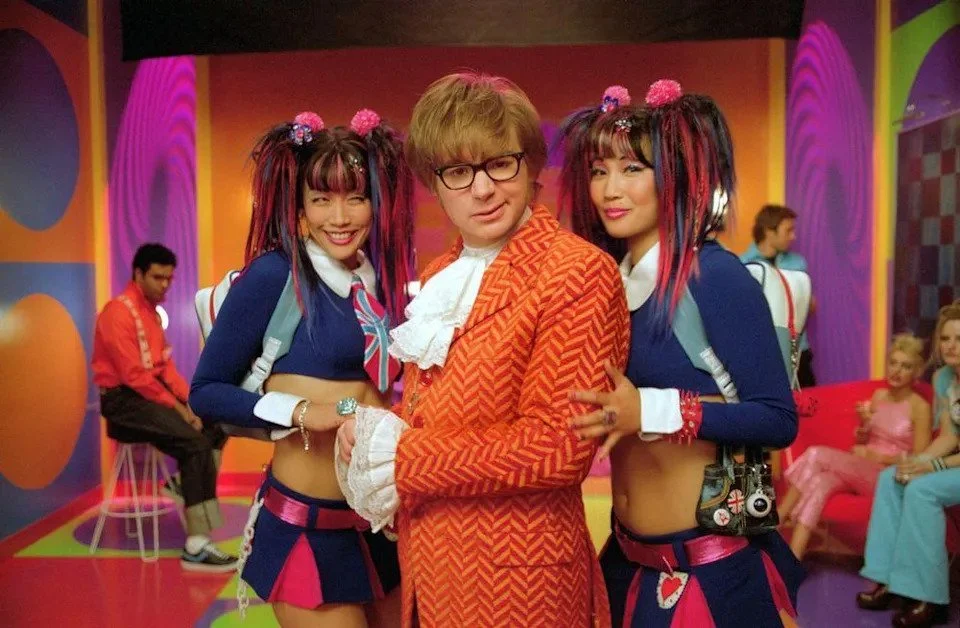
From left to right: Carrie Ann Inaba as Fook Yu, Michael Myers as Austin Powers, and Diane Mizota as Fook Mi. Austin Powers in Goldmember, released June 8, 1999. (New Line Cinema)

AMERICA’S WIDESPREAD ACCEPTANCE OF ANTI-ASIAN RACISM

Throughout my 31 years of living in America, anti-Asian racism has always been widely accepted and normalized. It has always felt like a universal truth that we all knew and understood — “We can all be racist towards Asians.” This gross, widespread acceptance of anti-Asian racism was constantly being reflected back to me, as well — at school, at my parents’ small businesses, at the grocery store, on TV, and in the movies.

It felt impossible to fight against it.

Because of the widespread acceptance of anti-Asian racism in America, there was no space for me to demand that people treat me and the Asian community with the dignity and respect we deserved. If I ever called people out for being racist towards Asians, they would gaslight me, criticize me for being “too sensitive,” and label me as “the angry Asian.”

No Asians in the movies or TV shows I watched ever stood up against anti-Asian racism either. The few times I ever saw an Asian person on screen, they usually were one-dimensional characters that were grossly stereotyped, mocked, and humiliated — Lane and Mrs. Kim in Gilmore Girls, Agent Lee in Rush Hours 1, 2, and 3, Fook Mi and Fook Yu in Austin Powers, Mr. Miyagi in The Karate Kid, Long Duk Dong in Sixteen Candles, and Mr. Chow in The Hangover. The list goes on and on.

There was no space for me.
There was no space for us.
We were made invisible.

Over time, our extreme lack of authentic representation in media, along with the widespread acceptance of anti-Asian racism in America, had a severe impact on the way I saw myself.

The way white people viewed me heavily shaped how I viewed myself, and gradually, I learned to internalize racist thoughts and beliefs against myself and my community.

I learned to hate the Asian parts of me.

I distanced myself as far as I possibly could from my Korean and Asian identities. I erased the Korean and Asian parts of me. I tried to act more white, look more white, talk more white, and be more white.

It’s like the saying goes: “If you can’t beat ‘em, join ‘em.”

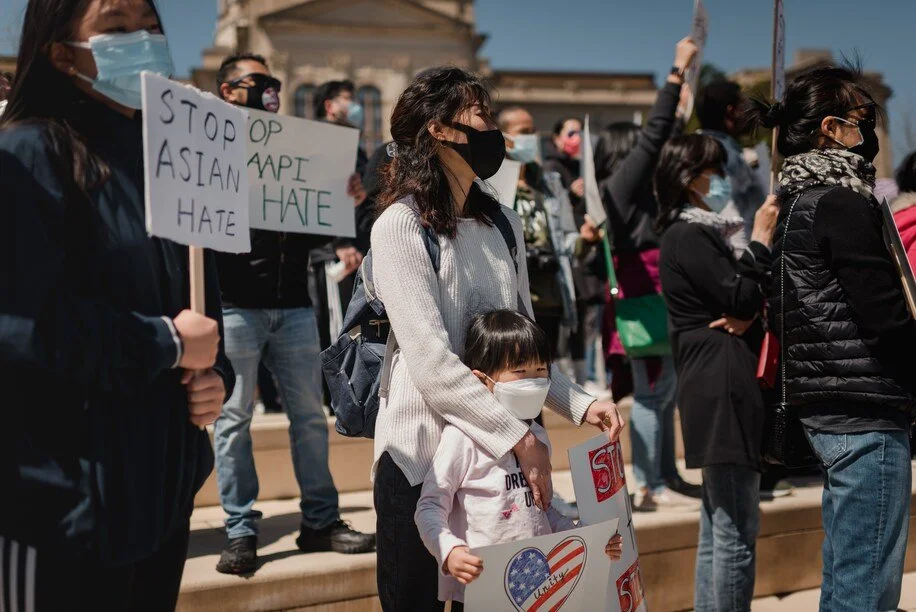
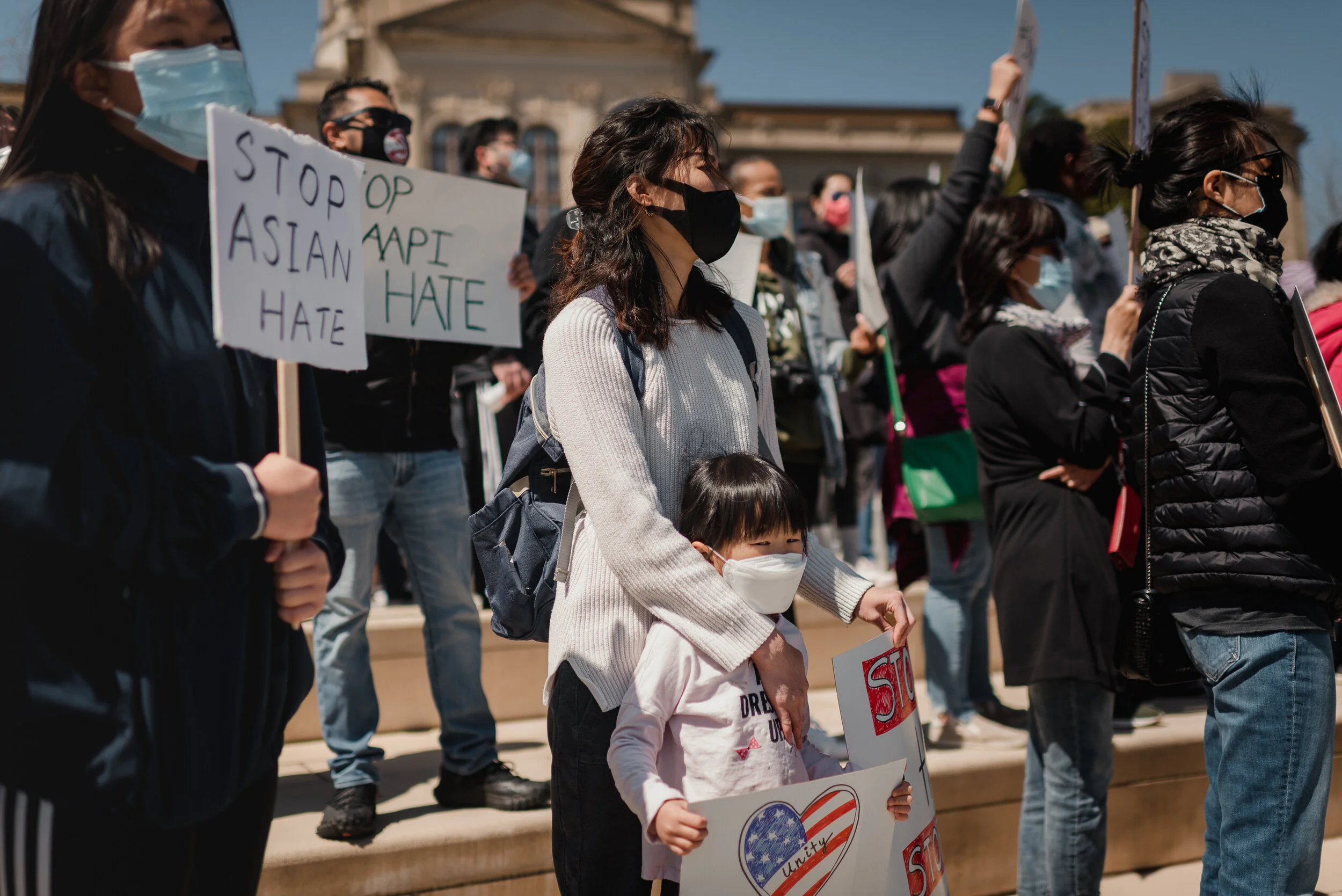
Susan Choi, 33, and her daughter, Arlene, 5, stand together during the #StopAsianHate march and rally in Atlanta on March 20. (Hannah Yoon for the Washington Post)

STOP ASIAN HATE

Over the last two years, throughout the pandemic, I’ve watched countless Asian Americans get brutalized in the streets, have their homes, vehicles, and businesses vandalized, and have racist hate speech hurled at them. I myself have personally experienced multiple incidents of anti-Asian racism this year. According to the organization, Stop AAPI Hate, the number of anti-Asian hate crimes that have been reported since the beginning of the pandemic until September 2021, has risen to a staggering 10,370.

I watched 61-year-old Noel Quintana get slashed across the face with a box cutter on the L train, on his way to work, while an entire train car full of people sat in silence and watched him bleed. I watched 65-year-old Vilma Kari get knocked to the ground and kicked in the face in Times Square, as she was walking to church for Easter Sunday service, while two doormen of a nearby luxury apartment building silently stood by, watched, and even closed the door on her. And along with the rest of the world, I watched Soon Chung Park, Hyun Jung Grant, Yong Ae Yue, Suncha Kim, Xiaojie Tan, and Daoyou Feng get shot and killed in the Atlanta spa shootings.

In the early hours of March 17, 2021, when I found out that, the night before, six Asian women had been targeted and murdered by a white man in a shooting spree at several spas in Atlanta, Georgia, something broke inside me.

I hated hearing news anchors and reporters mangle these women’s beautiful names. I hated hearing the sheriff’s captain validate the murderer’s egregious actions by claiming “he had a really bad day” and “he had a sex addiction.” I hated seeing this negative light being cast over these six women, just because of where they worked.

Even in death, these women could not be respected.

For an entire year, I watched thousands of Asian Americans get slain, day after day, while the news barely reported on any of it. For an entire year, I noticed that the only people who seemed to be concerned and enraged about Asian bodies and Asian lives were the ones within the Asian American community. For an entire year, I was reminded of my childhood, adolescence, and adulthood, and all the racism and discrimination I had quietly endured, and all the racism and discrimination I watched my parents quietly endure. For an entire year, I was reminded of all the times I swallowed my rage — because no one would protect us, speak up for us, or stand up for us.

When the Atlanta spa shooting happened, it was the end for me.

It was the end of staying silent when people blatantly disrespected my community. It was the end of hiding my Korean and Asian identities. It was the end of code-switching. It was the end of worshiping whiteness. It was the end of centering white voices. It was the end of holding onto relationships with people who did not make space for all of me.

It was the end of being embarrassed and ashamed of who I am.

The Atlanta spa shooting was also the beginning for me.

It was the beginning of reclaiming my Korean and Asian identities. It was the beginning of using my voice to protect my community. It was the beginning of being proudly, unapologetically Korean and Asian. It was the beginning of reclaiming who I am, and who I have always been.

It was the beginning of finally learning how to center myself in my own life.

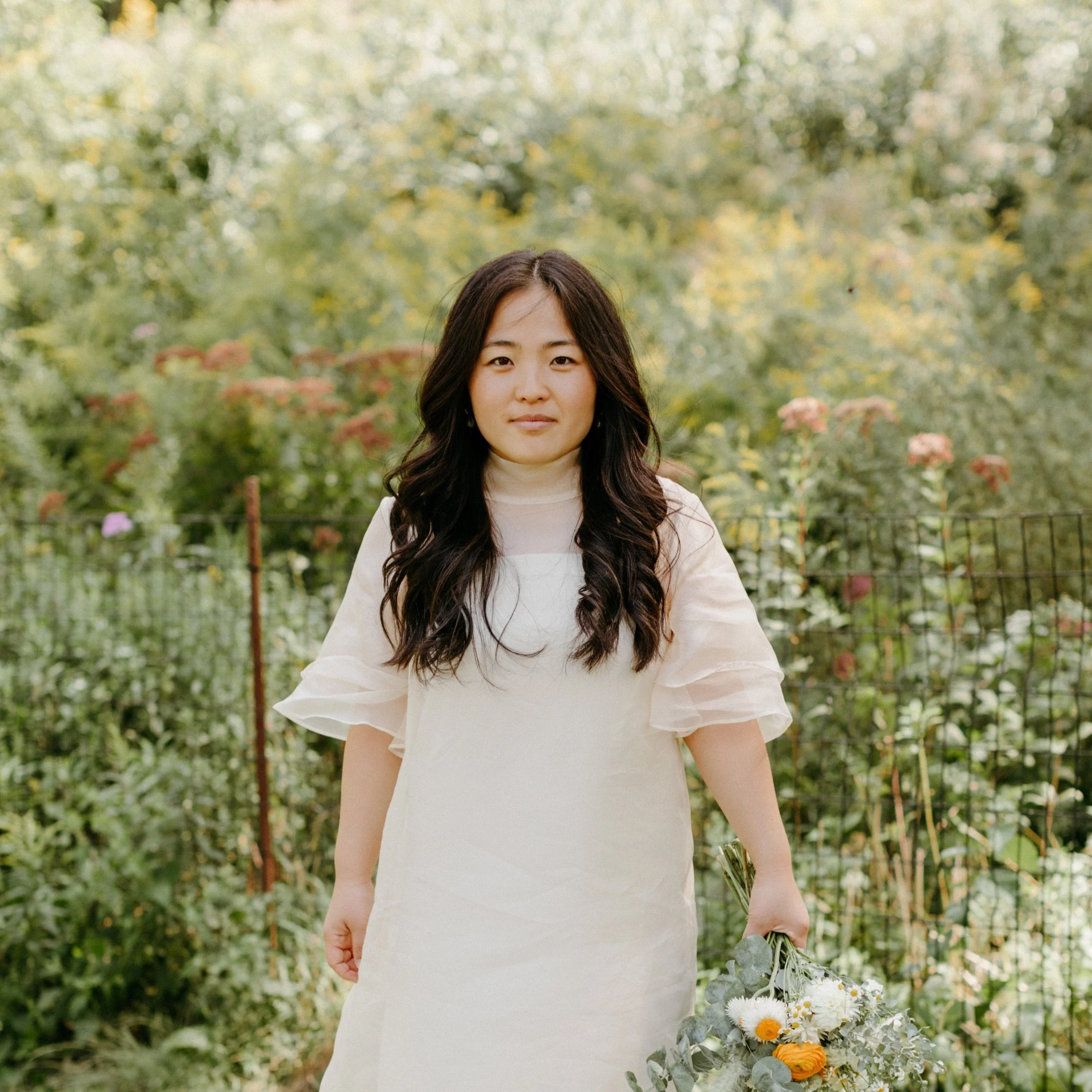
September 20, 2020; Brooklyn, New York. (Eloise Photography)

RECLAIMING JIEUN

Reclaiming my name is an act of resistance. It’s my way of proudly claiming who I am and where I come from.

To reclaim my name is to reclaim myself.

Through the reclamation of my name, I hope to shift the perception of what a normal, American name actually is. I hope to give other Asian Americans and people of color the space to resist assimilation, cultural erasure, and self-erasure, and firmly hold onto their cultural roots. I hope to give other immigrants and immigrant kids the space to be proud of their beautiful names and the rich cultures they come from. And I hope to inspire others to stay true to who they are, and not contort themselves for the sake of others.

I want to reclaim Jieun because she is me, and I am her. I want to be one person in all spaces — not one person constantly code-switching between two cultures, two worlds, and two identities. I want to reclaim Jieun because I want to proudly be who I am, and who I've always been. I don't want any part of me to be altered or erased, for the sake of making other people who are unfamiliar with Asian names feel more comfortable. I deserve to feel comfortable in this one life — in this one body I've been given.

In the words of Thandiwe Newton in the reclamation of her own name earlier this year:

"I'm taking back what's mine."

The truth is, our names are, and have always been, beautiful.
We are, and have always been, beautiful.

To my parents, I am Jieun. To my family, I am Jieun. To my aunts, uncles, cousins, and grandparents, I am Jieun. To any Korean I have or will ever meet, I am Jieun. I have always been, and I will always be, Jieun — to them and to me.

Jieun is a beautiful name. It is my name. And it feels like home.

Thank you for joining me in this monumental transition, friends. Please feel free to reach out to me with words of encouragement, support, and love.

Love always,
Jieun Ko


December 12, 2021: Anti-Asian Racism on the F Train


Earlier this week, on Sunday, December 12, 2021, I witnessed, intervened in, and was a victim of anti-Asian racism, verbal harassment, and verbal assault.

I was boarding the F train at the Jay Street MetroTech stop in Brooklyn going towards Manhattan. I had just missed the previous F train, so I had to wait on the platform for 10 minutes for the next one to show up, so I talked to Greg on the phone while I waited. When the F finally arrived, I got on the train, and while I was still talking to Greg on the phone, I saw and heard an altercation happening at the other end of my train car. An Asian woman — probably in her late twenties / early thirties — was being verbally assaulted by a man and a woman — probably in their late thirties or early forties — at the other end of the train car. The altercation was already happening when I got on the train, so it must've started at the previous stop. I quickly walked across the train car to her, to offer my protection and defense, and to just be a presence of solidarity for her. I abruptly hung up on Greg and said, “Hey, I gotta go.”

The man and the woman were yelling at the Asian woman, "FUCKING STUPID ASS BITCH! WHO THE FUCK DO YOU THINK YOU ARE?! SHUT THE FUCK UP!" They yelled at her repeatedly, from three feet away on the same bench on the train.

There was a man standing at the pole between them and he intervened on her behalf. He told them to stop screaming at her, and when he did, the male aggressor started yelling at the man standing at the pole, screaming literally two inches away from his face saying, "SHUT THE FUCK UP! THIS HAS NOTHING TO DO WITH YOU! I WILL PUNCH YOU IN YOUR FUCKING FACE IF YOU DON'T SHUT THE FUCK UP! I WILL BEAT YOUR ASS! I DARE YOU TO KEEP TALKING! SEE WHAT HAPPENS!" The man holding onto the pole kept saying, "This woman did nothing wrong — leave her alone!"

While these two men were in conflict, I turned to the Asian woman and asked, "Are you okay? What happened?" She didn't answer. She was crying. She looked furious, hurt, and scared. She had turned away from her aggressors and was now just staring straight out in front of her. She seemed to be having a trauma response to what was happening to her — she was stuck in freeze mode. I don't think she could process my questions, so I started looking for solutions to get her out of the situation. I asked her if she wanted to move over and I could sit between her and the people who were screaming at her. I asked her if she wanted to move down the train car to another bench, further away from them. She didn't say anything. She just kept crying and staring ahead. She seemed to be a quieter, more soft-spoken woman. I wonder if she didn't want to get up and move because she hadn't done anything wrong. I wonder if she wasn't able to process anything I was saying to her because she was living her worst nightmare.

I intervened and told her aggressors to stop yelling at her. Then the two aggressors started verbally assaulting me. "WHO THE FUCK ARE YOU?! THIS IS NONE OF YOUR FUCKING BUSINESS! YOU DON'T EVEN KNOW WHAT'S GOING ON HERE! MIND YOUR OWN FUCKING BUSINESS!" I said, "You made it my business when you decided to start yelling at a stranger on the train!" They said, “YOU’RE THE ONE WHO WALKED ALL THE WAY OVER HERE FROM WHERE YOU WERE SITTING! YOU SHOULD’VE JUST STAYED OVER THERE. THIS HAS NOTHING TO DO WITH YOU!” I kept repeating myself, "You made this my business when you decided to make a scene on the train!" And then they said, “YOU'RE ONLY HERE BECAUSE SHE'S ONE OF YOUR KIND. FUCKING BITCH. THAT'S WHY YOU KEEP SEEING YOUR KIND GETTING BLACK EYES IN THE NEWS. MIND YOUR OWN FUCKING BUSINESS!" I was filled with rage.

The male aggressor started yelling at the Asian woman again, "DON'T FUCKING LEAVE YOUR BAG ON THE FUCKING SEAT! WHAT THE FUCK DO YOU THINK THIS IS?!" The female aggressor was yelling the same things at her, and then she started asking the stranger (a woman) sitting across from them, "You saw what she did, right?!?" And the stranger just kept egging them on saying, "Yeah, I totally saw that! She left her bag on the seat!" That's when I realized that this entire conflict was about the Asian woman having her purse on the bench.

I looked the Asian woman in the eye and said, "None of this is your fault. You did nothing wrong." To the man standing at the pole, I said, "Thank you for getting involved in this situation and standing up for someone who didn't do anything wrong."

The aggressors fought back and said, "SHE DIDN'T DO ANYTHING WRONG?! WHAT SHE DID WAS ILLEGAL! SHE SHOULD GET ARRESTED FOR THAT." I said, "Putting your bag on the bench is not illegal — you're allowed to put your bag on the bench." They said, "LOOK IT UP, BITCH! IT'S AGAINST THE LAW TO PUT YOUR BAG ON THE BENCH! SHUT THE FUCK UP! THIS IS NONE OF YOUR BUSINESS! YOU'RE THE ONE BRINGING THIS UPON YOURSELF!" Then the Asian woman started talking to them and said, "You don't have to be so aggressive! You don't have to keep talking to us!" The man brushed her off and said, "Oh please! Shut the fuck up! You're only talking because she came to your rescue! Shut the fuck up!" He said it in a way that was so invalidating and dehumanizing. The man then looked at me and started saying, "Look at this bitch. This bitch is so fucking ugly. FUCKING UGLY. UGLY. YEAH, UGLY. WHAT THE FUCK ARE YOU STARING AT, UGLY? YEAH, SHUT THE FUCK UP." To that I said, "I will follow your lead." He said, "NO, YOU WILL FOLLOW YOUR LEAD!" Then he started talking to the man standing at the pole, saying, "YOU'RE A FUCKING F*GGOT. FUCKING F*GGOT. YEAH, FROM A MAN'S PERSPECTIVE, YOU'RE A FUCKING F*GGOT. F*GGOT." And the man standing at the pole was unwavering. He just said, "Ok, I'm a f*ggot.” He just stood there and took it, while this man repeatedly verbally assaulted him.

We went through five stops like this. I didn't even realize the train was moving, or that people were getting on and off the train. I did notice that the only people getting involved in this altercation were me and this man standing at the pole. I did notice that there were other people on the train that were doing nothing. But I honestly didn't have time to think about all the other silent bystanders and witnesses because we were in the middle of a very scary, dangerous situation.

As more people were getting on the train, it seemed as though the aggressors were feeling embarrassed of their childish behavior, so they lowered their voices, raised their masks, but they were still making comments and threats. One of the last things the man said to me was, "Let's fucking see where this bitch gets off. Yeah, let's see where this bitch gets off. We'll see what happens then." This scared the shit out of me.

When I realized that I had no idea where I was getting off, and I was probably getting close to my stop, I checked my phone and realized we were only one stop away from where I needed to get off: Broadway Lafayette. I asked the Asian woman, "Are you getting off soon?" She said yes. When we got to Broadway Lafayette, I reached my hand out at her, looked at her, and said, "Hey, I'm getting off here. Stay safe." She looked back at me and said, "You too."

When I got off the train, I was afraid the aggressors were going to chase after me, as my back was now toward them. I was afraid they were going to push me into the train tracks. I was afraid they were going to chase me down and beat me in the subway station. I was afraid they were going to stalk me, follow me, and beat me in the streets. I was afraid. I pulled my ponytail forward, for fear that they would grab me by my hair and pull me to the ground. As soon as I got off the train, I called Greg, shaking and trembling, running up the stairs to get out of the station as fast as I possibly could, adrenaline pulsing through my entire body. Once I got off the train, my body flooded with repressed rage and fear. I was in SoHo, so Greg immediately got in the car and drove up to SoHo to pick me up.

I absolutely did not have the energy or capacity to engage in this type of altercation. On Saturday, Greg and I drove through the night, in a storm, from Virginia to Brooklyn. On Friday, we took my dad to see his radiation oncologist and lung oncologist. On Thursday we took my dad to see his neuro oncologist. On Wednesday, we drove down from Brooklyn to Virginia. I got involved because I had to. I got involved because I know what it's like to be verbally assaulted for being Asian and have people either watch me in silence or ignore me completely, as if nothing is happening at all. I got involved because I wanted her to know that she was not alone.

I am writing all of this to be a witness to my own trauma. What we experienced yesterday was real. The fear I felt was real. The rage I felt was real. I want to remember and document that this happened — to this woman, to this man, and to me.

I also want people outside of our community to know that anti-Asian hate, racism, and violence is still happening every day, and it is still very real for our community. Don't think that it's gone, just because you're not seeing it on your newsfeed. Anti-Asian racism has been around for generations, and it's not going away anytime soon.

My ask for my own community is to be an active ally for the Asian American community. Educate yourself. Do an internal inventory on the ways that you may have passively or actively contributed to racism against the Asian community. Laughing at racist Asian jokes, consuming media that portrays Asians as racist stereotypes, and mocking Asian accents are just some of the many anti-Asian racist behaviors that are deplorable, and yet, still somewhat socially acceptable. Take ownership and apologize for your behavior to your Asian friends. Read books and listen to podcasts by Asian Americans that discuss the struggles that we face as a community, that we have largely faced in silence, for many, many years. Initiate uncomfortable conversations about race and privilege with your own friends and family. Put in the work to actively be an ally. Consistently check your own implicit biases. And most importantly, don't be a passive bystander.

With love,
Jieun Ko | 고지은


The One Year Anniversary of My Dad's Lung Cancer


July 1, 2021 marked one year since my dad was diagnosed with Stage 3B Lung Adenocarcinoma. When I think back on that day, it's crazy to see how far we've come.

In January 2020, my parents had actually come up to New York to look at a wedding dress with us. In early March, shortly after they returned to Virginia, my dad was suffering from a really bad cough, back pain, and shortness of breath. Because COVID was going around, he was scared he might have it, so he went to the local INOVA health care center to get checked out. My parents, like many immigrant parents, never go to the doctor. They have also never had health insurance.

The doctor told my dad he likely didn't have COVID, but because he was coughing up blood in his sputum, they thought he might have tuberculosis, so they tested him for that. The test came back negative so they ran a scan on his chest, and that's when they found a large mass on the top part of my dad's right lung. The doctor told my dad they needed to do a lung biopsy on him to be certain of what the tumor was, but he told my dad that the tumor was likely not cancer. My parents didn't tell me about any of this until Greg and I visited them in the beginning of June to help them move into their new townhouse.

One morning, I saw them walk outside together to take a phone call. I asked them what the phone call was about, and that’s when they told me about the lung mass. They told me not to worry and that it was likely not cancer, but obviously I was worried and I feared it was cancer. At the end of June, on the day before his lung biopsy, Greg and I drove back down to Virginia to be there for the procedure, but on that day, my dad received a phone call from the hospital. He was told that his insurance had been automatically switched over to Kaiser Permanente and he would now have to pay $25,000 for his lung biopsy that was happening the very next day because this procedure was no longer covered under his current insurance plan. My dad cancelled his lung biopsy, we switched him over to Kaiser, and we had to start his care all over again. This is when Greg and I took over taking care of my dad’s health.

I still remember that phone call. It was the day after my dad’s 60th birthday. Because we were in the middle of the pandemic, all of my dad’s appointments were either via Zoom or telephone. His doctor was Dr. Mrunalini Chakurkar, a pulmonary specialist at Kaiser Permanente in Tysons Corner. She was incredible — she was direct, honest, and didn’t beat around the bush. After looking at my dad's scans from INOVA, contrary to what my dad’s previous doctor told him, Dr. Chakurkar told us the lung mass was most likely Stage 3B or 3C Lung Adenocarcinoma.

When Dr. Chakurkar told us it was Stage 3 Lung Cancer, I felt my heart drop to the bottom of my chest. My brain and body were in complete shock. I could not comprehend or accept my new reality. We were still on the phone with the doctor, so I put my emotions aside so I could get all the information we needed to figure out how to move forward. I asked about next steps, life expectancy, and treatment options. We rescheduled the biopsy that he had cancelled, and we scheduled his first PET scan for the following day. I held back tears. I texted three of my closest friends. I felt completely overwhelmed. This was my worst fear coming true, in the middle of a global pandemic. My dad had cancer.

After the call, Greg and I went outside for a walk to process through everything. We sat on a curb, a little ways away from my parents' new house. I couldn't cry at first, but my feelings eventually caught up with me. I burst into tears.

I felt completely helpless. I was angry. I was terrified. I was frustrated. I felt so many things all at once. I felt like my world had stopped. In an instant, my life had completely changed.

I knew next to nothing about cancer. I felt completely unprepared. The pandemic was bad enough, but now we had to deal with cancer? I just had a reel in my mind of all of my greatest fears. I kept thinking about how bad I knew things could get. I knew death was possible. I had no idea how or if we would beat this thing, or what the road ahead would look like. We were also dealing with a global pandemic. I had no capacity to deal with my dad having late-stage cancer.

I was in an emotional and mental fog for the first couple days. I mostly compartmentalized my feelings so I could take care of my dad and take him to all of his appointments, procedures, and surgeries. We reached out to all of our friends to pray for complete healing over my dad's body. I literally texted everyone in my phone address book. We had started the year praying together every morning, not knowing what the year would bring. We started praying for my dad's health every day. We made the decision to pause our music careers to take care of my parents. I had no idea what that meant, what it would look like, or how we would pay for things, but I didn't think about it much — it was just a given. I'm their only child, my parents don't speak English very well, and they struggle to advocate for themselves and their health. I knew we had to get involved so my dad could receive the best treatment possible, as quickly as possible, before his cancer spread any further.

Greg and I started driving back and forth every week, from New York to Virginia, to take care of my parents. We drove down to Virginia during the week to take my dad to all of his appointments, and we drove back to New York over the weekends to recharge. We did this for seven months — from July to January. We also took care of their finances — since they had both lost their businesses and were unemployed because of COVID and now cancer, we set them up with social services and rental assistance.

At the end of August, after two months of undergoing three biopsies, my dad finally got the official diagnosis of Stage 3B Adenocarcinoma. He could finally receive treatment. He was set up with his oncologist, Dr. Neeta Ahuja. She showed us images of the tumors on his lung and lymph nodes. A week later, we drove him to Maryland and he had his port surgically placed into his chest. A week after that, he started receiving radiation at Virginia Hospital Center with radiation oncologist, Robert Hong. And a couple days later, on August 25 — Greg's 31st birthday — my dad started his first round of chemo.

From August to January, my dad completed two rounds of chemo — 12 infusions, once a week. He completed one round of radiation — 30 sessions, five times a week. And he is now in the process of doing one round of immunotherapy — 24 infusions every two weeks for a year, and he’s a little over halfway through.

In September, we were able to switch his insurance plan and move him back to INOVA so he could receive treatment at the Schar Cancer Institute. We wanted him to receive the best treatment possible so he had the best chance of beating his cancer.

Over the course of his cancer treatment, my dad suffered tremendously. He had to go to the ER twice. In December, he lost all of his hair. He broke out in a rash and had red bumps all over his head. He threw up. He couldn't eat. He had very little energy. He couldn’t sleep. He struggled to move from the severe bone pain he experienced from the chemo. There are no words that can accurately describe the pain of watching your strong, healthy dad suffer, deteriorate, and become weaker than you ever thought possible. Death felt uncomfortably close. It was an impossibly difficult time for all of us, especially my dad. We all fought really hard.

This past year has been one of the hardest years of my life. I wish our family never had to experience the excruciating pain that comes with cancer. At the same time, I’m incredibly grateful for the invaluable gifts that came through cancer.

The best thing God gave me through cancer was quality time with my parents. I got to spend so much time with them — time we wouldn’t have spent together otherwise. We made so many memories together, even in just the simple moments — driving to hospitals, sitting in parking lots, filling out forms, waiting in waiting rooms. We took my parents on a trip to West Virginia to celebrate my dad completing his first round of treatment.

I learned a lot of things about my family history that I had never known before. We had a lot of tough conversations. We healed a lot of old wounds. We cried and laughed a lot. We leaned on and supported each other. We formed an unbreakable bond. We found joy in the midst of our suffering — something I’ve never really experienced before. I learned how to ask for help from others. People sent us cards in the mail. Our friend Lizzy set up a gofundme for my dad and our community gave us over $10,000. People rallied around us.

Cancer was a curse, but it was also a strange gift.

God used cancer to bring my family closer together. God used cancer to grow us. God used cancer to teach us about life, love, faith, suffering, grace, ourselves, and so much more. God used cancer to give me a much deeper understanding of suffering. As I began speaking publicly about my family’s cancer journey, people began reaching out to me about their own family members who were also battling cancer or had passed away from cancer. It was like we were all a part of this club that none of us ever wanted to be a part of, but through our shared suffering, we could find collective strength, relief, and comfort. We didn’t have to suffer alone.

My dad still has cancer and his fight is still not over, but he's doing a lot better these days. He is a fighter. He goes golfing every day. He eats more than the average human. And he makes us laugh all the time. He’s still receiving treatment, but he’s stable and doing really well. I don't know what the future holds for my dad or our family, but I can only hope and pray for the best.

I wanted to share all of this here because I want to commemorate this past year. I want to mourn the tough year we've had, and I want to celebrate how far we've come. God has carried us through, and he will continue to carry us through the toughest times of our lives. He is making all things new, all the time, and he has made beautiful things grow in the depths of the darkest places. I know he is good. I know he is trustworthy. I know he is faithful. Over this last year, I have experienced the love of Christ in a way I have never experienced it before, and for that, I am incredibly grateful.


How To Be An Asian American Ally


The hits keep coming.
But we'll keep fighting.

It has been one hell of a few weeks. I hope you've been able to take care of yourselves in the midst of getting hit by tragedy after tragedy — especially our Asian American, Pacific Islander, and Boulder friends.

We are enraged by the anti-Asian violence we have been witnessing in our country. While anti-Asian racism is not new, it has steadily been on the rise since early 2020, at the beginning of the pandemic.

Anti-Asian hate crimes are up a staggering 1,009%, and since March 2020, there have been an estimated 3,800+ cases of anti-Asian hate crimes committed against the Asian American community all across the country. And these are only the crimes that have been reported — 90% of hate crimes committed against Asian Americans go unreported for many reasons, including cultural tendencies to stay quiet and not cause disruption, language barriers and lack of language accessibility, and distrust of the government and law enforcement.

These hate crimes have specifically targeted two of our most vulnerable populations: Asian elders and Asian women — as we witnessed in the Atlanta spa shooting last Tuesday, March 16, 2021.

As people who support us, and more specifically me, Chi, I ask that you stand with us in solidarity as we fight for justice for the Asian American community. Below are four things you can do to be an Asian American ally.

To my Asian American and Pacific Islander family — I see you, and I'm grieving and raging right along with you.

With love,
Chi & Greg

asian am rally.jpg

1. Learn About Asian American History
and Anti-Asian Racism in America

Violence, inequality, and racism against Asian Americans is not new. It's embedded and buried in our history. Take the time to learn about our history and the injustices the Asian American community has been facing in this country since the 1800s. This is a list of documentaries, news sources, and organizations that serve the AAPI community.

Asian Americans @ PBS: 5-part documentary series
NextShark: leading source for Asian American news
Stop AAPI Hate: an organization that tracks and responds to incidents of anti-Asian hate and violence
Asian Americans Advancing Justice: a legal and civil rights organization serving low-income AAPI communities
Asian American Federation: a nonprofit that aims to overcome the significant obstacles that Asian Americans face by empowering AAPI nonprofits to better serve their communities
Asian Mental Health Collective: an organization dedicated to normalizing and de-stigmatizing mental health within the Asian community
AAPI Women Lead: an organization dedicated to empowering AAPI women to become leaders in politics, business, technology, and education

2. Listen to Asian American Stories

Stories help us connect with one another. While we definitely need more of our stories to be told, we do have films you can watch and books you can read to learn more about who we are and where we come from. This is a list of movies, TV shows, video series, podcasts, and books, that highlight the Asian American experience.

Minari: film about a Korean American family in rural Arkansas
The Farewell: film about a Chinese American family going back to China
Happy Cleaners: film about a Korean American family in Queens
Kim's Convenience: TV series about a Korean Canadian family in Toronto
#AsianAmCovidStories: AAPI stories during the time of COVID-19
Korean American Story's Legacy Project: oral history video project
K-Pod: podcast about Korean Americans in arts and culture
Self Evident: podcast about Asian America
The Making of Asian America by Erika Lee
Minor Feelings by Cathy Park Hong
The Magical Language of Others by E.J. Koh
Pachinko by Min Jin Lee
Yolk by Mary H. K. Choi
Not Quite Not White by Sharmila Sen
Crying in H Mart by Michelle Zauner

3. Take Action, Donate, and Get Involved

Our liberty is bound together. If you see an Asian person being verbally or physically assaulted, do something. Say something. Attend a virtual bystander intervention training. Go to an anti-Asian racism protest in your city and join our fight. Have tough conversations with your non-Asian friends and family members about anti-Asian racism.

Donate to organizations that focus on advancing justice and equality for the Asian American community. Donate to the Atlanta spa shooting victims' memorial funds on gofundme. Venmo your Asian friends some money for dinner. And make regular donations to your local Asian-owned dry cleaners, laundromats, restaurants, delis, convenience stores, and liquor stores.

Get creative. These are just a few things you can do to show us that you care.

Anti-Asian Racism Bystander Intervention Training: free training sessions hosted by Asian Americans Advancing Justice and Hollaback
Yong Ae Yue's Memorial Fund
Xiaojie Tan's Memorial Fund
Suncha Kim's Memorial Fund
Hyunjung Kim's Memorial Fund
Elcias Hernandez Ortiz's Medical Expenses Fund
Eunja Kang's Survivor Fund

4. Support Asian American Creators

We are a small but mighty crew of incredible Asian American creators, doing really incredible things.

As Asian Americans, we have barriers to pursuing and reaching success in the arts, including family pressures, financial limitations, and a significant lack of privilege and access to opportunities than our white counterparts.

Our voices are imperative in these spaces.

This is a short list of up-and-coming Asian American artists, comedians, filmmakers, writers, and creators — many of whom are our friends! I would love for you to check out there work and support them financially, so that more Asian Americans can thrive in the arts, more of our stories can be told, and our voices can continue to be heard.

Chi & Greg: patreon.com/chiandgreg
Run River North: patreon.com/runrivernorth
Philippe Lazaro: philippelazaro.com/journal
David You: davidyou.bandcamp.com
Jennifer Chung: jenniferchung.com
The Futuristic Vintage: thefuturisticvintage.com
Joon Chung: thejooniverse.com
Angel Yau: angelyau.com
Jessica Rowboat: jessicarowboat.bandcamp.com
Sarah Kang: instagram.com/sarahkang
Jay Miners: jayminersmusic.com
Treya Lam: treyamakesmusic.com


You Will Not Gaslight Me Anymore

You will not gaslight me anymore.

You will not tell me “you didn’t know.”
You will not tell me “you’re doing your best.”
You will not tell me “you didn’t mean to overlook us.”
You will not tell me “not all Asians feel that way.”

You will not tell me “you’re mad at the system that made us invisible to you.”
You will not tell me about your one Asian friend.
You will not tell me “I’m overreacting.”
You will not tell me to “calm down.”

You will not tell me “I’m being too sensitive.”
You will not tell me “other people have it way worse.”
You will not tell me “it’s not our time.”
You will not tell me “it’s not that bad.”

You will not mansplain me.
You will not rush me into forgiveness.
You will not tell me “it’s really hard for you.”
You will not tell me “you just don’t land there.”

You will not tell me it’s not your fault.”
You will not tell me “you didn’t do anything wrong.”
You will not tell me “there are so many racial groups and you can’t see them all.”
You will not tell me “you didn’t mean to.”

You will not tell me about your “good intentions.”
You will not blame me for your shame.
You will not make yourself the center of this conversation.
You will not make yourself the victim in this situation.

We come from the most populated continent in the world.

There have been 3,800+ hate crimes — and counting — committed against the Asian American community since the beginning of 2020. And that’s just in America. Those are just the incidents that have been reported.

Our community has been experiencing racial injustices since the 1800s.

This conversation is not about you.

You will not gaslight me anymore.

 
IMG_3777.PNG
 

We Are Still Here

You can try to make us invisible,
But we are still here.
You can turn a blind eye,
But we are still here.
You can minimize our traumas,
But we are still here.
You can minimize our pain,
But we are still here.

You can try to erase us,
But we are still here.
You can wipe our injustices out of your history books,
But we are still here.
You can try to deny the racism and xenophobia that lives in your heart,
But we are still here.
You can try to gaslight us until we internalize it,
But we are still here.

You can believe the white murderer,
But we are still here.
You can humanize the killer and dehumanize the victims,
But we are still here.
You can say “it wasn’t racially motivated,”
But we are still here.
You can say “he had a bad day,”
But we are still here.

You can scream, “Go back to China!”
But we are still here.
You can say, “ching chong!”
But we are still here.
You can mock our accents,
But we are still here.
You can pull up the corners of your eyes,
But we are still here.

You can blame us for the virus,
But we are still here.
You can say “kung flu” and “China virus,”
But we are still here.
You can vandalize our businesses,
But we are still here.
You can send us death threats,
But we are still here.

You can pepper-spray us in the face,
But we are still here.
You can punch us in the streets,
But we are still here.
You can slash us on the train,
But we are still here.
You can try to run us over,
But we are still here.

You can try to break us down,
But we are still here.
You can gun us down senselessly,
But we are still here.
You can just leave us to bleed,
But we are still here.
You can kill us with your silence,
But we are still here.

You can hang us from the gallows,
But we are still here.
You can sling your racial slurs,
But we are still here.
You can break our sacred bodies,
But we are still here.
You can stab us in the back,
But we are still here.

You can try to wipe us off the face of the earth,
But we are still here.

We are still here.
We are still here.

We.
Are.
Still.
Here.

 
image0 (4).png
 

Bright Lights on a Dark Day

 
image4-2.jpeg

I wrote a short list of things I was grateful for, the day I found out about the Atlanta spa shooting.

1. This sign in Prospect Park that reads: Come celebrate with me that every day something has tried to kill me and has failed.” And our sweatshirt that has my name on it. It felt like a hug. It felt like it was giving me permission to exist exactly as I am, validating my existence in this world and this country, as Chi.

2. I had planned on going on a walk around Prospect Park at night with my friend, Ellice Lee, before all the shootings. In light of Tuesday’s events, we were too scared to walk at night by ourselves, so we walked in the afternoon instead. Collectively grieving, venting, and holding space for each other in person, as Korean American women, felt empowering and so 속시원해 (relieving).

3. FaceTiming my best friend, @amieekim. I felt like I had full space to express the fullest extent of my rage, and I gave her that full space back. She just sat and nodded her head in fierce agreement when I talked. I just made crazy faces and motions of disbelief when she talked.

4. I couldn’t eat today. I had no appetite. But for dinner, we ordered my favorite foods from our favorite Thai restaurant, @nourishthai — shrimp pad thai, chicken red curry, and papaya salad. I am so grateful for their employees today. They take care of me on my hardest days.

5. I talked to my parents a lot today. They called me. I called them. They tried to cheer me up. I could see their concern for me in their eyes. We had some really good conversations about racism and the importance of not staying silent during times like these. I’m grateful we can have these hard conversations, openly and honestly. I’m grateful that they answer my phone calls, no matter what time it is. I’m grateful for the love I’ve received from my beautiful Korean parents.

6. My friend @sharchun invited me to an emergency zoom lament and prayer meeting her church was holding for the Asian American community. I was in awe of all the faces: the ones that looked like mine, and the ones that didn’t. I felt so encouraged when I saw all the non-Asians who showed up. It made me realize: “There are non-Asians who care. We do have allies.” I prayed for the group. I held hope and rage. God made space for it all. It felt powerful. And it was so comforting to just be together with other grievers.

7. All my friends who shared my words, entered into my pain, made space for my rage, and checked in on me.

Chi Jieun Ko, 고지은


March 16, 2021 — Atlanta Spa Shootings

 
IMG_3375.jpg

March 17, 2021 — 6:17 AM Eastern Standard Time

I woke up at 6:17 this morning. At 6:19 am, I checked Instagram on my phone, which I usually try not to do, but I was curious how our fun video about our Patreon Family Reunion was being received by our community. The first post I saw was by my friend, Rachel Lee. It read, "Dear my Asian brothers and sisters. Grieve. Don't swallow it. Cry. Don't silence your grief, pain, and anger. Tonight, we grieve and pray. We will organize. But tonight, we grieve and pray.”

I thought she was just saying this in response to all the anti-Asian hate crimes that have been committed in our country recently. I also got a little nervous. I scrolled down. I saw another post that said something similar. Then I saw my friend Susie Gamez’s post. It read, "They were Korean women my mom's age..." That's when I knew something had happened to us.

I read Next Shark’s posts. I read an article that Time published. At 6:28 am, I called my mom three times. At 6:39 am, I called my dad. I called him again at 6:43 am, and he finally answered. He was asleep, and so was my mom. They had already heard about the incident last night while watching CNN.

My dad said, "It was all over CNN last night. I was going to call you in the morning to tell you to be careful and not go on your morning walk. Greg has to go with you. You can't go alone. Ji, you have to be careful. It's dangerous out there. Do we just have to keep getting hit like this? I really can’t understand why this keeps happening to Asian people."

His voice and his face communicated that he was scared, concerned, confused, and upset. There was an urgency, and a very real fear, in the tone of his voice.

My mom's initial response was very typical of my mom. She said, "I know, I heard about it, Ji. What can we do? Just go back to sleep." She was laughing it off, brushing it off. I told her to stop laughing because it was making me feel invalidated. I reminded myself that this is just her way of coping with trauma after trauma throughout her tumultuous life, as a post-Korean war child, and an immigrant in America.

우리가 이렇게 계속 당해야돼?
Do we just have to keep getting hit like this?

이 또한 지나가 리라.
This too shall pass.

어떡해?
What can we do?

조심해야돼!
You have to be careful!

To my mom and dad, I said, "Seriously, don't worry about working anywhere right now. Those people were the same age as you. And the people getting attacked are your age. Be careful, seriously. This is serious."

I woke up this morning, thinking today was going to be normal, with probably an egregious hate crime to be livid about — that's sadly become my normal. But this? I don't even have adequate words or language to describe my feelings right now. This is too damn much. This is so across the damn line that I don't even see my own boundaries anymore.

I have been feeling so many feelings since 6:19 am. I feel enraged. I feel scared. I feel frustrated. I feel sad. I feel gutted. I feel numb. I am so enraged that it took a goddamn massacre of our people for people to finally see us. For people to finally validate that what’s happening to us is an injustice. For people to finally reach out. For people to finally speak up. Some people have still chosen to be silent. The silence I’m hearing from non-Asians is deafening. It’s painful. The silence is communicating far more than you acknowledge or know.

I've been laughing out of utter disbelief. I’ve wept. I’ve been 한숨-ing collective sighs of grief, anguish, and frustration all day. I’m scared for my parents’ safety and well-being. I’m scared for my friends’ safety and well-being. I’m scared for my people’s safety and well-being. I’m scared for my own safety and well-being. This senseless hate crime — all the senseless hate crimes — make me feel like we don't matter. The silence I've been receiving from many of my non-Asian friends makes me feel like I don't matter.

To my Asian brothers and sisters — I am with you. You are not alone. We are not alone. Do not believe for one second that your pain doesn't matter, or your life doesn't matter. You matter. You matter. You matter.

If you have no idea what I'm talking about, then you are contributing to a massive problem we as Asians have been facing for generations and generations. If you’re only speaking up now on behalf of the Asian American community, my question to you is: where have you been? Where have you been all these years? Where were you during kung flu? Where were you during China virus? Where were you last year? Where were you last month? Where were you last week? Where were you yesterday? Where have you been?

If this is you, please show us the respect we deserve, but rarely ask for — take complete ownership for your silence, complacency, performative allyship, “thoughts and prayers,” and blind eye to our suffering, before offering your condolences and togetherness. Search your heart and be really honest with yourself. Uproot the racism in your heart. Put your hands and feet and hearts in our suffering. Grieve with us — not for us. Be angry with us — not for us.

We deserve better.

Non-Asians — Take the time to pray with us. Take the time to lament with us. Make space for us. Do your own research on how hard our communities have been getting hit, both today and in America’s hidden history. Do not try to erase us, or this day, from your memory.

We deserve better.

With Love,
Chi Jieun Ko, 고지은


Why Minari Meant So Much To Me, as a Korean American Woman from Virginia

 
minari2.jpg

A few weeks ago, we watched a screening of Minari through A24, and from beginning to end, it was stunning. Lee Isaac Chung turned the Korean American immigrant story — a story of suffering, injustice, perseverance, grit, tenacity, resilience, hopes, and dreams — into a cinematic work of art. There were so many scenes where I felt so acutely seen and validated.

IMG_3379.jpg

The opening scene. The family station wagon. The worn-down house. The parents pursuing their American dream. Working all the time, putting their blood, sweat, and tears into backbreaking jobs, in the hopes of a better life and future for themselves and their children. Fighting to keep their marriage together. Experiencing so many failures and setbacks, yet never giving up.

Everything about Halmeonie. The hanyak scene. All the tender bedtime scenes. David kneeling with his hands in the air, and going outside to find a stick. Anne always feeling like she has be to responsible. The beautiful Korean language. The broken English. The Konglish. Their ability to still communicate with each other, despite the massive cultural, generational, and language barriers between them. The blatant racism. The subtle microaggressions. The complicated, daily struggle of being Korean in white America. And all the uniquely Korean ways they expressed their love to each other.

From the small details to the big ones, Minari felt so honest and true. To me, that's what made it so beautiful. It told both the incredible parts — and the incredibly painful parts — of what it's like to be Korean American in America. I could have never dreamt that a movie like this could be made about my life, my people, and my trauma.

IMG_3369.jpg

I am so grateful that Lee Isaac Chung decided to become a filmmaker. He could've done anything with his life. He could've gotten a stable job, making a stable wage, so he didn't have to struggle financially like his parents. But instead, he chose to take a huge risk and pursue his dream of making films. If he didn't push past his own doubts, fears, barriers, and failures, to pursue his dream, we wouldn't have this film today. As a 32-year-old Korean American woman creating music, this really inspired me.

I'm grateful he made the brave choice to be vulnerable and share his own personal story of what it was like growing up as a Korean American boy in rural Arkansas. Although I grew up as a Korean American girl in suburban Northern Virginia, I could still see so much of my own life in his story. I saw myself in David. I saw myself in Anne. I saw my mom in Umma. And I saw my dad in Appa.

I believe Minari will play a huge role in healing generations of Korean Americans from the pain we have been conditioned to bury for so long. But we need more of our stories to be told to draw a fuller picture of the Korean American experience. This movie only tells one story. We need many, many more.

IMG_3367.jpg

Growing up, I struggled so much with being Korean. I felt like there was no place for me — no place where I completely fit in, no place where my life and experiences could be fully understood, no place where I could be wholly accepted, just as I was: fully Korean, and fully American. To non-Asians, I was viewed as weird, with a weird-sounding name, weird-smelling food, a weird-sounding language, and a weird-looking face. I wanted to be white, I wanted to be black — I wanted to be anything but myself.

As I've grown older, I've learned to love my culture, my language, my food, my history, my homeland, and my childhood, so much more. I’m still learning. But as I learn to love the Korean parts of me, I learn to love myself more, too.

I can't tell you how excited I feel when I see things like Minari, To All The Boys I’ve Loved Before 1, 2, and 3, Kim’s Convenience, Ugly Delicious, and Happy Cleaners on my television screen. Or when I see people like David Chang, Steven Yeun, Youn Yuh-Jung, and Sandra Oh being so widely loved and revered. It reminds me of what has always been true — we matter, we have always mattered, our stories have always mattered, and our Korean-ness is not weird, but it’s incredibly amazing, beautiful, cool, and badass! And there is so much space for people like us in this world.

Thank you, Minari, for telling our story. I am incredibly proud to be Korean these days. 🌱

Love always,
Chi, Ji Eun, 지은